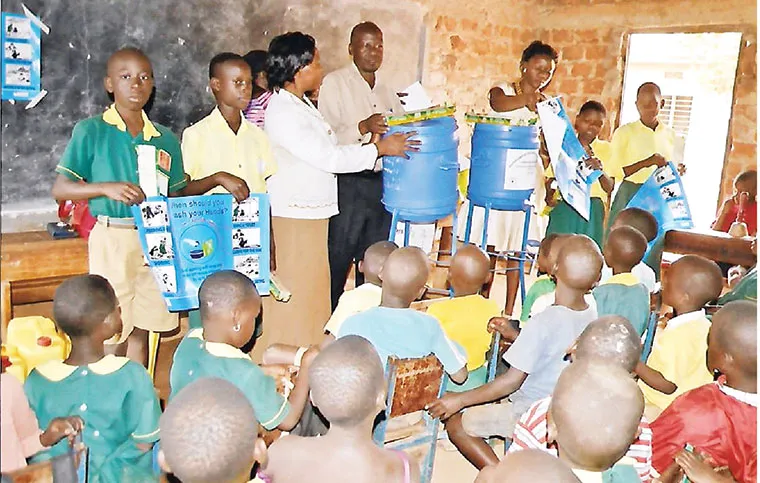
Jinja District has taken a decisive step toward improving child health and learning
outcomes by integrating hygiene education into routine school teaching under a new
partnership with Dettol, shifting away from short term campaigns to a district led,
sustainable model.
The partnership, formalised through a Memorandum of Understanding between Jinja
District Local Government and the Dettol Hygiene Quest initiative, embeds hygiene
lessons directly into everyday classroom activities across schools in the district.
The
approach aims to reduce preventable illnesses, improve attendance and instil
lifelong healthy habits among learners.
Unlike previous stand alone interventions, the new model places teachers at the
centre of delivery. Educators will receive structured guidance and digital support
tools to help integrate hygiene topics such as handwashing and sanitation into daily
lessons rather than treating them as occasional extracurricular messages.
A key innovation under the partnership is the introduction of digital support systems
designed to strengthen monitoring and accountability. Schools will be able to track
attendance trends and hygiene related indicators, enabling district education and
health officials to identify patterns linked to illness related absenteeism and respond
with targeted interventions.
District leaders say the initiative aligns with national priorities on child health,
education quality and disease prevention, while also easing the financial burden on
schools through in kind support. This includes teaching materials, hygiene
infrastructure and technical tools that the district can continue using beyond the initial
rollout period.
Officials involved in the programme say embedding hygiene education into routine
teaching marks an important shift in how public health is addressed in schools. By
making hygiene part of the learning process rather than a one-off message, the
district hopes to achieve lasting behaviour change that benefits both pupils and their
families.