KAMPALA –
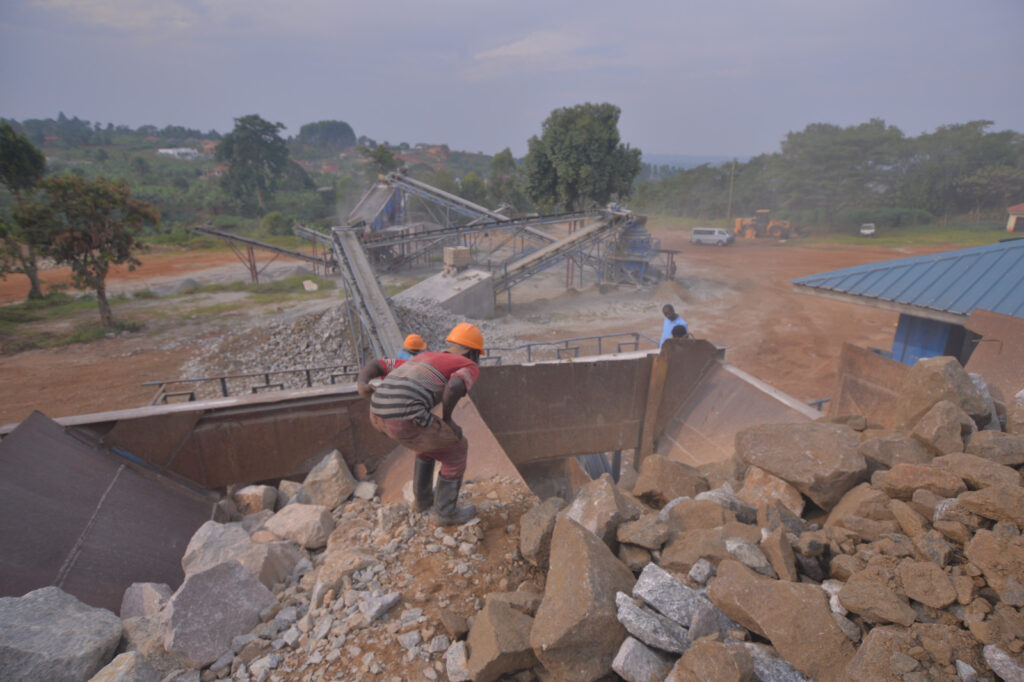
Uganda’s commercial banks have expressed readiness to fund both large and small-scale mining projects, provided investors meet regulatory, environmental, and governance standards.
The development marks a growing push to formalize and expand a sector that is increasingly viewed as a cornerstone of Uganda’s economic transformation. Mining has recently surpassed coffee as the country’s leading export earner, bringing in more than $4 billion annually. However, despite this surge in export revenue, the sector currently contributes only about 1 percent to Uganda’s Gross Domestic Product. Government targets under the National Development Plan IV (2023–2029) aim to raise that figure to 10 percent.
Mark Muyobo, Chief Executive Officer of NCBA Bank Uganda, said the bank has set up a dedicated financing allocation for mining projects in line with national priorities.
He noted that NCBA intends to help formalize and sustainably finance the fast-expanding minerals industry, which aligns with Uganda’s broader ambition to grow its economy from roughly $50 billion to $500 billion by 2040. The strategy focuses on Agro-industrialization, Tourism, Mineral-based industrial development, and Science, Technology and Innovation (ATMS).
Drawing from its regional experience, Muyobo said NCBA has financed more than $400 million in mining ventures in Kenya and plans to apply a similar model in Uganda. The bank will offer asset and equipment financing, working capital support, and structured trade solutions.
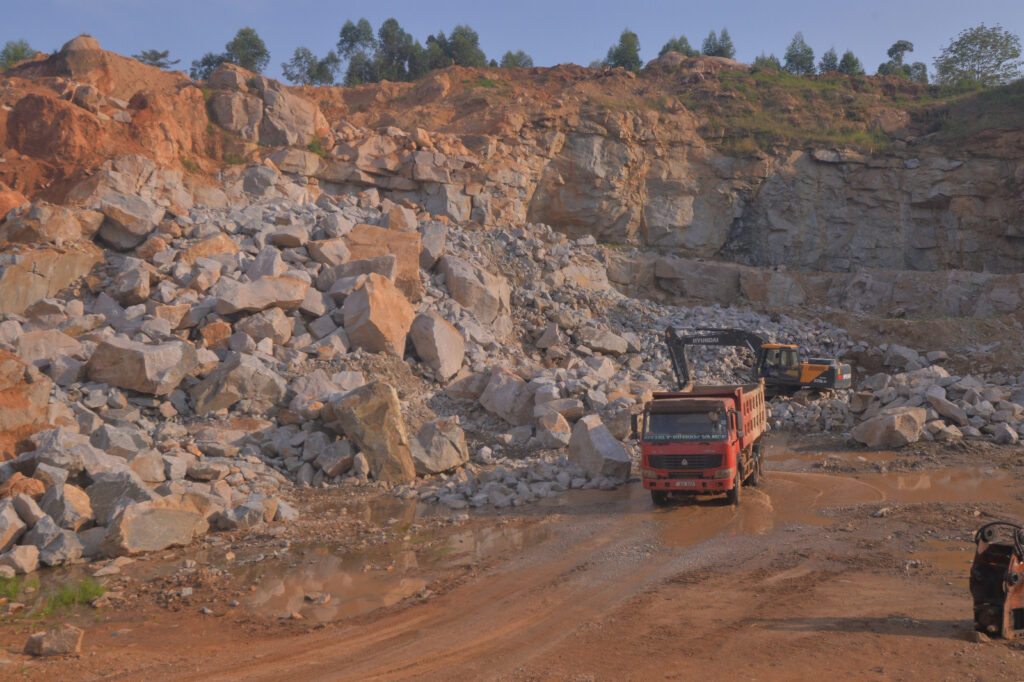
“Mining can be financed sustainably if the right structures are in place. What is needed is a well-organized ecosystem with clear regulations, formal operations, and solid financial partnerships to make the sector attractive to investors,” he said.
With operations across Kenya, Tanzania, Rwanda, and Uganda, NCBA says it is positioned to provide cross-border services including trade finance, foreign exchange support, and risk management for companies importing machinery or exporting processed minerals. The bank also indicated it can extend financing based on existing contracts, reducing the need for traditional collateral.
Engineer Irene Batebe, Permanent Secretary at the Ministry of Energy and Mineral Development, said Uganda is richly endowed with minerals such as gold, lithium, cobalt, copper, and nickel.
She observed that although gold exports have surged—generating nearly $4 billion—mining’s GDP contribution remains modest. “Our ambition is to transform mining into a major driver of economic growth,” she said.
Batebe outlined reforms designed to attract investment and improve accountability, including the rollout of a digital licensing system, zero-rated import duties on mining and exploration equipment, and mineral traceability mechanisms aligned with international standards.
Uganda currently has nine operational gold refineries. Major ventures such as the $300 million Wagagai Gold Mine have further boosted investor confidence in the country’s mineral potential.
However, stakeholders acknowledge that access to finance remains uneven, particularly for artisanal and small-scale miners (ASM), who often struggle to secure affordable credit.
Kenneth Asiimwe, Chief Executive Officer of the Uganda Association of Small-Scale Miners (UGAASM), said many small operators depend on informal lenders who charge extremely high interest rates.
“Some miners resort to borrowing at rates as high as 60 percent per month because the formal system largely caters to bigger companies,” he said.
Asiimwe called for simplified licensing procedures, establishment of seed capital funds, and joint ventures between artisanal cooperatives and investors to promote skills transfer and sector formalization.
Charles Siman of UNDP Uganda underscored the importance of developing financial products tailored to the needs of small-scale miners. He noted that many require between $5,000 and $15,000 to acquire equipment or expand operations but lack conventional collateral.
“For many of these miners, their mineral reserves are their real assets, yet existing financial systems do not factor that in,” he said.
Siman encouraged banks to explore options such as inventory-backed lending, mineral-backed credit facilities, and repayment schedules aligned with mining production cycles. Such innovations, he argued, could unlock opportunities for thousands of miners while advancing inclusive economic growth.