By Buwule Joseph Mary
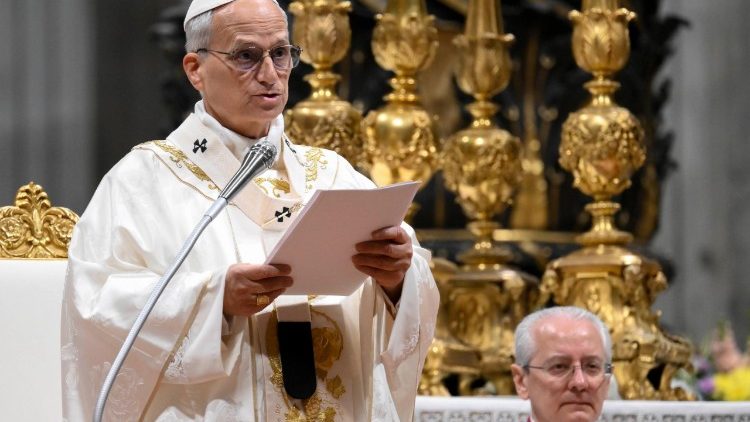
At the heart of Christendom, beneath the towering dome of St Peter’s Basilica, Pope Leo XIV delivered a profound reflection on the enduring struggle between good and evil, and the promise of rebirth, as he presided over the Easter Vigil Mass on Saturday evening.
In a solemn yet hopeful homily, the Pope drew from ancient Christian tradition, quoting a hymn that captures the transformative power of Easter: “It drives out hatred, fosters concord and brings down the mighty.” His message resonated deeply with thousands gathered in the basilica, as well as millions of faithful around the world following the celebration.
A story that spans centuries
Pope Leo XIV reminded the congregation that while Easter centers on the Resurrection of Jesus Christ, its meaning stretches far beyond a single moment in time.
“The holy mystery of this night,” he said, “extends across the centuries.”
Through the nine Scripture readings proclaimed during the liturgy, the Pope traced what he described as a “path of reconciliation and grace.” From the story of creation, through the liberation of the Israelites from Egypt, to the teachings of Saint Paul on the Resurrection, each passage revealed a consistent message: God’s unwavering response to human brokenness.
“The unifying theme,” the Pope explained, “is that God responds to the hardness of sin—which divides and kills—with the power of love, which unites and restores life.”
Love stronger than death
Reflecting on the Gospel account of the Resurrection in Gospel of Matthew, the Pope highlighted the moment when the two Marys approached the tomb of Christ. An earthquake, he noted, rolled away the stone that had sealed the grave—a powerful symbol of divine intervention.
What the women encountered, he said, was not just an empty tomb, but the undeniable triumph of love over death.
“The power of God’s love,” the Pope declared, “is stronger than any force of evil. Humanity can kill the body, but the life of the God of love is eternal—no tomb can imprison it.”
Confronting today’s “tombs”
Turning to contemporary challenges, Pope Leo XIV spoke of the many “tombs” that still imprison humanity today. He pointed to mistrust, fear, selfishness, and resentment, as well as global issues such as war, injustice, and the growing isolation among nations.
Yet his message was not one of despair.
He urged the faithful not to be “paralysed” by these realities, but instead to draw inspiration from the lives of the saints—men and women who, throughout history, chose courage, compassion, and faith over fear.
By following their example, he said, the world can experience the true fruits of Easter: harmony, reconciliation, and lasting peace.
A universal call to renewal
The Easter Vigil, one of the most significant celebrations in the Christian calendar, is marked by the singing of the Exsultet—the ancient Easter Proclamation—announcing the victory of light over darkness. This same proclamation echoed earlier in the day at the Church of the Holy Sepulchre, revered as the site of Christ’s Resurrection.
From Jerusalem to Vatican City and across the globe, the message remained clear: Easter is not only a remembrance of what happened, but an invitation to renewal.
As Pope Leo XIV concluded, the challenge before humanity is to allow the light of the Resurrection to penetrate even the darkest corners of human experience—so that peace may not only be hoped for, but lived.