By Buwule Joseph Mary
-Uganda’s livestock sector is undergoing a quiet but potentially transformative shift, driven by the introduction of Chinese hybrid goats that are already sparking optimism among farmers, researchers, and policymakers. The initiative, implemented under the Food and Agriculture Organization (FAO)–China–Uganda South–South Cooperation (SSC) Project, is positioning goat farming as a powerful engine for improving household incomes, strengthening food security, and building resilience in rural communities.
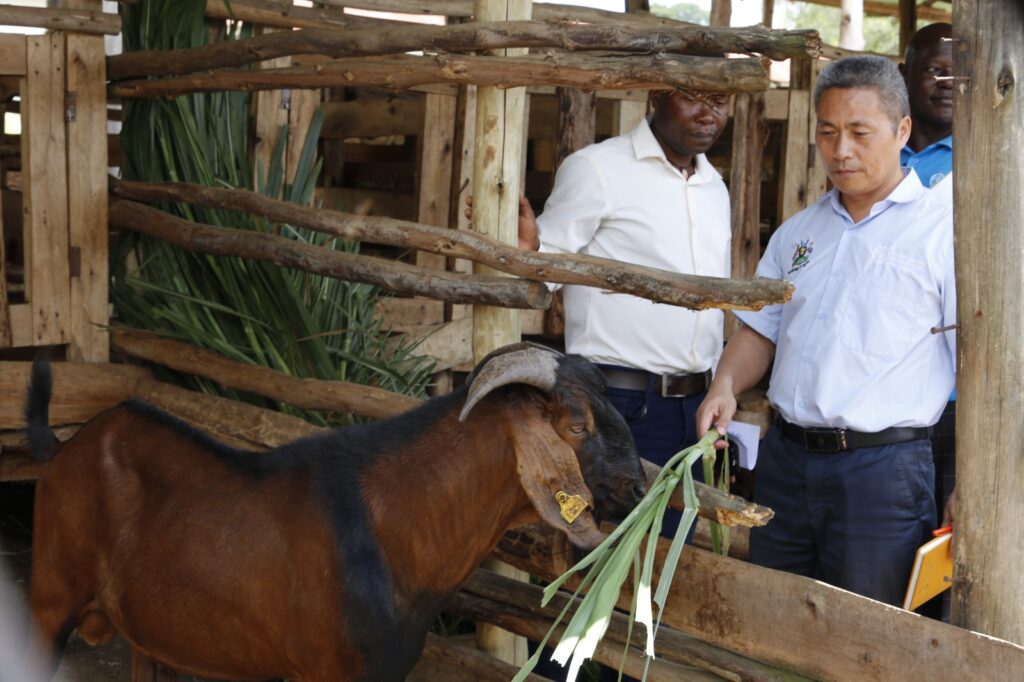
At the heart of this innovation is the Mbarara Zonal Agricultural Research and Development Institute (MBAZARDI), located in western Uganda, which is hosting the Guangzhou Big-Ear Goat breeding programme. The institute recently received a joint South–South Cooperation review mission tasked with evaluating progress, documenting lessons, and identifying opportunities for scaling up as Phase III of the project approaches its conclusion.
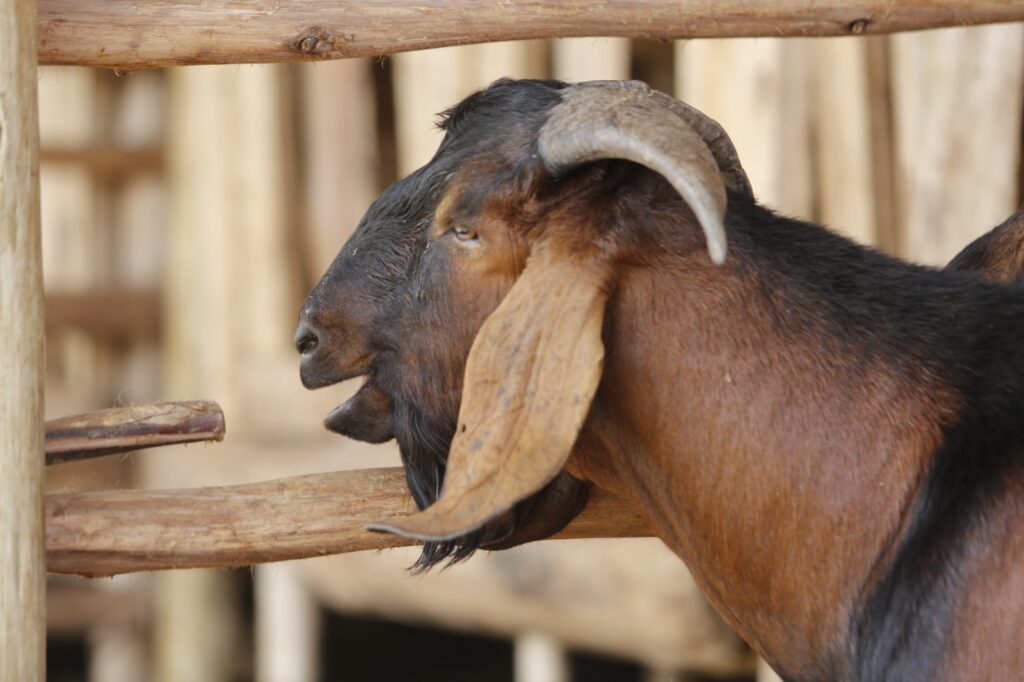
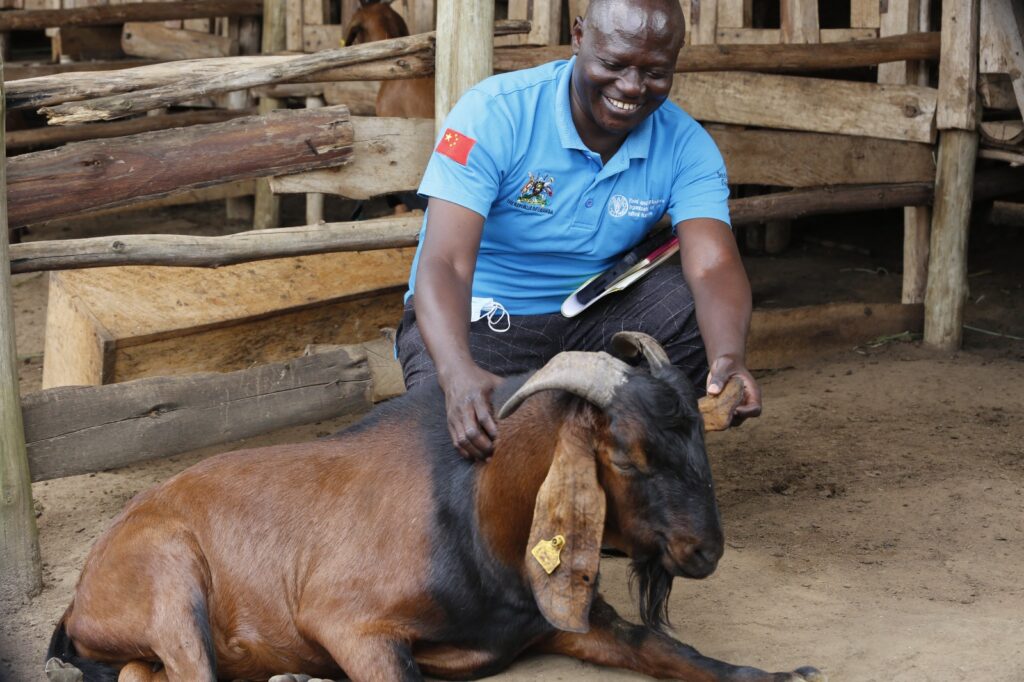
Under the long-running FAO–China SSC framework, Uganda imported nine Jianzhou Big-Ear goats, with six currently stationed at the National Agricultural Research Organisation (NARO) facility in Mbarara. These animals are being closely monitored for breeding, research, and performance under local conditions.
A Product of Science and Partnership
The Jianzhou Big-Ear goats are a hybrid breed developed from China’s Jian goat and the Anglo-Nubian. Known for their rapid growth rates and high meat yield, the goats represent a significant milestone in Uganda’s livestock modernization efforts. Their introduction reflects years of collaboration between Uganda, China, and FAO under one of the most enduring agricultural cooperation programmes.
Since its inception in 2012, the FAO–China SSC Project has evolved through three phases, bringing 47 Chinese agricultural experts to Uganda during its first two phases. These experts supported advancements in crop production, aquaculture, and livestock development, while building local capacity and establishing demonstration farms. The current phase focuses on scaling up these successes and ensuring long-term sustainability, with nine Chinese experts still actively supporting field operations.
Speaking during a monitoring visit in Mbarara, FAO Senior Programme Specialist Debel Gutta described the initiative as a model of effective international cooperation, emphasizing its tangible contribution to Uganda’s agricultural transformation agenda.
“This project demonstrates how partnerships can deliver real results on the ground,” he noted, pointing to its role in advancing Uganda’s ambition of achieving food self-sufficiency.
Promising Early Results
Early findings from the breeding programme at NARO are encouraging. According to Senior Research Officer Andrew Wange Bugenyi, the initial batch of goats—four females and two males—arrived in October 2025 and have since produced seven offspring.
Although initial projections estimated daily weight gains of 200 grams, the goats are currently averaging about 145 grams under local feeding conditions—still a strong performance compared to indigenous breeds. Kids born in late January are already weighing approximately 17 kilograms at just two and a half months old, with some recording weight gains of up to five kilograms in a single month.
Researchers are now focusing on evaluating adaptability, including how the goats respond to Uganda’s climate, resist local diseases, and utilize available feeds. So far, the animals have demonstrated resilience, with only minor health challenges such as manageable worm infestations.
Notably, the goats have adapted well to local forage like caliandra and fig leaves, significantly reducing dependence on expensive commercial feeds—a key advantage for smallholder farmers.
Transforming Indigenous Breeds
Beyond their individual productivity, the Jianzhou Big-Ear goats are expected to play a critical role in improving Uganda’s local goat populations. Indigenous breeds such as the Mubende and East African goats are typically smaller and slower-growing, limiting their commercial potential.
Through crossbreeding, scientists aim to develop improved hybrids capable of gaining over 100 grams per day—more than double the growth rate of some local breeds. This, experts say, could significantly increase meat production within shorter periods.
Dr. Jacob Mukose, the project’s national livestock counterpart, emphasized that the goal is to accelerate productivity while maintaining adaptability to local conditions.
“This is about producing more in less time,” he explained. “Higher productivity means better incomes for farmers and the ability to meet both domestic and export demand.”
Uganda is already eyeing international markets, particularly in the Middle East, where demand for goat meat continues to rise.
Empowering Farmers Through Knowledge
The project’s impact extends beyond breeding. In districts like Mbarara, farmers are receiving hands-on training in modern livestock management practices, including hay and silage making—essential techniques for ensuring feed availability during dry seasons.
According to District Production Officer Mathias Byamukama, these innovations are helping farmers maintain healthier animals, stabilize production, and access more lucrative markets.
“With improved feeding and better breeds, farmers can significantly increase their output and incomes,” he said.
Sustainability and the Road Ahead
As Phase III nears completion, attention is shifting toward sustaining and expanding the gains achieved. FAO and its partners are working to integrate project innovations into national agricultural systems while exploring opportunities to deploy more experts in animal breeding and feed technology.
The initiative comes at a time when climate change is increasingly threatening traditional farming systems. By combining Uganda’s indigenous knowledge with advanced Chinese breeding technologies, the project is helping to build a more resilient livestock sector capable of withstanding environmental shocks.
Looking ahead, stakeholders are optimistic that hybrid goats could redefine goat farming in Uganda—transforming it from a subsistence activity into a thriving commercial enterprise.
For now, efforts at NARO remain focused on multiplying the breeding stock and fully understanding the goats’ performance before wider distribution. But if current results are anything to go by, the Jianzhou Big-Ear goats could, within the next five to ten years, become a common feature on Ugandan farms.
Their success would not only boost meat production but also strengthen food security, create rural employment, and open new economic opportunities—cementing their role as a true game-changer in Uganda’s livestock sector.