By Johannah Nantongo
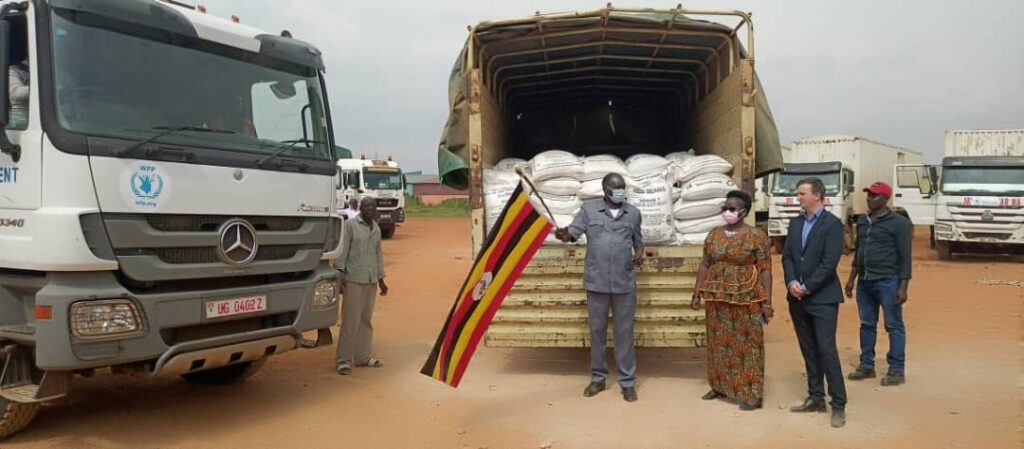
KAMPALA.The government through Office of the Prime Minister has rolled out an emergency food relief operation in the Karamoja sub-region .
This follows prolonged dry conditions that have caused widespread crop failure, worsening food shortages and reports of hunger-related deaths.
Several parts of Uganda are currently experiencing dry spells with Karamoja among the hardest-hit regions. The prolonged dry spell has severely disrupted agricultural production, leaving many households without adequate food supplies and deepening humanitarian concerns across the sub-region.
Latest reports show 16 people have reportedly died from causes linked to food shortages in Karamoja, although the reports have not been independently verified. The Government extended its deepest sympathies to the bereaved families and affected communities.
As part of the emergency response, OPM on Wednesday, July 8, delivered 22 tonnes of relief food to Loduku and Loyoru sub-counties in Kaabong District. The consignment comprised 13 tonnes of maize flour and nine tonnes of beans and is expected to provide immediate assistance to households facing acute food insecurity.
The Office of the Prime Minister (OPM) has also arranged another consignment of emergency food for immediate distribution to the districts requiring urgent intervention, including Kaabong, Kotido, Amudat, Napak and Moroto, where poor harvests brought on by the prolonged dry spell have intensified food shortages.
To expand the relief effort, the OPM is expected to seek Cabinet approval on Monday, July 13, for the procurement of additional emergency food supplies to support communities across the wider Karamoja sub-region and neighbouring districts.
Permanent Secretary Alex Kakooza said the Government was taking urgent steps to respond to the worsening humanitarian situation and ensure that assistance reaches the most vulnerable households.
“The Government recognises the difficulties faced by Ugandans experiencing food shortages and is taking urgent measures to support the families most in need,” Kakooza said in a statement.
He said the emergency food distribution forms part of wider government efforts to cushion affected communities while additional relief supplies are mobilised and longer-term interventions to strengthen food security are pursued.
The intervention comes as humanitarian concerns continue to mount across Karamoja, where recurrent droughts and climate-related shocks continue to undermine agricultural production, livelihoods and household food security, underscoring the need for sustained emergency assistance alongside long-term investments in climate resilience and agricultural recovery.