By Joseph Mary Buule
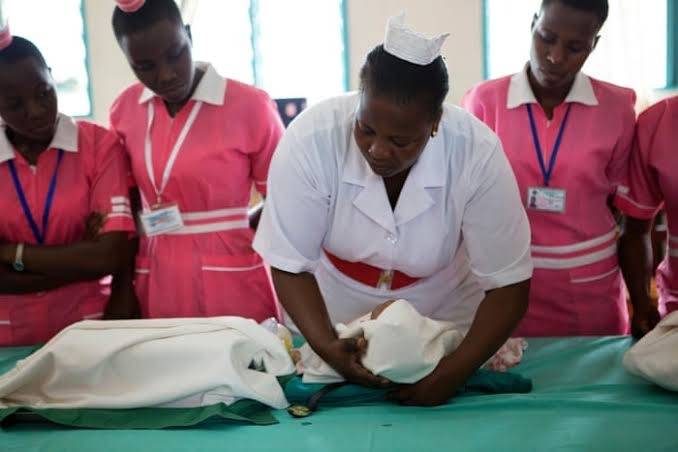
The Ministry of Health has directed all public hospital workers to wear uniforms while on duty, regardless of role.
The Ministry Permanent Secretary Dr Diana Atwiine issued the directive at Hoima Regional Referral Hospital as she led the Ministry’s Integrated Technical Support Supervision Team to monitor activities in Bunyoro.
She stressed that uniforms with name tags must be provided for every category of staff in health facilities.
“It is illegal, it is unacceptable for a government worker to come to work and you are not in uniform. It is unacceptable even if you are a cashier, even if you are a records person. In hospital facilities, you must find a way of getting specific simple uniforms with name on it for everyone to be identified,” Dr Atwiine said.
She said the ministry will not tolerate unidentified persons operating within health facilities.
“We will not accept anybody who is an imposter.”
Dr Atwiine further decried the poor appearance of some health workers, saying it undermined the dignity of the profession.
“We will not look like vendors on the streets or wheelbarrow pushers in our facilities. We must stand and protect our profession,” she said.
However, social media users quickly challenged her directive, saying that though wearing uniform is commendable, it will not improve service provision in public health facilities.
“Enforcing dress codes while ignoring the real working environment won’t improve healthcare. The government must fix the basics first,” one social media user, Cynthie Choco wrote on X.
Providing uniforms, though reasonable, Choco said, is not enough.
She said that healthcare workers need proper infrastructure, well equipped facilities, and adequate supplies.
Many government health facilities across the country are in a state that members of the public say is poor.
Recently, it was reported that Mbarara Regional Referral Hospital was grappling with overcrowding, patients sleeping on the floor due to lack of beds, and shortage of medicines and diagnostic services.
The reports also indicated that some patients were being forced to procure medicines, imaging and laboratory services from private facilities outside the hospital.