By Maria Mariam Namala
KAMPALA: Members of Parliament have raised concerns over persistent inequalities in electricity access, accusing the Government of failing to deliver on longstanding commitments to expand power supply to underserved communities.
The legislators warned that unreliable and limited electricity access is undermining development and affecting the delivery of essential services, including education, healthcare and digital transformation.
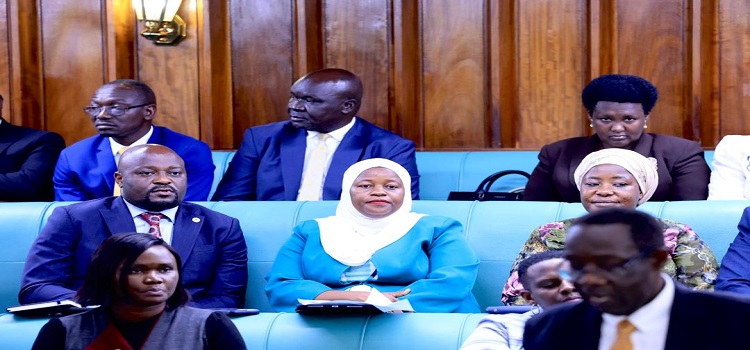
The concerns were raised during debate on a statement by the Minister of State for Energy, Sidronius Okaasai, on rural electrification during a parliamentary sitting chaired by Deputy Speaker Thomas Tayebwa on Tuesday, August 18, 2026.
Kibanda North County MP Linos Ngompek challenged the Ministry of Energy and Mineral Development over delays in compensating people affected by the Karuma Hydroelectric Power Project.
“We cannot talk about rural electrification while ignoring the people who gave up their land for these projects,” Ngompek said.
Construction of the Karuma project began in December 2013 and displaced more than 3,000 people, including 280 landowners and 134 tenants.
The latest dispute centres on Government’s decision to physically resettle vulnerable project-affected persons (PAPs) at Lapono in Nwoya District instead of resolving all outstanding claims through cash compensation.
Minister Okaasai said the resettlement process had progressed significantly and would be difficult to reverse.
“The money has been released, and we are taking the project-affected persons to see the land where their houses are going to be constructed,” Okaasai said.
He added that house designs were awaiting Government approval and that an electric fence would be installed to address concerns about wildlife at the proposed resettlement site.
Okaasai also said the Parliamentary Committee on Environment and Natural Resources would visit the area and engage affected communities.
Meanwhile, Jamali Ayagalachi, NUP MP for Bukooli County North, said 39 parishes in his constituency have remained without electricity since 1997.
He questioned why communities in Busoga continue to struggle with access to electricity despite the region’s proximity to major hydropower resources.
Wakiso District Woman Representative Betty Naluyima highlighted challenges faced by island communities, including health centres operating without electricity.
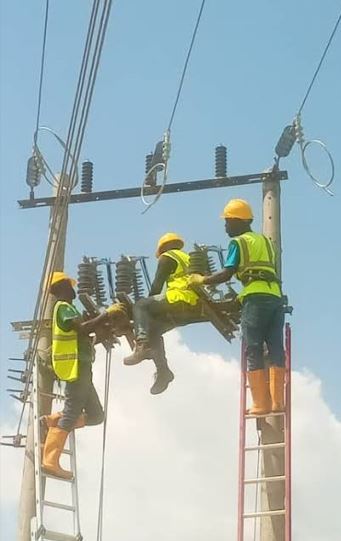
She also cited cases where electricity poles delivered to some communities seven years ago had never been connected.
Oyam County North MP Eunice Otuko Apio said three transformers allocated to her constituency more than a year ago had not yet been delivered.
She said the situation was affecting schools, health centres and sub-county headquarters that continue to operate without reliable electricity.
Ik County MP Hilary Lokwang said he had spent 11 years writing to Government requesting electricity for his constituency without receiving a meaningful response.
“I’ve been writing for the last 11 years, requesting for power. I have never captured an eye of the duty bearer,” Lokwang said.
He questioned whether Government’s commitment to affirmative action for marginalised communities could be meaningful if remote constituencies must rely on political influence to access basic infrastructure.
Lokwang also linked the electricity deficit to Uganda’s ambitions in education, healthcare and digital transformation.
“How shall we connect a computer to PowerPoint if you don’t have power in your school? How shall we mix the reagents in the laboratory if you don’t have power?” he asked.
Bunyaruguru County MP Benjamin Cadet said more than 11,000 households in his constituency remain off the national electricity grid.
In response, Minister Okaasai said seven Government-funded rural electrification lots worth approximately Shs145 billion were under implementation, with contractors already working in various areas.
He said Government also plans to extend electricity to small and micro enterprises, particularly agricultural enterprises, alongside additional grid-extension works involving approximately 35.39 kilometres of medium-voltage lines in western and southern Uganda.
Another intervention is the Grid Densification Programme Phase II, supported by a grant from the German Government through KfW.
Okaasai also presented the proposed Uganda Rural Electrification Access Project Phase II, which is expected to cover 49 districts and approximately 259.7 kilometres of medium-voltage lines.
The project is intended to connect 352 schools, 282 health centres and 537 small-scale enterprises. It is expected to be financed by the African Development Bank and will require parliamentary approval.
Deputy Speaker Thomas Tayebwa, however, questioned whether the proposed projects would translate into actual infrastructure or remain another list of Government promises.
“We do not want members to be told that projects are coming, only for them to discover later that there is no money,” Tayebwa said.
Tayebwa acknowledged the unique challenges faced by the Ik, placing them alongside the Tepeth, Batwa and Banyabindi among communities experiencing significant marginalisation.
He urged the Ministry of Energy to give the Ik special attention, citing the difficult geographical conditions in which the community lives.