By Maria Mariam Namara
Mastercard has highlighted digital payments as a key driver of Uganda’s economic transformation, saying wider adoption of cashless transactions could expand financial inclusion, improve access to credit and support business growth.
Victor Ndlovu, Mastercard’s Vice-President and Head of Business Development for East Africa, said economies that reduce reliance on cash often experience GDP growth of between 1 and 2 per cent.
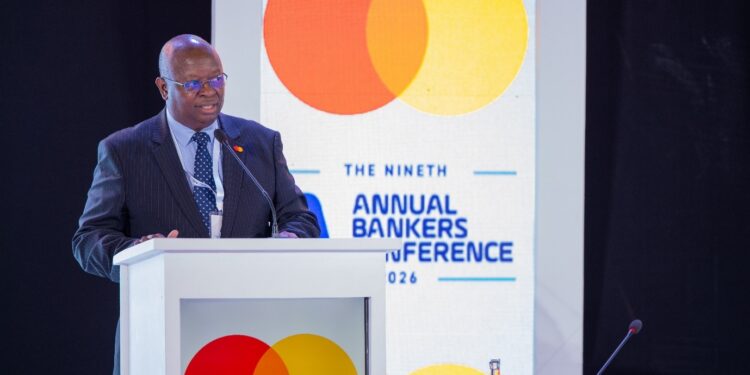
He made the remarks on the sidelines of the ninth Uganda Bankers’ Association (UBA) annual conference held at the Kampala Marriott Hotel on Friday. The conference focused on the role of financial institutions in supporting Uganda’s ambition to grow its economy tenfold.
Under the government’s Tenfold Growth Strategy, Uganda aims to expand its economy from approximately $50 billion to $500 billion by 2040.
Ndlovu said digital payments could contribute to this target by bringing more businesses and individuals into the formal financial system, generating transaction records that financial institutions can use to assess borrowers.
Figures from the Bank of Uganda indicate that electronic money transactions increased by 28.6 per cent to Shs326.3 trillion in the year ending June 2025. Meanwhile, Uganda Communications Commission (UCC) data shows that active mobile money subscriptions reached 37.8 million in the quarter ending June 2026, with transactions totalling 2.55 billion.
Despite the growth of mobile money, card payments remain less widely accepted among small businesses. Ndlovu said Mastercard was exploring affordable solutions that would enable traders to accept card payments using mobile phones, reducing the need for costly payment terminals.
He stressed that the intention was to complement existing mobile money services rather than compete with them.
The increasing availability of smartphones and mobile internet is expected to support the expansion of digital transactions. UCC figures indicate that active mobile internet subscriptions reached 19.7 million, while active smartphones stood at 20.5 million in the second quarter of 2026.
SMEs at the Centre of Digital Transformation
Small and medium-sized enterprises (SMEs) are among the main beneficiaries Mastercard hopes to reach through its digital payment initiatives.
According to the Uganda Investment Authority, SMEs employ more than 2.5 million people and account for approximately 90 per cent of the private sector.
However, limited access to financing continues to affect many businesses. Ndlovu said digital transactions could help address this challenge by creating financial records that lenders can use when evaluating loan applications.
He noted that improved access to capital would enable businesses to increase production, expand operations and contribute more to the national economy.
“Today’s challenge, not just here in Uganda but across Africa, is access to capital,” Ndlovu said.
In the agricultural sector, Mastercard operates Community Pass, a digital platform that provides farmers with digital identities and supports transactions even in areas without internet connectivity.
Through the platform, farmers can access agricultural inputs through digital marketplaces while building transaction histories that may help them obtain financing.
Ndlovu said approximately 1.2 million farmers in Uganda were using the service through Mastercard’s banking partners.
The company has also exceeded its target of connecting 50 million small businesses to the digital economy, including 37 million women entrepreneurs, through support and digital solutions.
He observed that women entrepreneurs had often faced barriers to formal financial services, despite the important role their earnings play in supporting households.
As an example, he cited a woman operating a fishing business in the Lake Victoria region who accessed financing through a partner bank, expanded her operations and began supplying markets outside her community.
Digital Remittances and Regional Trade
Remittances from Ugandans living abroad are another area where digital payments are playing an increasingly important role.
Bank of Uganda figures show that remittance inflows reached $2.5 billion in 2025, equivalent to about 3.8 per cent of GDP. Digital channels accounted for nearly three-quarters of the inflows, with mobile money representing approximately 61 per cent of receipts.
The value of remittances slightly exceeded coffee export earnings, which stood at $2.46 billion during the same year.
Ndlovu said Mastercard had worked to lower remittance transfer costs through its channels to approximately four per cent, compared with about eight per cent for traditional transfers.
Recipients can receive money through bank accounts, mobile wallets or cash collection services. Senders can also direct funds towards particular expenses, including education, healthcare and household necessities.
He added that digital payments were helping businesses conduct cross-border transactions more efficiently by reducing dependence on physical cash and minimising risks associated with transporting money.
For example, traders selling goods between Uganda and Kenya can receive payments electronically, helping them access their funds more quickly and manage transactions across borders.
Expanding Digital Financial Services
Mastercard began operating in Uganda in 1999, with Barclays Bank as its first client. The company now maintains an office in Kampala staffed by five Ugandans.
Ndlovu described Uganda as Mastercard’s second-fastest-growing market in East Africa.
Partnerships with telecommunications companies Airtel and MTN have also enabled the introduction of virtual cards linked to mobile wallets. These services allow people without conventional bank accounts to make online payments for services such as software and streaming subscriptions.
To improve online payment security, Mastercard operates its Mastercard Payment Gateway Services (MPGS), which analyses transaction information, including device details, internet protocol addresses, purchase times and merchant data.
Artificial intelligence is used to assess transaction risks, helping to identify potentially suspicious payments and strengthen confidence in online commerce.
The company is also introducing payment products targeting younger users, including wristbands that allow schoolchildren to make contactless payments under parental spending controls.
Prepaid student cards are being rolled out at several universities to facilitate payments for tuition, meals and campus services.
Ndlovu said public education would remain important in helping consumers and businesses understand emerging payment technologies, including payment rings and other contactless devices.
Focus Shifts to Business Payments
Looking ahead, Mastercard plans to expand its business-to-business payment services through solutions such as B2B Track, which enables companies to transfer larger sums electronically in line with applicable national regulations.
The service is intended to support business transactions across trade corridors, including those involving China.
Ndlovu said the company was ready to engage with policymakers, the Bank of Uganda and other stakeholders to explore opportunities arising from new payment technologies.
He emphasised the importance of developing digital payment systems that combine innovation, security and wider access to financial services.
“The world is moving forward and not waiting,” he said.