ENTEBBE
by Buwule Joseph Mary

As artificial intelligence (AI) and robotics continue to reshape industries across the globe, experts are warning that the future of work will demand a radical shift from traditional academic qualifications to practical, verifiable skills.
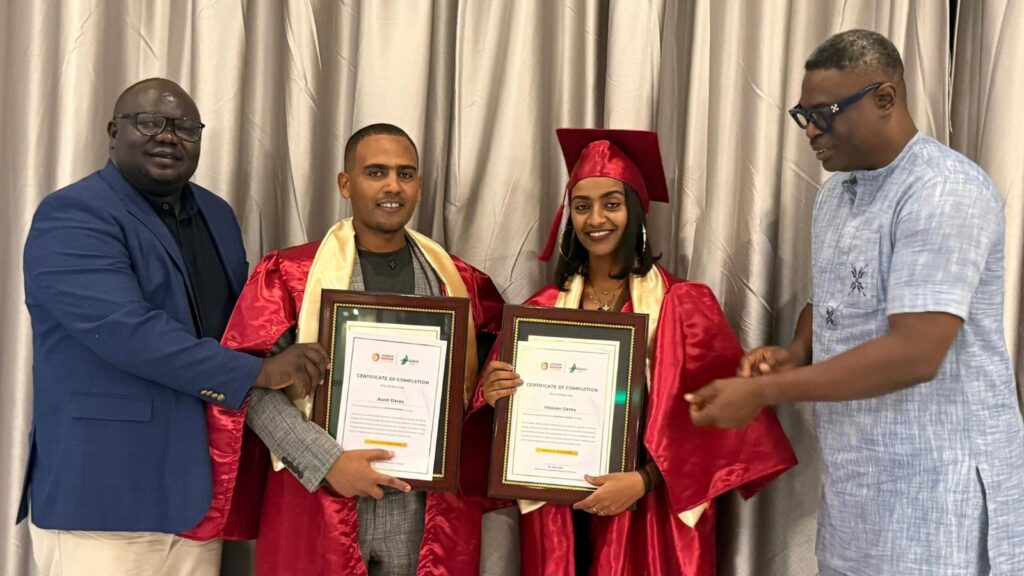
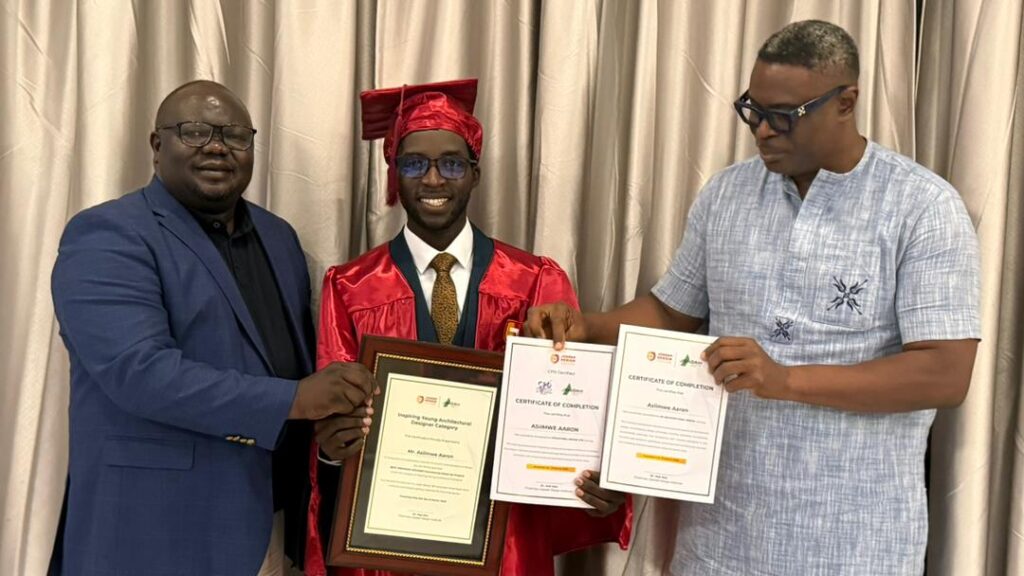
This message came into sharp focus during the graduation ceremony of Cohort 6 CAD designers at Joadah Design Institute, where students completed six months of intensive, hands-on training in design technologies.
The ceremony, held in Entebbe, celebrated not just academic achievement, but a growing movement toward skills-based education as a response to rapidly evolving labour market demands.
Dr. Joel Aita, Chief Executive Officer, delivered a stark message about the future of employment, warning that job seekers who rely solely on traditional degrees risk being left behind.
“Starting 2035 to 2040, the future of work isn’t a degree on your wall — it’s a skill stack that AI can verify in seconds,” Dr. Aita said. “Micro-credentials, portfolios, and real-time competency assessments are quietly replacing the four-year degree as the currency of employability.”
He emphasized that employers are increasingly asking a different question: not where one studied, but what one is capable of doing in real-world scenarios.
“The question is no longer ‘Where did you study?’ but ‘What can you actually do?’ Universities had better evolve or become the next industry AI disrupts,” he added.
Rising Pressure on Job Seekers
The integration of AI and robotics into workplaces is already creating uncertainty for many job seekers, particularly young graduates entering the labour market.
Routine and repetitive jobs — especially in administration, manufacturing, and basic data processing — are increasingly being automated. This shift is reducing the number of entry-level opportunities that traditionally served as stepping stones for graduates.
At the same time, new roles are emerging that require hybrid skills — combining technical knowledge, creativity, and problem-solving — areas where many conventional education systems are still lagging.
Experts note that one of the biggest challenges facing job seekers today is the speed at which skills become obsolete. Unlike in the past, where a degree could sustain a career for decades, workers must now continuously update their competencies to remain relevant.
Additionally, the rise of AI-powered recruitment tools means candidates are being screened not just on qualifications, but on demonstrable skills, digital portfolios, and real-time assessments. Those without practical experience risk being filtered out before reaching human recruiters.
The Shift to Skills-Based Learning
Institutions like Joadah Design Institute are positioning themselves at the forefront of this transition by offering short-term, practical training programmes tailored to industry needs.
JDI, a specialized vocational training centre, focuses on architectural, graphic, interior, and landscape design. Its model emphasizes hands-on learning, mentorship from industry professionals, and the use of technology to solve African challenges.
Graduates from the institute leave with portfolios showcasing their work — a key advantage in an increasingly competitive job market.
During the ceremony, several graduates expressed confidence that their practical training would give them an edge over peers with purely theoretical backgrounds.
A Call for Education Reform
Dr. Aita’s remarks reflect a broader global conversation about the future of education and employment. As AI systems become more capable of evaluating skills instantly, traditional academic pathways are under pressure to adapt.
He urged universities and training institutions in Uganda and across Africa to rethink their curricula, integrate emerging technologies, and prioritize experiential learning.
Without such reforms, experts warn, there is a risk that a growing number of graduates will find themselves unemployed or underemployed — not due to lack of education, but due to a mismatch between their skills and market demands.
Preparing for the Future
For current and future job seekers, the message is clear: adaptability, continuous learning, and practical skills development are no longer optional.
As industries evolve, those who invest in building diverse skill sets — supported by verifiable evidence of competence — are more likely to thrive in the AI-driven economy.
The graduates of Cohort 6 at Joadah Design Institute may represent a new model of workforce readiness — one that prioritizes what individuals can do over the certificates they hold.
And as AI and robotics continue to redefine the world of work, that model could soon become the norm rather than the exception.
