KAMPALA
The Constitutional Court in Kampala has dismissed a petition challenging the 2022 cooperation agreement between the ruling National Resistance Movement (NRM) and the opposition Democratic Party (DP).
In a unanimous decision delivered on Monday, a panel of five justices ruled that the petition did not raise constitutional issues requiring interpretation by the court.
The coram that had the petition filed by six members of DP comprised Justices Asa Mugenyi, Hellen Obura, Musa Ssekaana, Moses Kawumi Kazibwe and Margaret Tibulya.
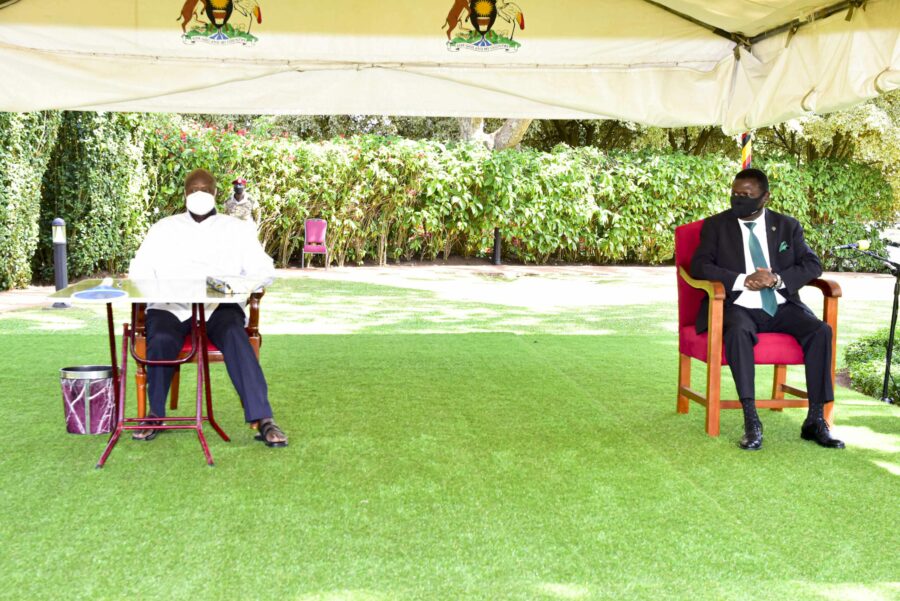
Court documents indicate that the agreement, signed in July 2022 by DP President General Norbert Mao and President Yoweri Kaguta Museveni, committed the DP to cooperate with the NRM in supporting the government’s governance agenda.
Under the arrangement, the DP undertook to back parliamentary votes on matters of confidence and supply for the duration of the current Parliament, as well as support procedural motions in the House and in select and sessional committees.
The agreement also provided for the appointment of DP members to Cabinet, who would be bound by Cabinet Rules on confidentiality, public duty and personal interests.
Following the signing of the agreement, Mr Mao was appointed Minister for Justice and Constitutional Affairs and took the oath on August 2, 2022.
In its decision, the court held that the issues raised in the petition did not disclose substantive constitutional questions warranting its intervention.
“The petition does not raise any substantive constitutional questions for interpretation by this court,” the justices held.
The court held that it is mandated under Article 137 of the Constitution to interpret the Constitution where a question arises as to its meaning or application. However, it emphasised that not every grievance or dispute qualifies as a constitutional question.
In dismissing the petition, the justices found that the matters raised by the legislators primarily concerned internal party governance and procedure rather than constitutional interpretation.
The court stated that the issues presented revolved around whether the DP President General had authority under the party constitution to enter into the cooperation agreement and whether proper consultation had been undertaken within party organs.
According to the judgment, such matters did not, in themselves, amount to violations of the national Constitution.
The petition had been filed by six DP Members of Parliament led by Richard Lumu Kizito. The other legislators were Michael Phillip Lulume Bayigga, John Paul Lukwago Mpalanyi, Fortunate Rode Nantongo, Richard Sebamala and Fred Kayondo.
They had sued Mao, DP Secretary General Gerald Siranda, the Democratic Party and the Attorney General.
The legislators argued that they were elected on the DP ticket and are members of the party’s National Executive Committee (NEC), its top decision-making organ.
The petitioners contended that Mao signed the cooperation agreement without proper authority or consultation with party organs and under the title Chairman General, which they argued is not recognised under the DP constitution.
They contended that although they did not object to Mao serving as minister in his personal capacity, executing a binding cooperation agreement while serving as DP President General undermined democratic governance principles enshrined in the Constitution.
The MPs asked court to declare the agreement null and void and to issue a permanent injunction restraining DP organs from ratifying it.