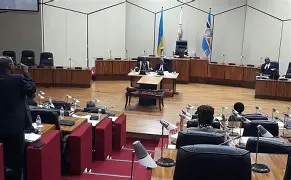
A legal memo from the East African Legislative Assembly (EALA) has halted Uganda’s attempt to replace two of its representatives, directly contradicting an ongoing internal selection process by the ruling National Resistance Movement (NRM).
The memo, issued under the East African Community (EAC) legal office and dated March 23, explicitly states that no vacancies currently exist despite the election of Denis Namara and James Kakooza to Uganda’s 12th Parliament.
“I refer to the attached letter of the Rt. Hon. Speaker of EALA to the Speaker of the Parliament of Uganda on the above subject dated March, 17 2026, which has been brought to my attention,” the memo begins. It then sets out the legal basis under the EAC Treaty:
“Whereas Article 51(3) of the Treaty provides that an elected Member of the Assembly shall vacate his or her seat in the Assembly upon his or her election or nomination as a member of the National Assembly of a Partner State, the provision should be interpreted in the context of the elections conducted.”
The memo makes clear that timing is central to the interpretation: “The Members referred to in that letter were elected to the 12th Parliament of Uganda which will commence in May, 2026. As such, until that time, there is no vacancy created by their election.”
It concludes with a firm directive: “In effect, no vacancy can be declared in EALA until they become Members of Parliament in Uganda.”
“It is imperative that the Assembly does not attract unintended consequences of prematurely declaring vacancies.”
The position puts Uganda’s political process at odds with regional procedure.
Earlier this week, the NRM Electoral Commission, chaired by Tanga Odoi, nominated 38 candidates to contest for the party flag for the two seats, with plans to submit names to EALA by April 15.
The seats were expected to fall vacant after Namara and Kakooza won parliamentary positions in January, prompting a rapid mobilisation within the NRM to maintain its representation in the regional assembly.
The EALA legal position now raises the likelihood of delays, leaving aspirants in limbo and exposing a procedural gap between Uganda’s domestic political calendar and EAC treaty requirements.
EALA is the legislative arm of the East African Community and plays a central role in shaping laws on regional trade, integration and cooperation — areas where Uganda has been seeking to strengthen its influence.
