
The Ministry of Trade, Industry and Cooperatives has announced a National Trade Review Conference scheduled for March 4–5, 2026, at the Speke Resort Convention Centre, aimed at accelerating Uganda’s journey toward becoming a $500 billion economy by 2040.
Addressing the media and stakeholders, Minister Wilson Mbasu Mbadi said Uganda has registered strong growth in trade, industrialization and cooperative development over the past five years. He noted that in the 2024/25 financial year, exports of goods and services rose to approximately $13.3–$13.4 billion, with merchandise exports contributing about $10.6 billion.
According to the Minister, the growth was fueled by improved performance in key sectors such as coffee, gold and other mineral products, cocoa beans, sugar and fish. He attributed the gains to policy reforms, enhanced trade facilitation, industrial infrastructure expansion and strengthened public-private collaboration under the leadership of President Yoweri Museveni.
Despite the progress, Mbadi emphasized the need to translate current achievements into sustained, tenfold growth capable of transforming Uganda into a high-value economy within the next 15 years.
Focus on Tenfold Growth Strategy
The conference will be held under the theme, “Trade-Driven Transformation: Propelling Uganda to a $500B Economy by 2040.” It is expected to assess Uganda’s trade performance and readiness to support the country’s Tenfold Growth Strategy, which is anchored on agro-industrialization, tourism, mineral development, and science, technology and innovation, including creative industries.
Among its key objectives, the conference will seek to generate actionable policy and regulatory reforms to boost exports and value addition. Cabinet is also expected to approve and launch the Revised National Trade Policy and the National Export Development Strategy during the event.
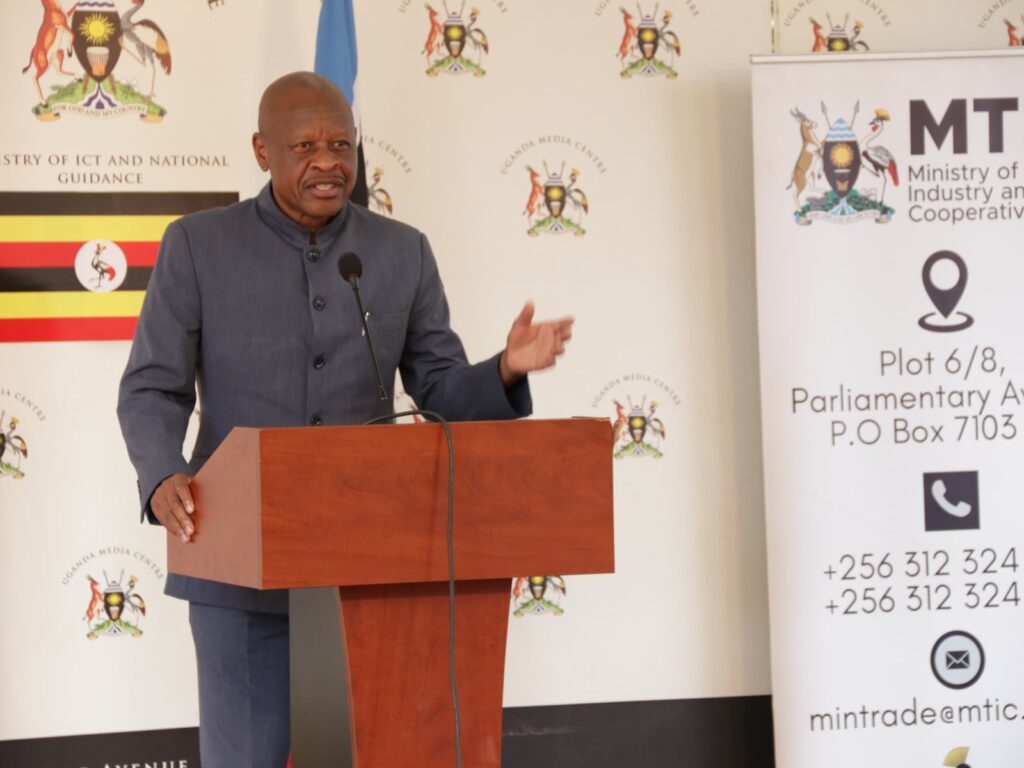
Mbadi said the meeting is intended to move beyond dialogue and produce a time-bound implementation plan and a high-level national communiqué to guide follow-up actions.
Addressing Emerging Trade Challenges
The conference will examine critical issues shaping Uganda’s trade outlook, including navigating a fragmented global trading system and the country’s graduation from Least Developed Country status. Discussions will also focus on scaling agro-industrial value chains, strengthening mineral-based industrialization, and enhancing competitiveness in regional services markets under the East African Community (EAC), COMESA and the African Continental Free Trade Area (AfCFTA).
Other areas of focus include leveraging science and innovation for high-value manufacturing, revitalizing cooperatives and SMEs to boost export competitiveness, and enforcing quality standards in domestic markets.
Expected Outcomes
By the end of the two-day event, the Ministry expects to officially launch the revised trade policy frameworks, outline prioritized reform actions aligned with the Tenfold Growth Strategy, and strengthen coordination among government agencies, the private sector, academia, development partners and cooperatives.
Mbadi underscored that while Uganda’s export profile is gradually shifting from raw agricultural commodities to processed minerals and manufactured goods, more work is needed to safeguard competitiveness, deepen value addition and expand market access.
He called on government institutions, private sector actors, cooperative leaders, researchers, development partners and the media to actively participate in shaping Uganda’s next phase of trade-led transformation.
“Uganda has shown that growth is possible. The task now is to scale it deliberately and strategically,” Mbadi said, expressing confidence that coordinated trade reforms will help the country multiply its gains and achieve long-term prosperity.