KAMPALA.
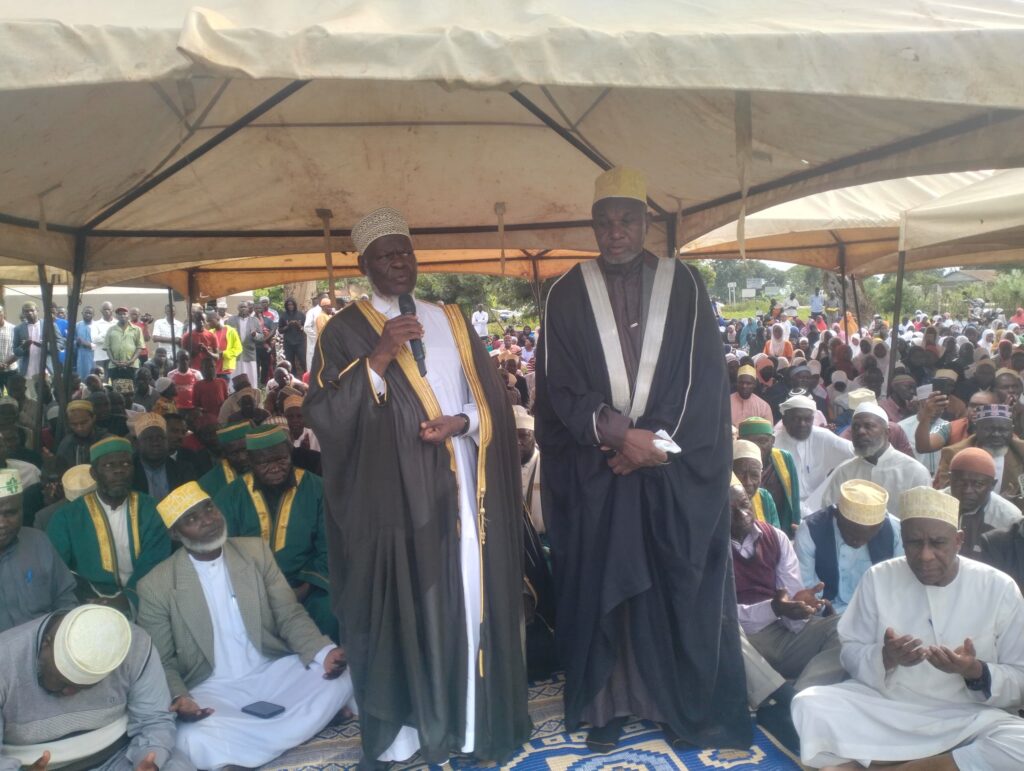
His Eminence Sheikh Shaban Ramadhan Mubajje, the Mufti of Uganda, has expressed dismay and condemned the widespread killings of civilians, including children, the elderly, women, and men, in the ongoing war in the Middle East.
He noted that even the Iranian top religious leader, Ayatollah Ali Khamenei, is not being spared. The Mufti described these acts as totally inhuman and unacceptable, especially during the holy month of Ramadan.
This statement came during the Mufti’s address to mourners at the burial of a prominent Muslim cleric, Sheikh Abdu-Majid Abubakar Muyangu, the paternal uncle of His Eminence Sheikh Muhammad Ali Waiswa. The late Sheikh was buried on Sunday at the family’s ancestral grounds in Namalemba village, Bugweri District, near the Tirinyi-Mbale Highway.
“I reiterate my message to the Muslim faithful to always adhere to the Islamic faith as ordained in the Holy Quran and the divine teachings contained in the sayings of Prophet Muhammad, peace be upon him. Maintain peace, brotherhood, and unity in diversity,” the Mufti said.
He cautioned Muslims against copying practices from some Arab countries, recalling the hatred and infighting in Uganda’s Muslim community during the 1980s and 1990s over minor theological differences—such as keeping beards or reciting prayers loudly. “Yet the core pillars of Islam, anchored on the statement that there is no deity worthy of worship except Almighty Allah and Prophet Muhammad is His messenger, remain the same. Despite differences, anyone who sincerely expresses this statement is your brother,” he added, turning towards the shrouded body of the late Sheikh, which was left uncovered on a stretcher.
The Mufti also emphasized that Islamic burial practices in Uganda largely follow the interpretations of Imam Shafi’i, one of the great Islamic theological scholars. He noted that some clerics returning from studies in Arab countries introduced practices such as leaving bodies uncovered, which often draw mixed reactions from the multi-religious public. “I offer religious guidance that, in order to safeguard the dignity of the deceased and respect for the grieving family, I urge all Muslims to cover caskets during burials,” he issued as a fatwa.
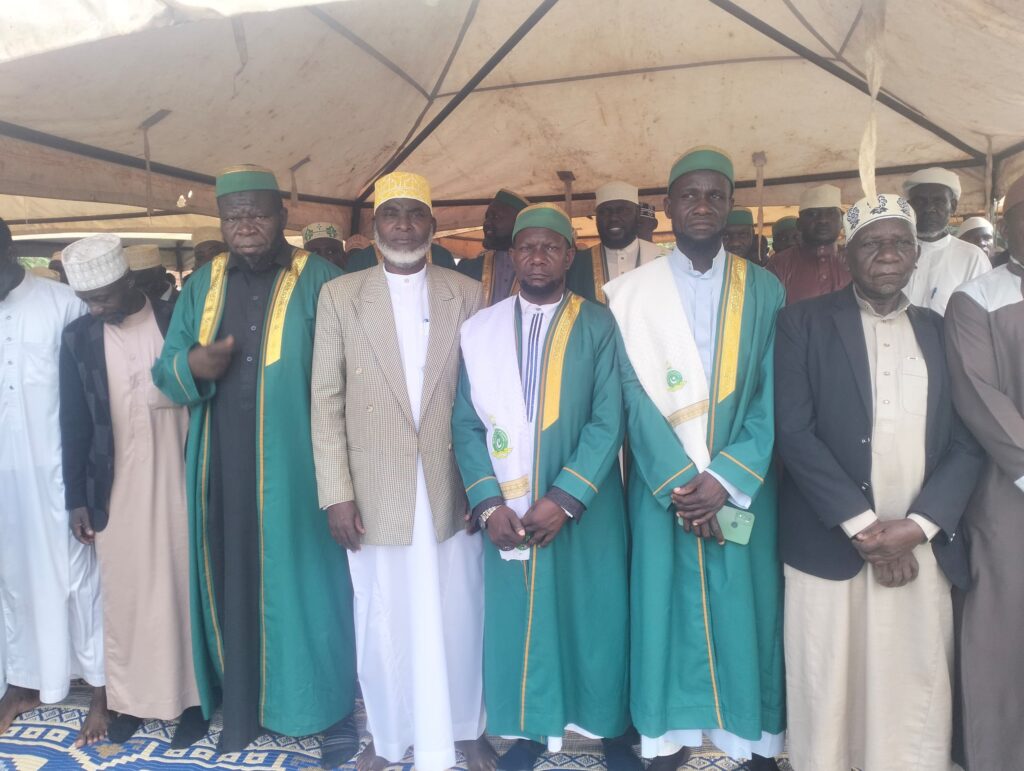
He further clarified that it is not blasphemy when a Muslim woman kneels while addressing her husband. Traditionally, this is a sign of respect, not idol worship, though some have misinterpreted it. He compared it to Arab customs of greeting superiors by pecking foreheads, cheeks, or the back of palms. As four family members laid a green cloth over the casket, mourners expressed their gratitude for the Mufti’s guidance. Lastly, thanked the late Sheikh Ali Bakari’s family for being instrumental in the propagation of Islam. He urged the rest of Muslims to emulate them and teach their children Islamic theology as in preparation to replace the elder sheikhs when they pass on.
Before the Mufti spoke, Sheikh Muhammad Ali Waiswa represented the bereaved family. He recounted the close relationship he had with the deceased, noting that when he acquired a scholarship to study Islamic theology in Saudi Arabia in 1969, and that it him (Sheikh Waiswa) who lobbied for the late Sheikh a scholarship later, joined him at Madina Islamic University. Upon completing their studies, both dedicated their lives to teaching the Islamic faith.
The late Sheikh served as a teacher for decades at Nahadha Islamic Institute, a school founded by his elder brother, Sheikh Ali Bakari, in Bukakaire, Namalemba, Bugweri District.