By Johannah Nantongo
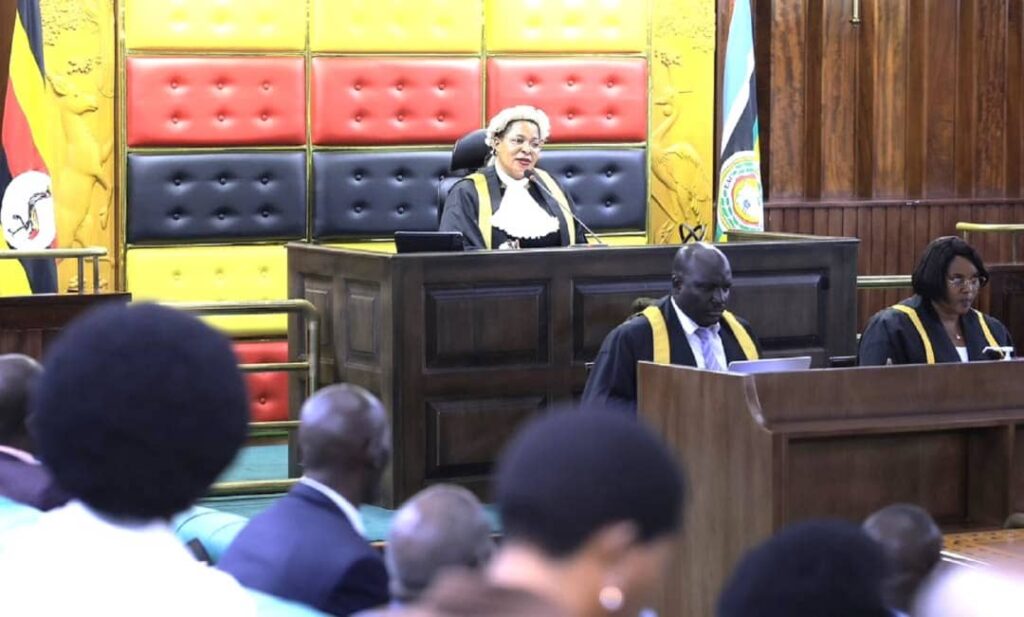
Uganda’s creative industry received a major boost after Parliament approved the Copyright and Neighbouring Rights (Amendment) Bill, 2025 during a sitting on Tuesday, 17 March 2026. The decision sparked celebrations among artists, musicians, and authors who had long awaited stronger legal protection and fair compensation for their work.
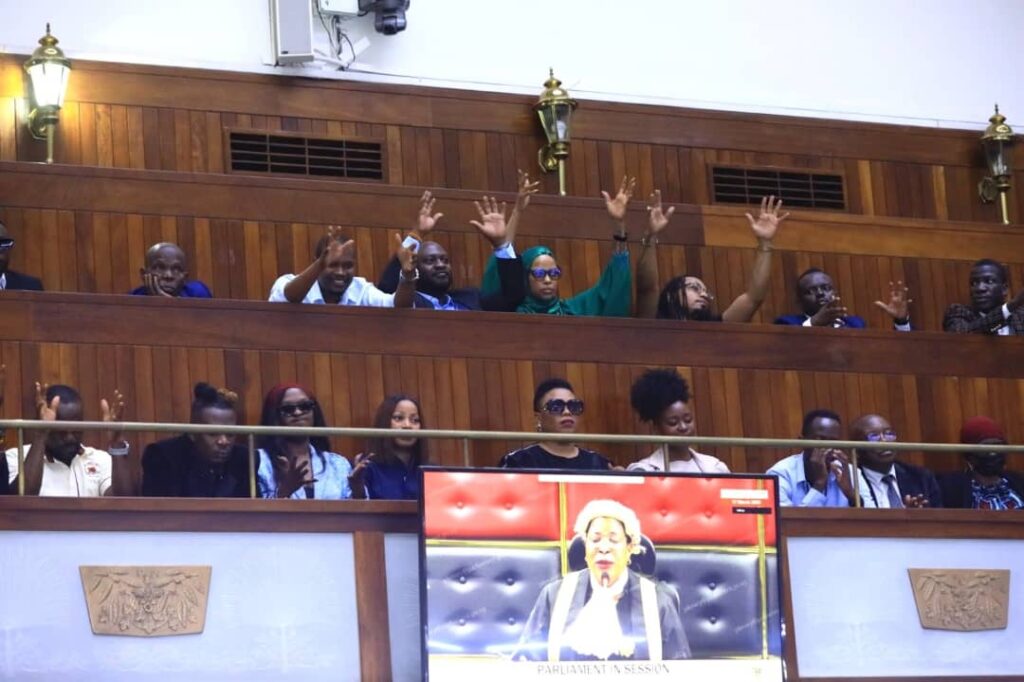
The session, chaired by Anita Among, saw overwhelming support for reforms aimed at improving how creatives earn from their intellectual property. Many artists followed proceedings from the public gallery, erupting into jubilation upon hearing the Bill had passed, while others gathered outside Parliament, closely monitoring updates.
A key amendment, introduced by David Kabanda, grants the Minister for Justice and Constitutional Affairs powers to regulate how royalties and other payments are collected and distributed. This will be done in consultation with the Uganda Registration Services Bureau to ensure transparency and efficiency.
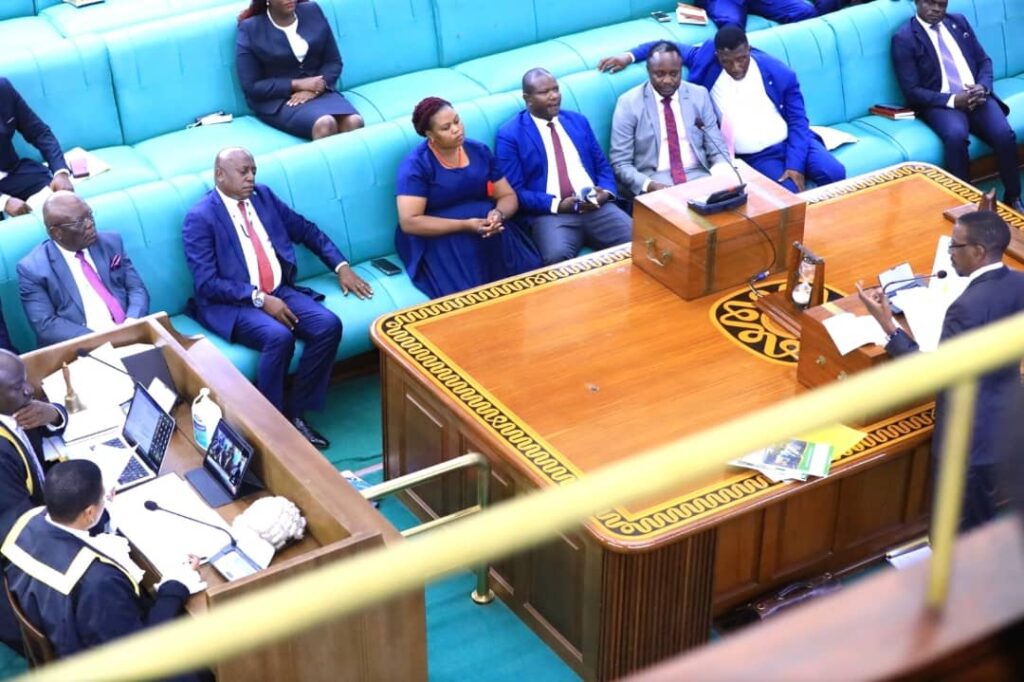
The law provides that performers and producers must receive equitable remuneration whenever their music or audiovisual content is used for commercial advertising, broadcasting, or public performances. Payments will be processed through systems established under the National Payment Systems Act, while the Registrar will monitor usage and report regularly to the minister.
Additionally, collecting societies have been given expanded authority to gather and distribute royalties on behalf of creators, a move expected to streamline payments and reduce exploitation.
The Bill also tightens enforcement. Individuals who use copyrighted material without authorization risk penalties of up to 10 years in prison, fines of up to Shs50 million, or both. Those dealing in equipment intended for copyright infringement could face up to seven years in jail or fines of up to Shs40 million.
Attorney General Kiryowa Kiwanuka emphasized the importance of registration, noting that creators must formally register their works to fully benefit from legal protections, including the ability to take down infringing content.
Another notable feature is the introduction of “orphan works”—copyrighted materials whose owners cannot be identified. The law allows licensed use of such works under strict conditions, with provisions ensuring rights revert to the original owner if they are later identified.
The legislation also extends protection to literary works, translations, adaptations, and expressions of folklore, aligning Uganda’s framework with international standards such as the Berne Convention.
However, lawmakers acknowledged gaps in addressing emerging technologies. Stephen Baka Mugabi noted that the law does not yet fully cover content generated using artificial intelligence, recommending future reforms to address this evolving area.
Originally introduced by Hillary Kiyaga as a Private Member’s Bill, it was later adopted by the government. Justice Minister Norbert Mao moved the motion for its second reading, while ICT Minister Chris Baryomunsi presented it for the final reading.
The Bill now awaits presidential assent before it becomes law, marking a significant step toward fairer compensation and stronger protection for Uganda’s creative sector.
