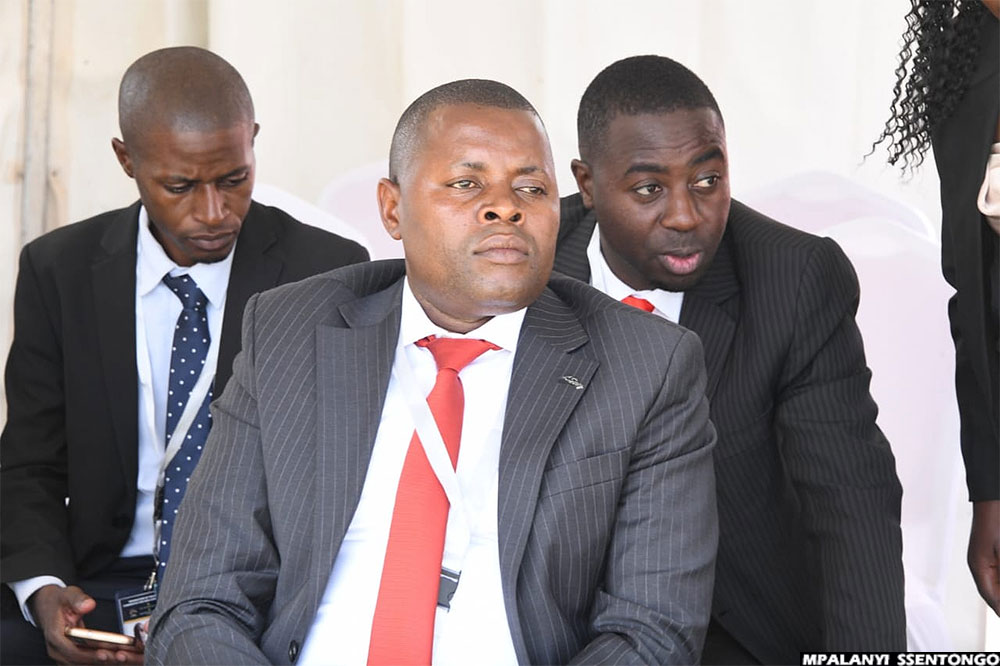
KAMPALA. Peasants Party presidential candidate Robert Kasibante has filed a petition in the Supreme Court seeking to overturn President Museveni’s re-election, citing extensive electoral malpractice, violence, and breaches of the law that he claims substantially affected the outcome of last Thursday presidential and parliamentary polls .
Kasibante, who finished sixth in the election, lodged the petition under Article 104 of the Constitution and Section 61 of the Presidential Elections Act, challenging both the conduct of the election and the declaration of Museveni as the winner.
In his more than 1,000-page petition, Kasibante lists President Museveni, the Electoral Commission (EC), and the Attorney General as respondents.
He argues that the election was neither free nor fair and that it violated constitutional and statutory requirements.
According to results announced by the EC on January 17, Museveni received 7,946,772 votes, while Kasibante garnered 33,440 votes.
Other contenders included Robert Kyagulanyi (NUP), Nathan Nandala Mafabi (FDC), and Gen. Gregory Mugisha Muntu (ANT).
A key allegation in the petition concerns the failure to gazette 15,256 polling stations before polling day. Kasibante claims these stations, representing nearly 30 percent of the total, were nevertheless used for voting, counting, and tallying, denying candidates and their agents the opportunity to deploy personnel and monitor the process effectively.
The petition also highlights widespread violence and intimidation during the campaign period, particularly targeting opposition candidates.
Kasibante alleges that he and other contenders faced harassment, teargas, and physical assaults by security personnel.
He cites an incident on November 6, 2025, in Namisindwa District where his campaign activities were allegedly disrupted by the Uganda Police Force and the Special Forces Command.
Similar incidents, he says, affected Robert Kyagulanyi, Nathan Nandala Mafabi, and Mubarak Munyagwa in other parts of the country.
Kasibante attributes responsibility to President Museveni as Commander-in-Chief, accusing the armed forces of partisan conduct.
He alleges that security agencies interfered with opposition rallies, issued unlawful directives to voters, and actively participated in the electoral process in favour of the incumbent.
The petition also raises concerns over the use of Biometric Voter Verification (BVV) machines, arguing that the devices were deployed without a clear legal framework, prone to malfunction, and not independently tested or audited by candidates.
Frequent failures, Kasibante claims, forced election officials to revert to manual verification, resulting in delays and irregularities.
Additional complaints relate to the counting, tallying, and transmission of results, citing altered declaration forms, delayed transmission, discrepancies between polling station and district tallies, restricted access to tallying centres, and the premature announcement of results.
Kasibante further accuses President Museveni and his agents of voter bribery and illegal inducements, alleging the distribution of money and gifts to voters during the campaign.
As remedies, Kasibante asks the Supreme Court to declare that Museveni was not duly elected, nullify the results, and order a fresh presidential election. \He also seeks a comprehensive audit of election returns and the BVV system, as well as costs of the petition.
The Supreme Court has not yet issued directions regarding the hearing of the case.