by Buwule Joseph Mary
A growing number of girls in rural schools across Uganda are dropping out of education, with lack of access to sanitary pads and poor menstrual hygiene management emerging as critical contributing factors. What should be a natural biological process has instead become a barrier to education, dignity, and opportunity for thousands of young girls.
In many communities, menstruation remains a deeply sensitive and stigmatized issue. Cultural silence and misinformation leave girls without the knowledge, support, or resources they need to manage their periods safely. For many, the onset of menstruation marks the beginning of interrupted education, as they are forced to miss several days of school each month.
Teachers in rural schools report that absenteeism among girls spikes during menstrual periods. “Many girls choose to stay home because they fear embarrassment or simply lack the materials they need,” says a primary school teacher in a remote district. “Over time, these absences accumulate, and eventually some girls drop out altogether.”
The situation is especially dire in hard-to-reach areas, where access to affordable sanitary products is limited. In the absence of proper materials, some girls resort to using unsafe alternatives such as old cloth, leaves, or even soil. These methods not only cause discomfort but also expose them to infections, further affecting their health and ability to concentrate in class.
The consequences extend far beyond the classroom. Girls who drop out of school face a heightened risk of early marriage and teenage pregnancy, effectively cutting short their dreams and reinforcing cycles of poverty within their communities.
Health experts emphasize that menstrual hygiene management is not only a health concern but also a matter of education and human rights. They argue that ensuring access to affordable sanitary pads, clean water, private sanitation facilities, and accurate information can significantly improve school attendance and retention among girls.
It is against this backdrop that targeted interventions are emerging to address the crisis.
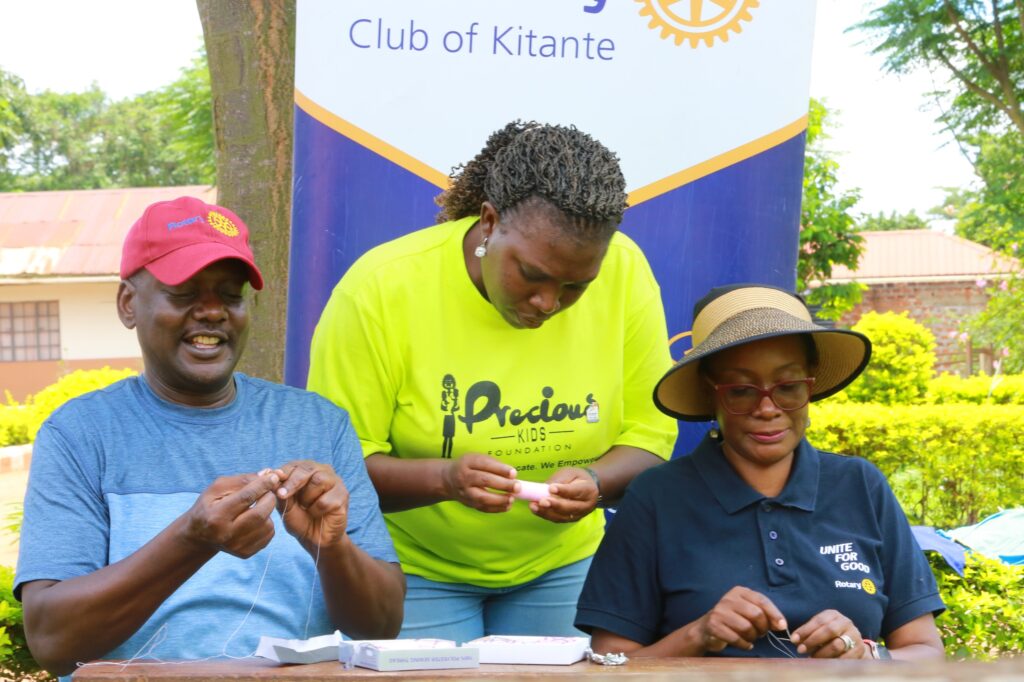
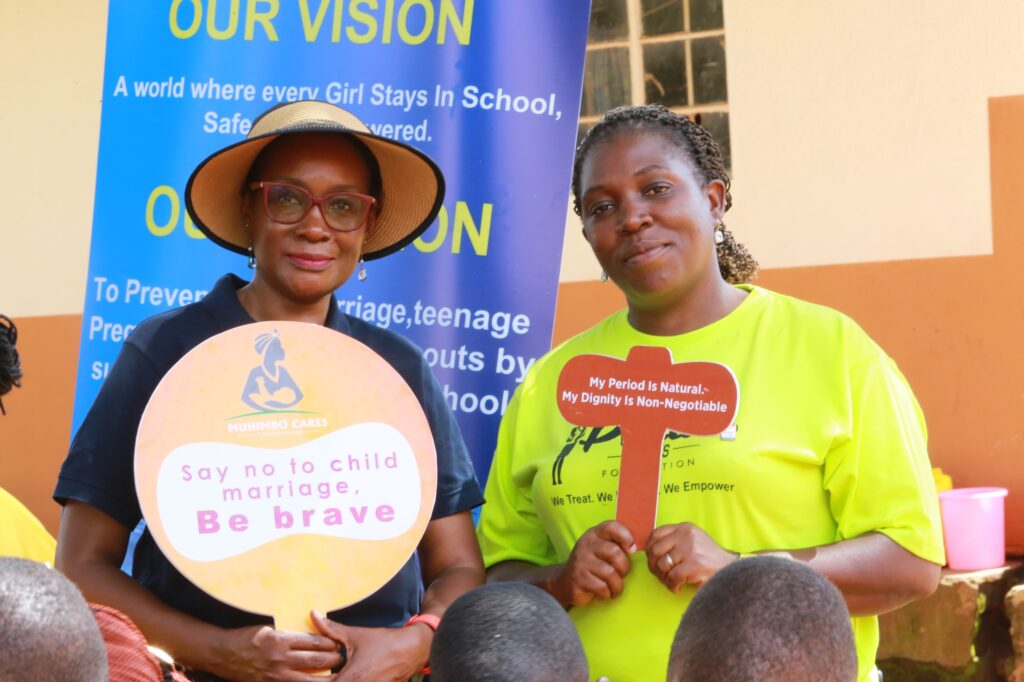
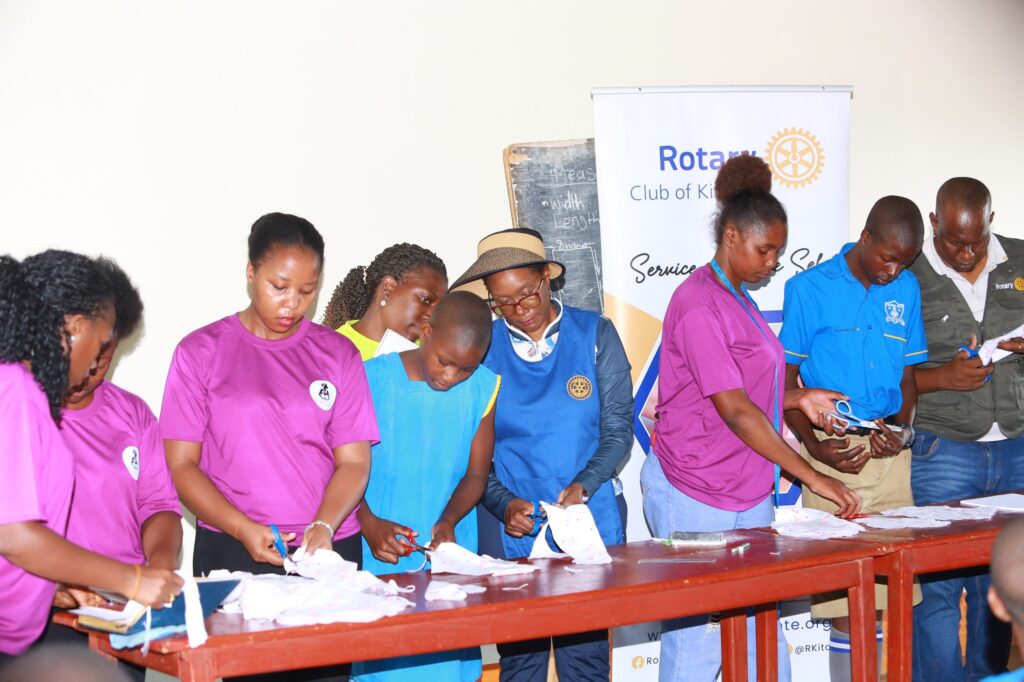
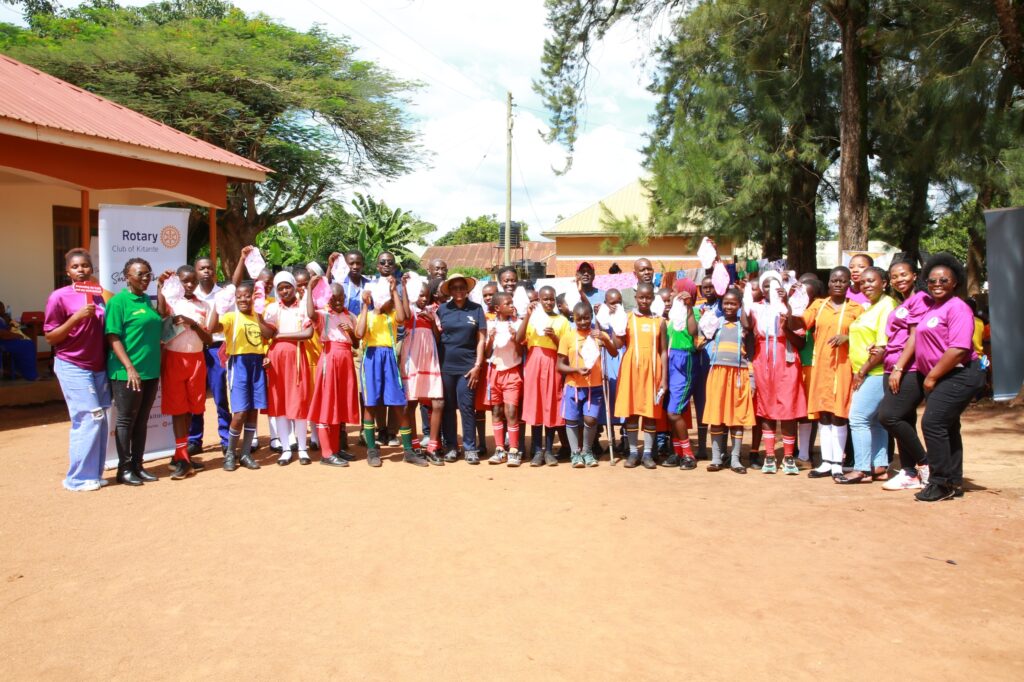
In Kayunga District, a transformative initiative led by the Rotary Club of Kitante, in partnership with Muhimbo Care Foundation and Precious Kids Foundation, is offering a practical solution. With funding support from Chandler Horizon Rotary Club in the United States, more than 200 schoolgirls, community women, and teachers have been trained to make reusable sanitary pads.
The training, held at Kayunga Girls School, brought together participants from institutions including Lion of Judah High School, Bemco Nakwero, Bugerere High School, and Connect Africa Vocational Institute. The sessions combined menstrual health education, stigma reduction, and hands-on skills development in producing reusable sanitary pads. Notably, boys were also included in the training to promote understanding and community support.
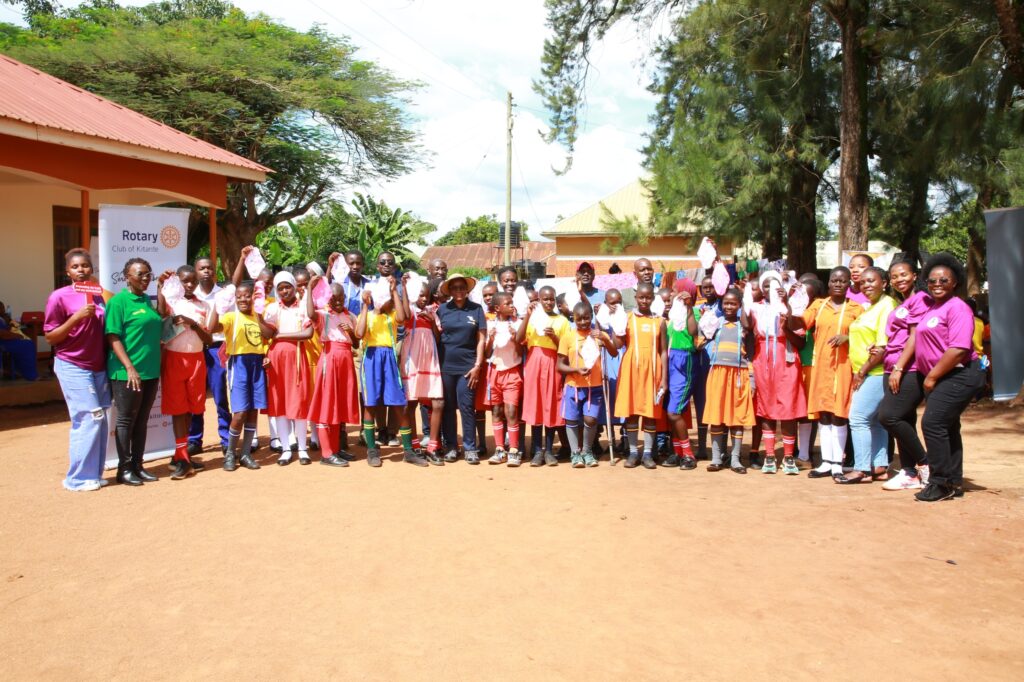
Maximilia Byenkya, President of the Rotary Club of Kitante, says the initiative is designed not only to keep girls in school but also to empower women economically.
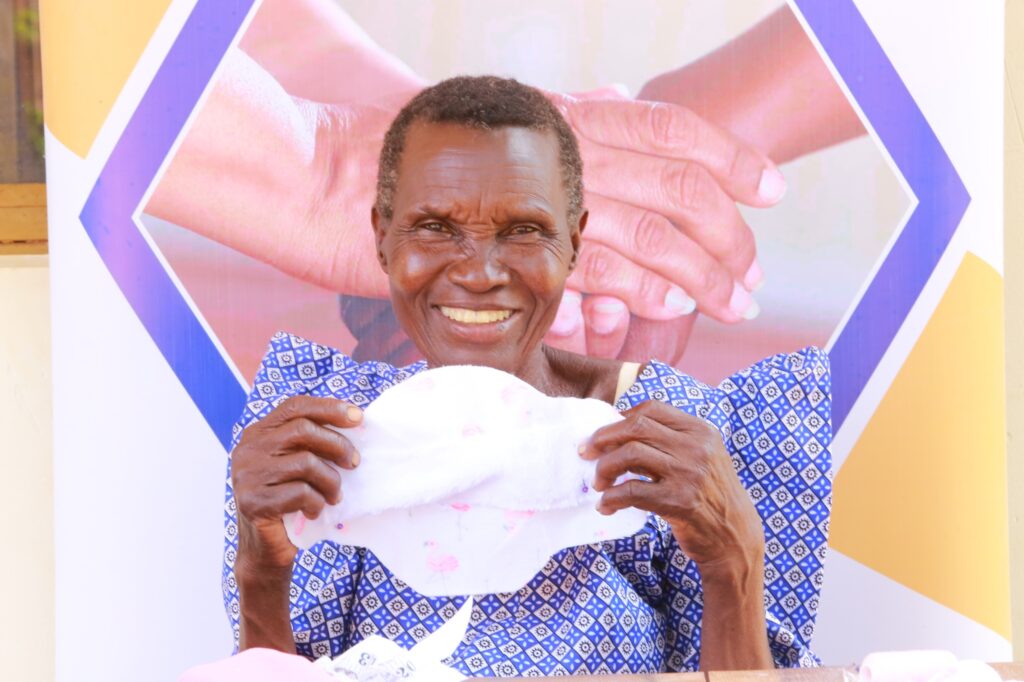
“We are training adolescent girls and women to make reusable sanitary pads because menstruation can be a very challenging experience, especially in communities with limited financial resources,” she explains. “Reusable pads can last up to two years if well maintained, making them both cost-effective and environmentally friendly.”
She highlights that many girls face temptation to engage in risky behavior due to lack of basic needs. “If parents are not supportive, some girls may be lured by men who promise money for sanitary pads. This can lead to early pregnancies and school dropout. Parents must step in and support their daughters during adolescence.”
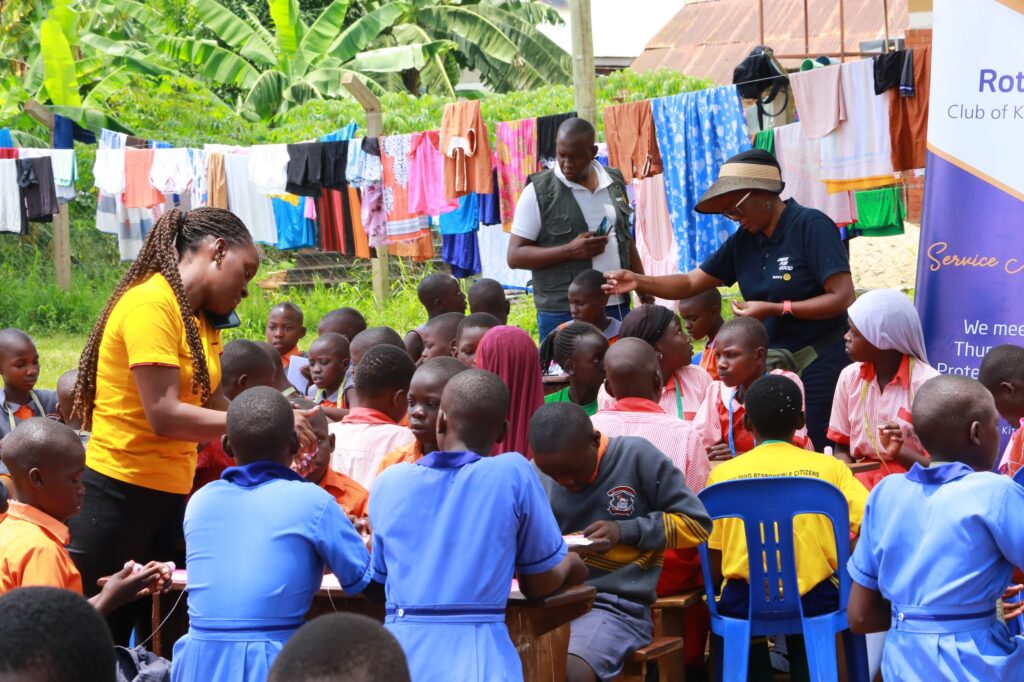
Byenkya also calls on government to support organizations producing reusable sanitary pads and provide materials to communities. She emphasizes sustainability, noting that future training sessions will include advanced skills such as machine sewing, enabling participants to produce pads at scale for sale and income generation.
The involvement of men in menstrual hygiene advocacy is also gaining attention. David Birungi, a trainer in menstrual health and member of the Rotary Club of Kitante, underscores the broader societal impact.
“Menstrual health is a community issue,” he says. “If a girl misses up to 21 days of school per term due to lack of sanitary products, her performance declines, and she may drop out. This affects the entire community, including men, because the social and economic burden eventually falls on everyone.”
Birungi adds that raising awareness within families and schools is essential to ensuring that girls stay in school and achieve their potential.
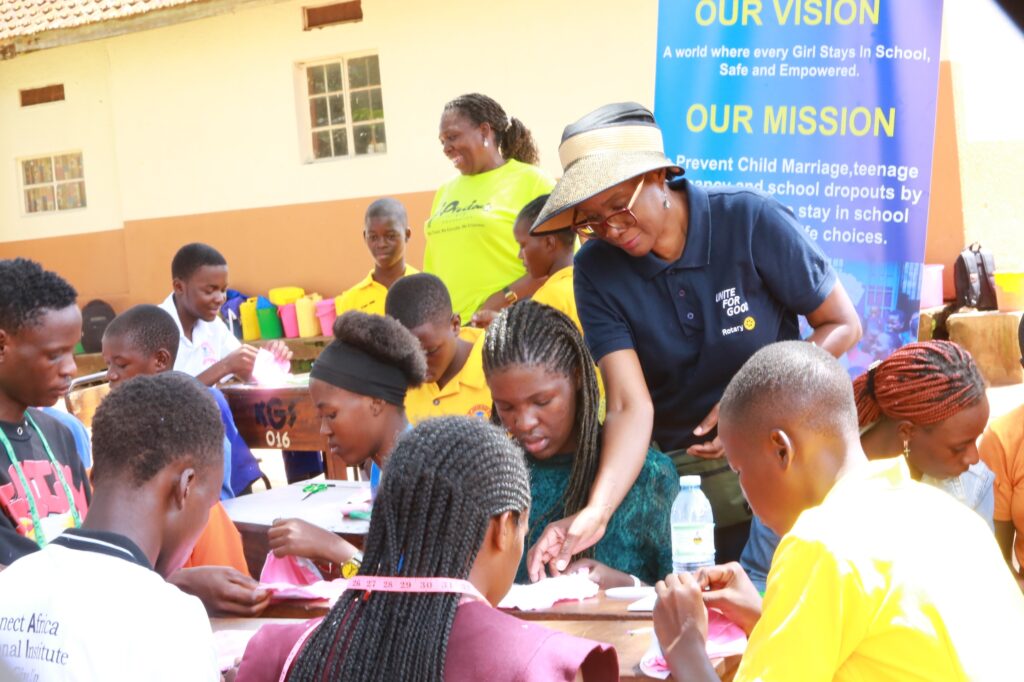
Komuhimbo Mugisa, founder of Muhimbo Care Foundation, paints a stark picture of the realities faced by many families. She explains that even the cost of a single packet of sanitary pads is beyond reach for some households.
“A mother will tell you she would rather buy food than sanitary pads,” Mugisa says. “Some girls do not even have basic items like underwear, clean water, or soap. So while we encourage hygiene, the resources are simply not there.”
Her organization is focusing on practical, low-cost solutions by teaching girls to make reusable pads using locally available materials. “We show them how to wash, dry, and reuse these pads safely. It’s about giving them a sustainable option that they can manage themselves.”
Despite ongoing efforts by government and development partners to distribute sanitary pads and conduct awareness campaigns, stakeholders agree that more sustained and widespread interventions are needed. There is also a growing call for open dialogue within families to break the stigma surrounding menstruation.
Parents, educators, and community leaders are being urged to support girls during this critical stage of development. By fostering open conversations and providing the necessary resources, communities can help restore confidence and dignity among young girls.
As Uganda continues to push for inclusive education, addressing menstrual hygiene challenges remains a crucial step toward ensuring that no girl is left behind. Empowering girls with knowledge, resources, and support is not just an investment in education—it is an investment in the nation’s future.
