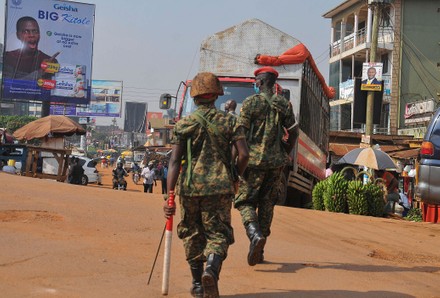
KAMPALA.The Uganda Peoples Defense Forces (UPDF) has started foot patrol soldiers and heavy armoured vehicles in Kampala City and major regional cities ahead the high-stake Thursday General Election .
According to Acting Director of Defence Public Information Col Chris Magezi, this unusual joint deployment including police is all aimed at security the country before ,during and after the elections .
“UPDF patrols in Kampala have commenced today. No cause for alarm,” Magezi said, adding: “However, we do not take threats of violence during the election period by some political actors and their supporters lightly.”
After daybreak, several war-like land combat and transport vehicles were seen manoeuvring through Kampala’s known flashpoints and patrolling major arterial highways on Sunday.
Different from what has been happening in the past weeks , heavily armed police officers are now taking up positions at major road junctions in Kampala and it surroundings .
According to Col Magezi, security agencies would ensure public safety and protect property, warning that “cases of criminality or threats to public order will be dealt with promptly and in compliance with the laws of Uganda.”
Under the Ugandan law, the UPDF is primarily tasked with defending the country against external threats, while police is typically responsible for domestic law enforcement and maintaining public order.
The use of the military for election security is considered exceptional and usually requires special orders or close coordination with police.
The Sunday deployment comes amid heightened political tension as President Museveni, 81, one of the world’s longest-serving leaders, seeks to extend his rule toward a half-century in what will be his eighth presidential contest.
‘120 bullets’
Amongst the eight presidential candidates, Museveni’s main challenger is widely seen to be opposition leader Robert Kyagulanyi, popularly known as Bobi Wine. Other presidential candidates in the race include Joseph Mabirizi, Mubarak Munyagwa, Frank Bulira, Mugisha Muntu, Nandala Mafabi, and Robert Kasibante.
As the final campaign week begins on Monday, Museveni has adopted a firmer tone in recent days.
Speaking during his final rallies late last week, he urged Ugandans to vote but warned against unrest.
“All of you should go and vote. No one can destabilize Uganda. Anyone who tries will regret,” Museveni said.
The veteran president had earlier drawn criticism after December remarks suggesting soldiers were equipped with “120 bullets” each, comments that the opposition NUP party said “reinforced fears of a hard security response to dissent.”
Security deployments ahead of elections are not new in Uganda, but analysts and international election observers have previously warned that the scale and visibility of combat-ready units risk discouraging voter participation by blurring the line between public order enforcement and intimidation.
Museveni, who came to power in 1986 after a five-year guerrilla war sparked by dissatisfaction with the 1980 polls, has seen at least three of his election victories unsuccessfully challenged in court.
The January 15 vote will be held at 50,739 polling stations nationwide, with 21,681,491 registered voters, according to official figures.