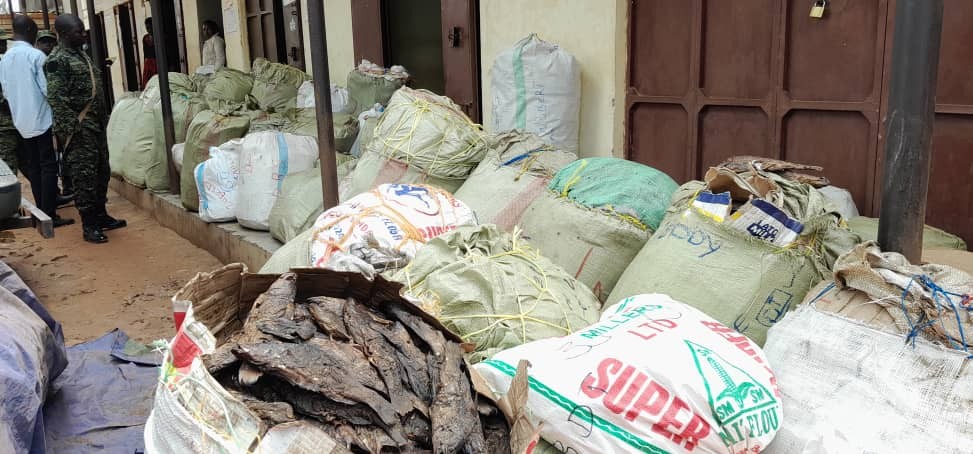
KAMPALA. Uganda’s fisheries sub sector is losing an estimated $1.4 billion (Shs5.5 trillion) annually due to widespread illegal activities, including smuggling of juvenile fish, trafficking of fish maws and the use of destructive “kokota” nets, industry players have said.
As a result, fish processing factories are operating at just 22 percent capacity, while nearly 98,000 tonnes of fish are estimated to cross Uganda’s borders untaxed each year, severely undermining the country’s fisheries sustainability and export potential.
William Tibyasa, the chief executive officer Uganda Fish Processors and Exporters Association (UFPEA), revealed the figures during a high-level breakfast meeting on export-led promotion for Uganda’s fish industry held in Kampala.
“The Ugandan fish sector is bleeding $1.4 billion (Shs5.5 trillion) annually to illegalities. Factories are underutilised, and untaxed fish continue to slip across borders. We must secure this national treasure,” Tibyasa said.
Officials from the Ministry of Trade, Industry and Cooperatives reiterated government’s commitment to working with exporters and industry stakeholders to address the challenges and unlock new international markets.
Tibyasa recalled a period of improved sector management between 2017 and 2019, when fish stocks reportedly recovered by 30 percent, the number of processing factories increased from four to twelve, and exports grew significantly.
“Today, the story has reversed. The blueprint for success exists; what we need is to reactivate it with accountability and strict enforcement,” he said.
Industry officials noted that sustainability is central to unlocking the sector’s full potential, estimated at $2 billion (Shs7.8 trillion) annually. Key export markets in the European Union, United States and United Kingdom increasingly demand Marine Stewardship Council (MSC) certification and full traceability.
To remain competitive, they said, Uganda must halt juvenile fishing, formalise the supply chain and expand commercial aquaculture.
Currently, most fish processing plants are operating at below 50 percent capacity. In addition to high air freight costs, declining fish stocks and illegal fishing continue to drive the sector’s heavy losses.
Tibyasa warned that new European Union traceability regulations, which take effect on January 10, could further strain the industry if compliance gaps are not addressed.
He urged government support for digital tracking systems to ensure continued access to the EU market, which currently accounts for about 66 percent of Uganda’s fish exports.
Lynette Bagonza, Permanent Secretary at the Ministry of Trade, Industry and Cooperatives, said government is working to improve the business environment by addressing high air freight costs that undermine the sector’s competitiveness.
“Government seeks to learn from and collaborate with industry CEOs, experts and stakeholders to unlock the sector’s potential. Together, we can build a vibrant, competitive and inclusive fisheries industry,” Bagonza said.
She added that under the National Development Plan, government aims to increase fish production to 183,000 metric tonnes by 2028 through infrastructure development, regulatory reforms and promotion of sustainable practices.
Fish exports are Uganda’s third-largest foreign exchange earner, generating about $116 million (Shs452 billion) annually.
However, shipping chilled fish from Entebbe International Airport costs between $1.25 and $1.80 (Shs4,875–Shs7,020) per kilogram, compared to rates of less than $1 (Shs3,900) at Moi International Airport in Mombasa, Kenya.