By Joseph Kiggundu
The compensation process for individuals affected by the East African Crude Oil Pipeline (EACOP) project has reached 98 percent completion, according to the Director for Economic and National Content Monitoring at the Petroleum Authority of Uganda (PAU), Peninah Aheebwa.
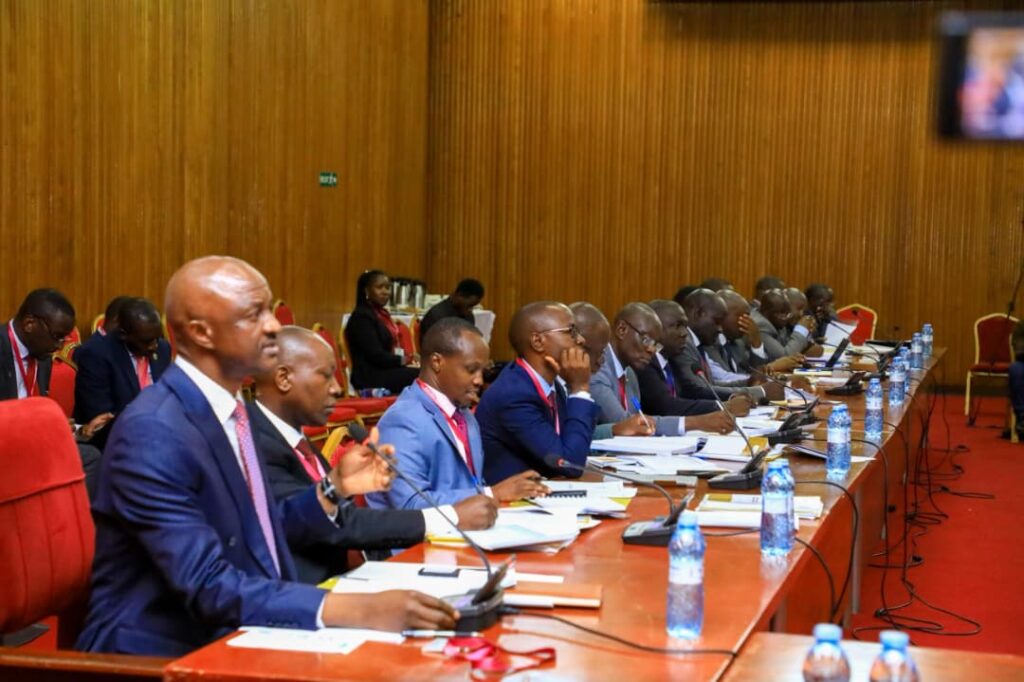
Aheebwa disclosed the progress while appearing before the Public Accounts Committee of the Parliament of Uganda on Wednesday, 11 March 2026. Her remarks came in response to concerns raised by Joseph Ssewungu, who said some residents had complained about delays in receiving compensation.
Ssewungu warned that unresolved compensation disputes could create future challenges for the country’s oil industry. He cited experiences in Nigeria, where vandalism in oil-producing regions has disrupted operations.
In response, Aheebwa stated that the compensation exercise was conducted in accordance with Uganda’s national regulations and international standards set by the International Finance Corporation (IFC), which guide environmental and social risk management in private-sector projects. She noted that lenders financing the pipeline closely monitor the process to ensure affected communities are treated fairly.
Aheebwa also revealed that Uganda is on track to achieve first oil production by the end of July 2026. The milestone marks the point at which a new oil field officially begins commercial production and exports its first shipment of crude.
She explained that drilling progress has already surpassed the minimum requirements for the initial production phase. Under the Tilenga Project, 170 wells were required for first oil, but 198 wells have already been drilled. Meanwhile, the Kingfisher Project needed 19 wells, and 21 have so far been completed.
Regarding construction progress, Aheebwa said the central processing facilities and feeder pipelines for the Tilenga and Kingfisher projects are 67 percent and 77 percent complete respectively, while the East African Crude Oil Pipeline has reached 81 percent completion.
To accelerate work and meet the July target, field operations at Tilenga are being expanded from two to three eight-hour shifts per day.
During the meeting, Basil Bataringaya raised concerns about delays in auditing recoverable costs owed to oil companies operating in the sector. He questioned why an audit referenced in 2021 had not yet been updated despite the substantial investments involved.
Aheebwa responded that approximately US$12.3 billion has been invested in Uganda’s petroleum sector so far, although not all expenditures qualify as recoverable costs.
She explained that investments in the EACOP pipeline will be recouped through transportation tariffs. About US$3.5 billion has already been spent on the pipeline and the cost will be recovered through a tariff of US$12.77 per barrel transported.
A report by the Office of the Auditor General of Uganda in 2021 indicated that oil companies involved in the projects—including TotalEnergies EP Uganda, CNOOC Uganda Limited, Uganda National Oil Company, and China Oilfield Services Limited Uganda—had claimed US$3.4 billion in recoverable costs.
Of that amount, US$2.9 billion (87 percent) was approved for recovery, while US$439 million (13 percent) was rejected.
Aheebwa noted that the broader investment figure of US$12.3 billion, recorded up to 2025, includes additional spending that has not yet been covered in the available audit reports
