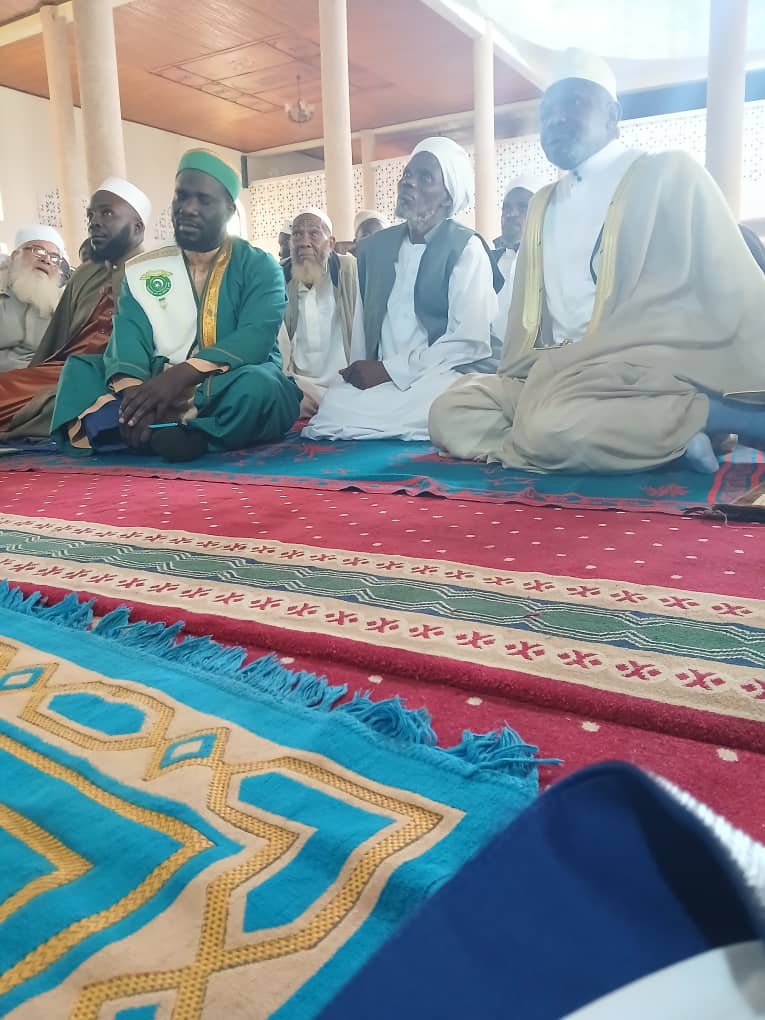
KAMPALA. His Eminence Sheikh Muhammad Ali Waiswa, the Deputy Mufti of Uganda, has advised Muslim clerics—Sheikhs—not to rush or single-handedly issue fatwahs (Islamic scholarly rulings) on emerging matters that may cause confusion among the Muslim faithful. He stressed that the responsibility of issuing such rulings lies with established Islamic authorities in each country, and that fatwahs should only emerge from consensus reached by highly trained Islamic theologians who deliberate on issues requiring spiritual guidance for the Muslim community.
This fatherly counsel was part of Sheikh Waiswa’s moving speech delivered on behalf of His Eminence Dr. Sheikh Shaban Ramadhan Mubajje, the Mufti of Uganda, who is currently on official duties in Morocco. Sheikh Waiswa delivered the remarks at the opening of the three-day Ijitma religious gathering organised by the Jamaat Tabligh at Makki Mosque, Bweya–Kajjansi. The event, aimed at deepening Islamic spirituality among the Muslim faithful, is taking place at Masjid Atiq in Mukono Town Council, Friday 4th, 2025.
Sheikh Waiswa hailed the group for being well organised, a quality that has earned them recognition from authorities and governments worldwide. He noted that they had been screened and found to have purely religious intentions, free from materialistic or politically inclined agendas, and focused solely on propagating Islam. “So continue and strive to instruct your children with religious knowledge without abandoning the secular branch of knowledge,” he advised. He additionally implored them to remain united despite pressing challenges while standing firmly behind the mainstream UMSC leadership.
Earlier, several high-profile personalities addressed the large gathering of Muslim clerics. Sheikh Imran Abdunoor Ssali, the UMSC Secretary for Religious Affairs, commended the group for exhibiting discipline and humility while sharing and propagating the divine words of Allah among Muslims and even people of other faiths. Sheikh Abbas Zubair Ssenkuba, the host Kadhi, in his welcoming remarks, said it was the first time their mosque was hosting such a huge congregation. He praised the group for their discipline and humility and urged them to train and empower their dai—Islamic propagators—with vital knowledge to use in their communities.
In his address, Sheikh Shaban Mbogo, the Amir, who spoke on behalf of the convenors, explained that they organise such gatherings across the country as part of their religious responsibility to convey the divine message of Islam to all people without discrimination. “Indeed, it is a responsibility of every Muslim believer to do dawah—inviting people to Islam—while reminding those, especially Muslim brethren who might have gone astray, to return to the righteous path,” Sheikh Mbogo said. He further expressed profound gratitude to the UMSC for the continuous support they receive, especially in providing recommendations and covering letters for government clearance, which has enabled them to carry out their religious activities without hindrance. They pledged to remain loyal to the UMSC as the governing body of all Muslims in Uganda.
Among the attendees were prominent Muslim personalities, including Associate Prof. Abbas Kiyimba and area Muslim leaders led by their district chairperson.
[12/6, 6:07 PM] Al Mahad: UCC warns Ugandans against using VPNs to access banned Facebook
KAMPALA.The Uganda Communications Commission (UCC) has warned Ugandans against violating the ban on Facebook by using Virtual Private Networks (VPNs), warning that they could face legal consequences.
The warning comes amid continued efforts by the public to access the social media platform, which has been blocked in Uganda since 2021.
Speaking at a joint press briefing organised by the Uganda Human Rights Commission (UHRC) this week, Dr Abudu Waiswa, UCC’s director of legal affairs, said VPN users are not beyond the reach of the law.
“We know you are using VPN to access Facebook, but that does not mean you are immune to legal action. We see everything, and when the time comes we can identify who posted what,” he said.
Waiswa encouraged the public to use legally accessible communication platforms responsibly, especially amid rising concerns over misinformation.
“At UCC, we encourage the public to use all communication platforms. But we keep reminding all users and consumers of communication services that you have a duty to ensure that whatever information you are airing is factual, fair, and for peace,” he added.
Facebook was blocked in Uganda ahead of the 2021 general elections, following the removal of at least 146 accounts linked to pro-government influencers, accused of “coordinated inauthentic behaviour.”
President Museveni later criticised Facebook’s actions as “discriminatory and unfair” and directed the ban, asserting that the platform had overstepped by interfering in Uganda’s internal affairs.
Despite public and stakeholder calls to restore the service, there is still no clarity on when, or if, Facebook will be unblocked.