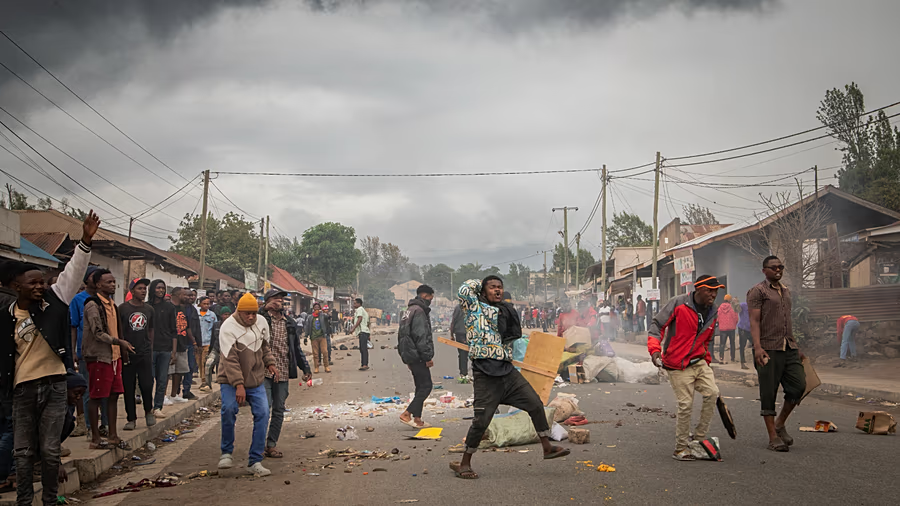
Tanzania’s government has declared that planned Independence Day protests will not be allowed to proceed, warning that any attempt to gather on December 9 will be treated as an effort to destabilise the state. The move comes amid ongoing tensions following the disputed October elections and a sweeping crackdown on opposition activity.
Speaking in Dar es Salaam, Home Affairs Minister George Simbachawene said the demonstrations were unlawful because no formal request or organiser had been registered with authorities.
“Those protests are not permitted and are unlawful that is not a protest, that is a coup,” he said, urging residents to avoid the streets on the national holiday.
Security forces intensified patrols across major cities, with reports of armoured vehicles, police checkpoints and heightened military presence in Dar es Salaam, Dodoma, Arusha and Mwanza. Several activists and opposition supporters were arrested in the days leading up to the holiday, with police accusing them of online offences and mobilising people for protests.
The country has been on edge since unrest broke out after the October 29 election, in which the ruling party secured a contested victory. Rights organisations say security forces responded with excessive force during earlier demonstrations. A statement from Human Rights Watch warned that the government was using fear to suppress dissent.
“The Tanzanian government is building on the alarming climate of fear that prevailed prior to the elections to deter further protests,” said HRW senior Africa researcher Oryem Nyeko.
Authorities have also cancelled official Independence Day celebrations saying national resources should instead go toward repairing infrastructure damaged during the post-election violence.
International observers have urged the government to respect its obligations under international law, including the rights to peaceful assembly and freedom of expression. The UN Human Rights Office emphasised that security responses must be proportionate and necessary, especially during periods of political tension.
As the country marks 64 years of independence, the streets remain unusually quiet, a sign of how deep the political rift has grown. With the government doubling down on its position and activists vowing to continue pushing for accountability, Tanzania faces a pivotal moment as it navigates public anger, security concerns and growing international scrutiny.