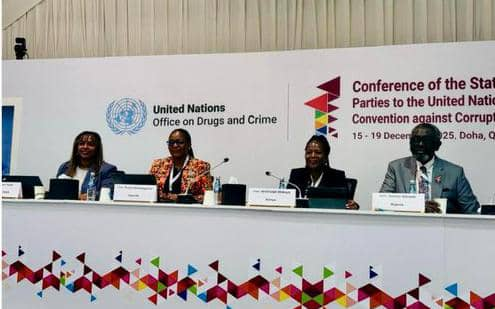
Uganda has reaffirmed its commitment to fighting corruption by placing judicial integrity at the centre of discussions during a high level United Nations conference, arguing that ethical, transparent courts are critical to defeating corruption.
Addressing delegates at the Conference of States Parties to the United Nations Convention against Corruption (UNCAC), Uganda highlighted steps it has taken to strengthen accountability within the judiciary, stressing that corruption cannot be effectively tackled without a justice system that is trusted by citizens and insulated from undue influence.
Uganda’s representatives noted that an independent and ethical judiciary plays a decisive role in enforcing anti-corruption laws resolving disputes fairly and ensuring that offenders are held accountable. They pointed to the country’s commitment to Article 11 of the UNCAC, which calls on states to promote integrity, accountability and transparency in judicial and prosecutorial systems.
Officials outlined measures Uganda has put in place to safeguard judicial conduct including enforcement of a national Code of Judicial Conduct, strengthened oversight mechanisms within the Judiciary and disciplinary processes aimed at addressing misconduct among judicial officers.
Beyond rules and oversight, Uganda emphasised the importance of capacity building to maintain professional standards in the justice sector. Continuous training of judges and court staff was highlighted to reinforce ethical decision making and adapt to emerging corruption risks.
The country also showcased its growing use of digital justice tools to improve transparency and efficiency. By digitising case management and tracking court performance, officials said opportunities for manipulation and delay are reduced while public confidence in the justice system is strengthened.
Uganda’s presentation drew attention to how technology can limit discretion and close gaps that often enable corrupt practices. Digital case tracking, electronic records and performance monitoring were described as practical tools that make judicial processes more open and accountable.
However, delegates were cautioned that technology must be paired with strong cybersecurity safeguards to protect sensitive judicial data and maintain public trust.
Led by senior government officials responsible for ethics and integrity, Uganda’s participation at the conference underscored its intention to remain actively engaged in global anti-corruption efforts. Officials said sharing experiences and learning from other countries is vital to strengthening national systems.