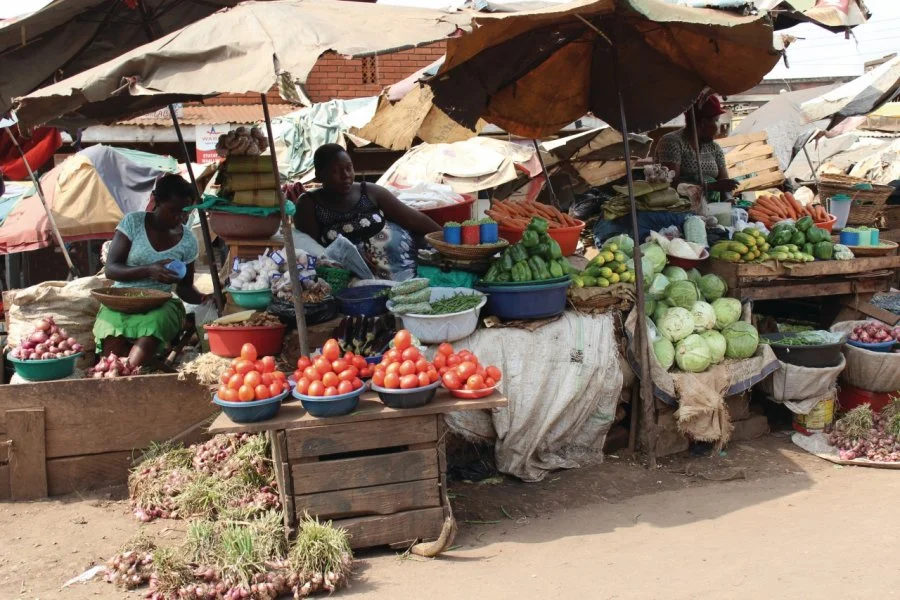
KAMPALA. At least nine in 10 Ugandan workers are employed in the informal sector, a new survey has revealed
This underscores the dominance of low-productivity and unregulated work in an economy struggling to generate stable jobs.
The Uganda Bureau of Statistics (UBOS) Labour Market Survey 2025 found that 87.6 percent of workers are in informal employment, rising to almost 90 percent when agriculture is included, reflecting the scale of dependence on subsistence and small-scale activities.
Out of 11.8 million employed Ugandans, more than 7.3 million work in informal establishments, the survey showed, with the majority concentrated in low-value sectors such as trade and agriculture.
“The objective of the survey was to provide insights into labour market dynamics and support employment-focused initiatives for inclusive economic growth,” UBOS Executive Director Chris Mukiza said.
Informal trade alone accounts for 53.1 percent of employment within informal establishments, making it the single largest source of jobs outside agriculture.
The findings highlight the limited shift of labour into higher-productivity sectors such as manufacturing, which remains a relatively small employer despite policy efforts to industrialise the economy.
The survey also shows that a large share of workers are engaged in vulnerable forms of employment, including own-use production, which accounts for 52.8 percent of total employment, reflecting a heavy reliance on subsistence activities.
Geographical disparities persist, with informal employment more deeply entrenched in rural areas, where access to formal jobs and structured enterprises remains limited.
Mukiza said the data should guide efforts to address structural challenges in the labour market.
“We urge all users, including policymakers and researchers, to utilise the information in this report to guide planning, policy formulation and evaluation of employment-focused initiatives,” he said.
Uganda’s working-age population stands at 26.4 million, but only a small fraction is employed in formal jobs, highlighting the scale of the challenge in transitioning workers into more stable and productive employment.
The report underscores the central role of the informal sector as both a safety net and a constraint on growth, absorbing the majority of workers while offering limited income security, productivity gains or access to social protection.