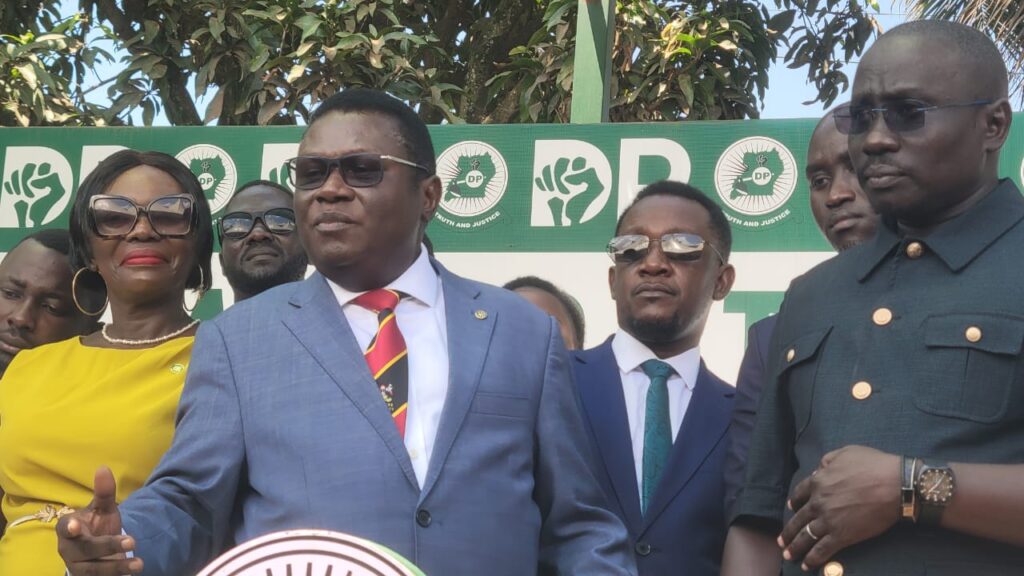
DP President General Norbert Mao has called for a comprehensive forensic audit into Uganda’s Parliament, warning that corruption allegations already in the public domain represent only “the tip of the iceberg” of a deeper system of nepotism, patronage, abuse of office and institutional decay allegedly entrenched during the tenure of former Speaker Anita Among.
Speaking to journalists at Parliament on May 26, Mao urged the newly elected parliamentary leadership to focus not only on repairing the Legislature’s battered public image but also on restoring institutional integrity, accountability and public trust.
“We are calling upon the new leadership of Parliament not just to focus on image management. The focus should be on the substance of what Parliament was established to do. Our message is simple: don’t just look good, be good,” Mao said.
The remarks come amid mounting public scrutiny over alleged financial impropriety, questionable procurement processes, and accusations of political patronage within Parliament, issues that have increasingly dominated Uganda’s governance discourse in recent years.
Mao argued that only an independent forensic audit and inquiry process can uncover the full scale of alleged wrongdoing, particularly in recruitment and procurement systems.
“Some of the things already in the public domain are merely the tip of the iceberg. Nepotism reached alarming levels. A patronage system was established where influential individuals allegedly secured jobs for their children and allies in exchange for political loyalty,” Mao said.
He alleged that ministers, judges and other powerful figures benefited from the system, leading to what he described as the intimidation and weakening of Parliament’s civil service structures.
“We have played the ostrich game for too long, burying our heads while Parliament collapses under the weight of institutional fear and compromised systems. Only a serious inquiry can establish who obtained jobs without merit or qualifications,” he added.
Mao, who also serves as MP for Laroo-Pece Division in Gulu City, proposed structural reforms to strengthen oversight within Parliament. Among the proposals is the appointment of a non-Member of Parliament to the Parliamentary Commission, the body responsible for Parliament’s administration and finances.
“We are asking: who watches the watchdogs? Parliament has demonstrated that it struggles to exercise oversight over itself. A hybrid commission with an independent non-MP member could improve accountability,” Mao argued.
The Democratic Party also called for greater citizen participation in parliamentary business, proposing annual public agenda-setting sessions where Ugandans directly identify key national issues requiring parliamentary debate and action.
Mao cited urban flooding in Kampala as an example of pressing public concerns Parliament should prioritise.
“If traders in Kampala want flooding debated, Parliament should respond and even establish ad hoc committees where necessary. Evidence-based debate cannot work if MPs are blocked from presenting findings after collecting evidence,” he said, referencing controversies surrounding investigations into the national carrier, Uganda Airlines.
Mao further claimed that the election of Jacob Oboth-Oboth as Speaker had already created what he described as “fresh air” within Parliament.
“There is now a remarkable feeling of openness and accessibility. Removing what is harmful is only the first step; the next step is building what is useful,” he said.
The calls for reform gained additional momentum after Winnie Byanyima, Executive Director of UNAIDS and former Constituent Assembly member, publicly demanded an independent inquiry into alleged corruption and impunity within Parliament.