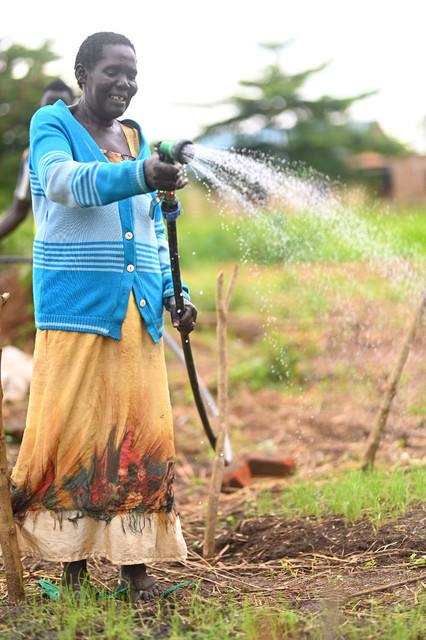
PARLIAMENT. The 12th Parliament will hold its fourth sitting of the First Meeting of the First Session on Wednesday, June 10, 2026, with lawmakers expected to consider a government request to borrow approximately Shs733.7 billion to finance Phase II of the Solar Powered Irrigation Systems Project.
According to the Order Paper, the House will debate a motion seeking authorization for government to borrow up to €168,976,354 (about Shs733.7 billion) from UK Export Finance (UKEF) and Citibank to support the expansion of solar-powered irrigation infrastructure across the country.
The sitting will commence at 10:00am with prayers, followed by the administration of oaths to new or returning members. The Speaker will then deliver a communication from the Chair before Parliament proceeds to the day’s business.
The loan request, tabled by the Minister of Finance, Planning and Economic Development, has been allocated 30 minutes for debate and resolution.
The proposed financing is intended to support the second phase of the Solar Powered Irrigation Systems Project, a key component of government’s efforts to reduce reliance on rain-fed agriculture, improve food security and mitigate the effects of climate change.
Phase I of the project focused on the installation of irrigation pumps and water distribution systems in selected areas. Phase II is expected to extend the programme to additional districts and farming communities, particularly those vulnerable to prolonged dry spells.
A Ministry of Finance official familiar with the project said solar irrigation had evolved from a pilot initiative into a central pillar of Uganda’s agricultural transformation strategy.
“Solar irrigation is no longer a pilot. It’s a national strategy. This financing from UKEF and Citibank will help us scale up so that farmers in water-stressed areas can grow crops throughout the year. That is how we protect the gains and move toward high middle-income status,” the official said.
Parliament is expected to scrutinise the loan’s terms and conditions, including interest rates, repayment schedules and implementation arrangements, before making a decision on whether to authorise the borrowing.
The debate comes just days after Uganda marked Heroes’ Day under the theme, “Protecting the Gains as We Make a Qualitative Leap into High Middle-Income Status.”
A former member of Parliament’s Committee on National Economy said legislators would be expected to thoroughly examine the proposal.
“We shall ask hard questions. What guarantees do farmers have that this equipment will be maintained? How will we ensure the money is not wasted? If the answers are convincing, we support anything that puts money in the pockets of our people,” he said.
An MP from an agricultural district welcomed the project but stressed the need for accountability.
“My constituents lose crops every dry season. If this solar irrigation reaches them, it will be real development, not just talk. But Parliament must ensure transparency in procurement and distribution,” the legislator said.
The sitting comes shortly after the swearing-in of the new Cabinet and a scaled-down Heroes’ Day commemoration at State House Entebbe, providing an early indication of how the 12th Parliament intends to approach public borrowing and major infrastructure investments.
The Order Paper contains no other substantive business, suggesting a largely single-issue sitting focused on the proposed loan.
A parliamentary clerk explained that after the preliminary proceedings, the Minister of Finance will move the motion before MPs debate and vote on it.
“If approved, government will be cleared to conclude the financing arrangements with UKEF and Citibank and proceed with implementation of Phase II of the project,” the clerk said.
The fourth sitting of the 12th Parliament is scheduled to begin at 10:00am on Wednesday, June 10, with all Members of Parliament expected to attend as the House considers a loan facility that could significantly expand Uganda’s irrigation capacity and agricultural productivity.