By Maria Mariam Namala
KAMPALA — Stanbic Bank has highlighted its growing contribution to financial inclusion in Uganda, revealing that more than UGX 362 billion has been extended through Savings and Credit Cooperative Organizations (SACCOs) and Village Savings and Loan Associations (VSLAs) since 2021, reaching millions of Ugandans across the country.
The announcement was made during the 28th Annual General Meeting of the Association of Microfinance Institutions of Uganda (AMFIU), which brought together stakeholders from the microfinance sector to discuss strategies for expanding access to financial services and strengthening community-based financial institutions.
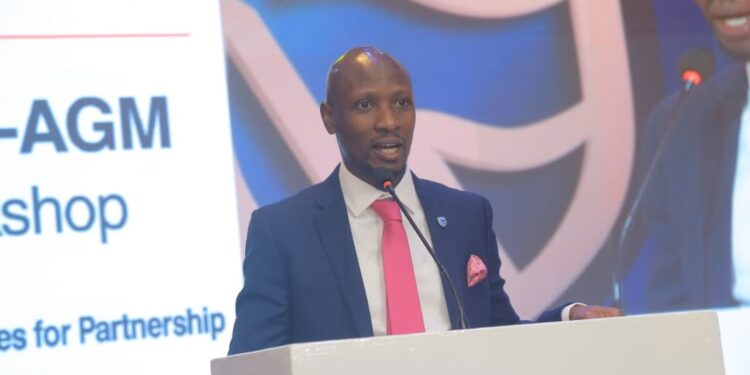
Speaking at the event, Stephen Segujja, Head of the Economic Enterprise Restart Fund at Stanbic Bank, said the bank’s efforts are driven by a commitment to empower women, youth, and farmers through increased access to affordable financial services.
“Financial inclusion is about creating opportunities for people to improve their livelihoods and build sustainable futures. It enables farmers to increase productivity, entrepreneurs to expand their businesses, and families to strengthen their economic resilience,” Segujja said.
He noted that Stanbic Bank’s partnership with AMFIU and its member institutions has significantly improved access to credit, particularly among underserved communities and smallholder farmers.
According to Segujja, nearly four million Ugandans have benefited from financing provided through SACCOs and VSLAs over the past four years, with approximately 780,000 members accessing credit to support agricultural and business activities.
The bank’s interventions are part of its Women, Youth and Farmers (WYF) agenda, which is backed by a UGX 1 trillion commitment aimed at promoting inclusive economic growth through financing, capacity building, and strategic partnerships.
Segujja explained that Stanbic has increased its support to SACCOs by providing affordable credit facilities tailored to community financial institutions. Agricultural SACCOs can access loans at an annual interest rate of 10 percent, while multipurpose SACCOs are eligible for financing at 12.5 percent.
“We understand the critical role SACCOs play in extending financial services to communities. By offering affordable financing, we are enabling these institutions to serve their members more effectively and support local economic development,” he said.
Eligible SACCOs can access financing of up to UGX 7 billion, creating opportunities for increased lending and investment in productive sectors of the economy.
The meeting also highlighted the growing importance of digital transformation within the microfinance sector. Segujja said Stanbic Bank is working with partners, including aBi Finance, to support SACCOs in adopting digital systems that enhance efficiency, accountability, and customer service.
He added that the bank’s FlexiPay platform is helping SACCOs digitize transactions and expand access to financial services, particularly in rural and underserved areas.
AMFIU Board President James Onyutta said the microfinance sector continues to play a vital role in supporting economic growth and financial inclusion in Uganda.
He commended member institutions for their resilience and dedication to serving low-income households, small businesses, and rural communities despite economic challenges.
“The microfinance industry remains a key pillar in expanding access to financial services and improving livelihoods across the country,” Onyutta said.
The Chief Guest, Moses Ogwapus, Commissioner for the Financial Services Department at the Ministry of Finance, Planning and Economic Development, praised AMFIU and its partners for advancing financial inclusion and creating opportunities for millions of Ugandans.
He noted that the sector has been instrumental in empowering women, farmers, entrepreneurs, and other groups that have traditionally faced barriers to accessing formal financial services.
Beyond financing, Stanbic Bank has also invested in leadership and governance training. More than 35,000 women leaders and farmer representatives have benefited from programmes aimed at strengthening financial management, leadership skills, and institutional governance.
Participants at the AGM emphasized the need for stronger partnerships, affordable financing, and increased adoption of digital technologies to further expand financial inclusion and support sustainable economic development in Uganda.