
By Johannah Nantongo
KAMPALA — The Ministry of Works and Transport has unveiled plans to introduce an electronic clock-in system for drivers of public service vehicles as part of broader reforms aimed at reducing road accidents, monitoring driver fatigue and improving accountability in the transport sector.
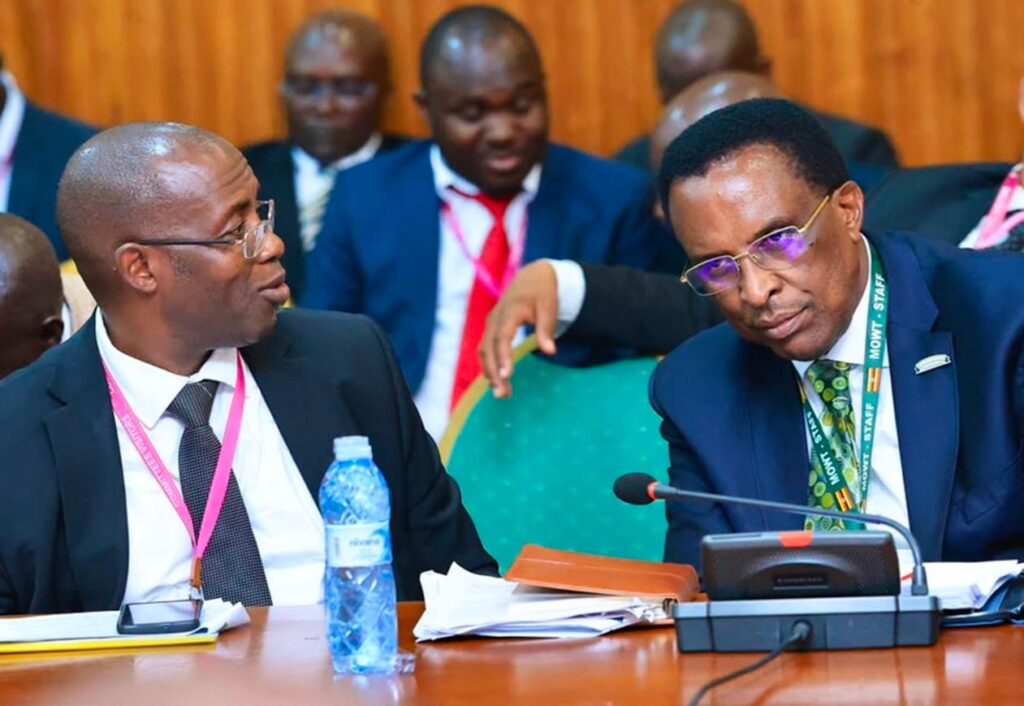
The proposal was presented before Parliament’s Committee on Physical Infrastructure during a meeting chaired by Mwine Mpaka, where ministry officials outlined measures being considered following a series of fatal road crashes recorded in July.
Commissioner for Transport Regulation and Safety Winston Katushabe said investigations into the recent accidents exposed widespread violations of transport regulations, including the operation of unlicensed buses, the use of unqualified drivers, poor vehicle maintenance and weak enforcement of existing laws.
Uganda experienced several tragic accidents during the month, including a bus crash in Omoro District that claimed 33 lives, another involving pupils from King David Junior School in Kapchorwa that left 24 children dead, and a collision between a passenger bus and a train in Mukono, which resulted in one fatality.
According to the ministry, investigations linked the crashes to reckless driving, excessive speeding, poor judgement by drivers, narrow sections of road and cases where drivers operated without valid licences.
Katushabe said the ministry is reviewing the National Road Safety Action Plan and intends to strengthen road safety regulations over the next five years. Planned reforms include setting standards for school buses, enhancing medical examinations for drivers and upgrading the automated driver testing system.
Under the proposed electronic clock-in programme, drivers of public service vehicles would be required to register their journeys at designated checkpoints. The system would enable authorities to monitor the number of hours drivers spend on the road, assess whether they have taken adequate rest and detect possible speeding.
He explained that the initiative is intended to address driver fatigue, which has increasingly been identified as a major contributor to road crashes.
The ministry also plans to improve digital systems used to verify vehicle registration and driver licensing in order to identify illegal operators more effectively. In addition, road safety audits will continue to identify hazardous road sections requiring improved signage, road markings and engineering upgrades.
Bukanga North MP Nathan Byanyima said transport operators must also take responsibility for improving safety standards, noting that regular engagements between government and bus owners had reduced in recent years. He called for renewed dialogue with transport companies.
Kole North MP Samuel Opio Acuti questioned how buses operating without licences are able to travel across the country without being intercepted. He also sought clarification on whether drivers undergo comprehensive medical examinations, including eyesight and colour vision tests, before being licensed.
Responding to legislators, Katushabe said accident investigation reports must accurately reflect the circumstances surrounding each crash, emphasizing that conclusions should be based on evidence rather than assumptions.
Meanwhile, Works and Transport Minister Fred Byamukama outlined additional reforms targeting road infrastructure projects, saying government is determined to improve accountability in the construction sector.
He identified corruption, poor contract management and failure to acquire land before awarding contracts as key factors behind delays and escalating project costs.
The minister cited the Busega–Mpigi Expressway as an example, noting that the project’s estimated cost had risen significantly due to design changes and alignment adjustments after implementation had already begun.
To avoid similar challenges in future, Byamukama said government will no longer award road construction contracts unless at least half of the required land has been acquired before work begins.
He also criticized delays in paying contractors, saying the current system sometimes allows newer payment certificates to be processed while contractors who completed work earlier remain unpaid, a practice he said government intends to address as part of ongoing procurement and project management reforms.