By: Joseph Mary Buwule
GUIYANG, China
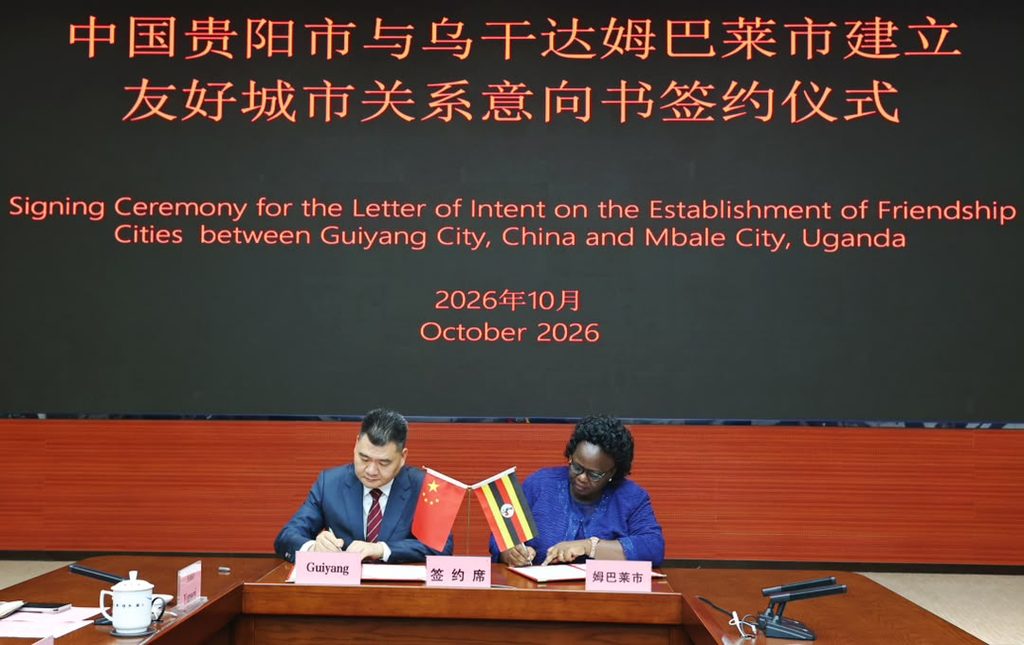
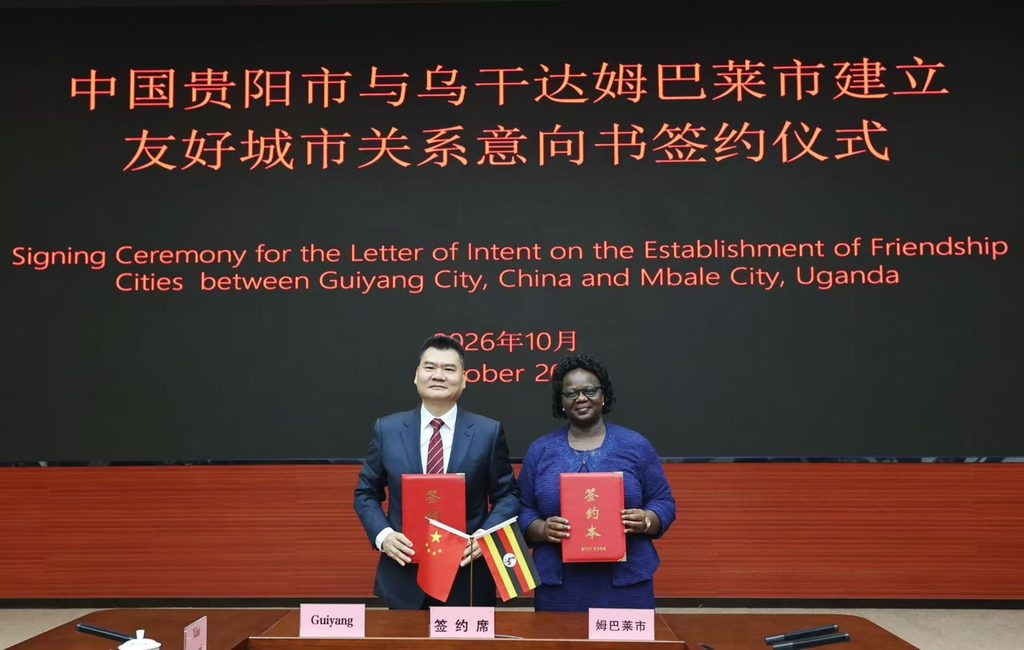
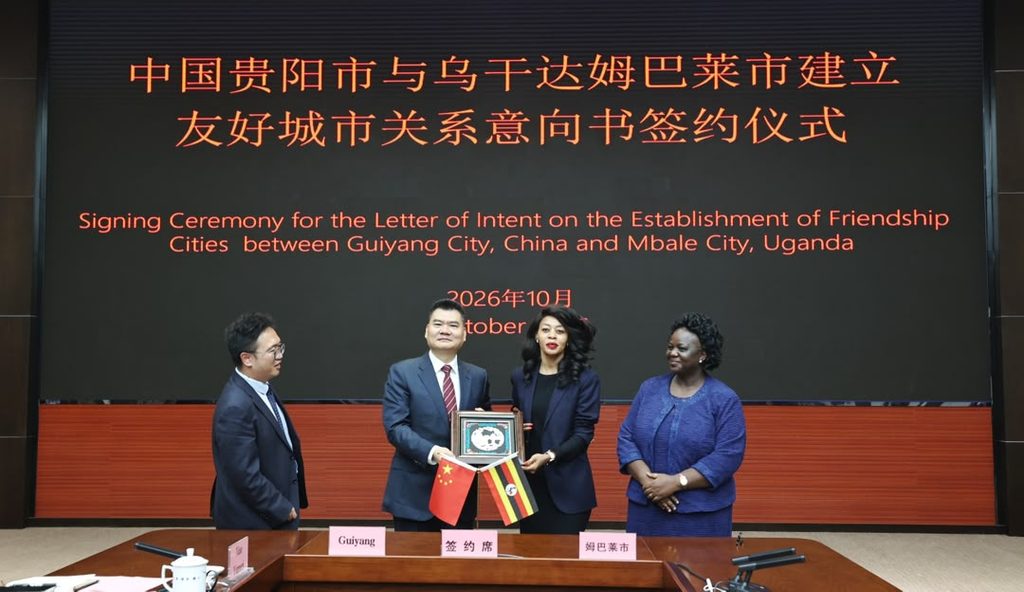
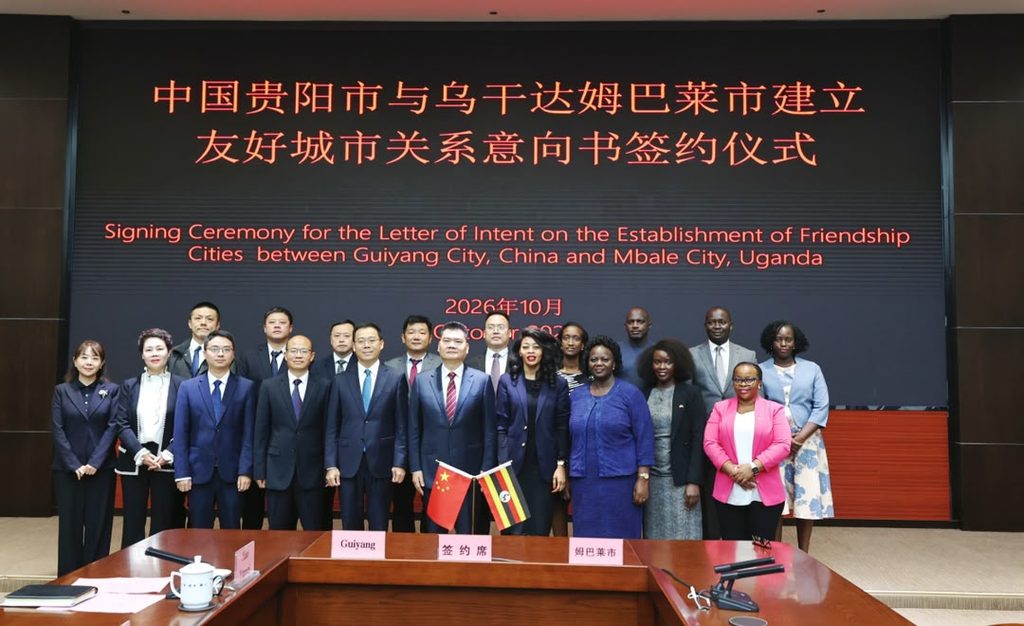
Mbale City in eastern Uganda and Guiyang City, the capital of Guizhou Province in China, have taken a major step towards strengthening economic, agricultural, cultural and technological cooperation following the signing of a Letter of Intent to Establish Friendly Exchange and Cooperation Relations between the two cities.
The agreement, signed in Guiyang on Tuesday, October 27, is expected to open new opportunities for cooperation in coffee, agriculture and agro-processing, industrial development, tourism, vocational education, digital innovation and environmental management.
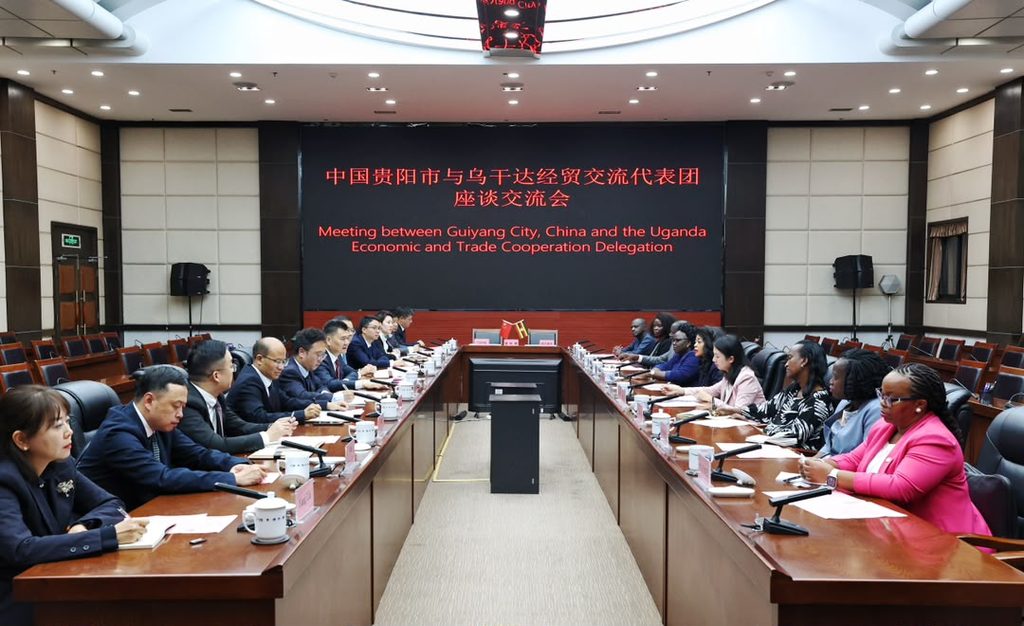
The landmark engagement brought together Guiyang municipal officials, Mbale City Mayor Hon. Joyce Matuka Kidulu, Uganda’s Consul General in Guangzhou Ambassador Judyth Nsababera, officials from Uganda’s Ministry of Agriculture, Animal Industry and Fisheries, and representatives of the Ugandan Consulate General in Guangzhou.
The signing is being viewed as an important first step towards developing a broader sister-city relationship founded on practical economic cooperation, people-to-people exchanges and shared development interests.
Guiyang Opens Its Doors to Ugandan Coffee
Welcoming the Ugandan delegation, the Mayor of Guiyang described the city as an important economic, transportation, tourism and commercial centre in Southwest China.
Guiyang covers approximately 8,043 square kilometres and serves as a major central city and national comprehensive transportation hub in Southwest China.
According to the Mayor, Guiyang’s economy has continued to expand, with the city’s GDP reaching 603.815 billion yuan in 2025, representing growth of 5.1 percent. The city’s permanent resident population stood at approximately 6.67 million.
He said Guiyang’s economic development, growing consumer market and expanding tourism industry provide a strong foundation for cooperation with Mbale and Uganda.
But it was the city’s coffee culture that particularly attracted the attention of the Ugandan delegation.
Describing Guiyang as a “City of Coffee,” the Mayor said the city has more than 3,000 coffee shops, equivalent to approximately one coffee shop for every 2,000 residents, placing Guiyang among the cities with the highest coffee-shop densities in China.
He said the city has developed a growing coffee ecosystem involving professional coffee brewers, local brands, specialised products and diverse consumption experiences.
Guiyang is home to more than 10 world and national coffee brewing champions, while local brands such as Captain George Coffee, Dui De Coffee, SeekSeeking and Black Stone Coffee continue to develop.
The Mayor also highlighted Guiyang’s hosting of the China Final of the 2026 World Barista Championship (WBrC) in July, describing it as an important milestone because the event was held outside the Yangtze River Delta for the first time.
The city has also developed distinctive coffee products incorporating local ingredients and cultural characteristics, including sour soup, roxburgh rose, Houttuynia cordata and litsea cubeba.
Beyond conventional coffee shops, Guiyang has developed coffee experiences in rural and natural settings, including waterfall, cave, forest and mountain coffee outlets.
The Mayor said the growing coffee culture has made “coming to Guiyang for a cup of coffee” an increasingly popular experience.
Guiyang Proposes Expanded Ugandan Coffee Imports
The Mayor proposed a series of concrete measures to deepen coffee cooperation between Guiyang and Uganda.
First, Guiyang wants to expand imports of Ugandan coffee.
The Mayor called on Ugandan authorities and industry stakeholders to identify major coffee-producing enterprises and provide information on production areas, output, quality standards and exporters.
This, he said, would help Guiyang companies establish stable, long-term procurement relationships with Ugandan coffee producers and increase imports of high-quality Ugandan coffee.
Second, Guiyang proposed greater participation in exhibitions and business matchmaking.
Ugandan coffee companies would be encouraged to participate in events such as the Guiyang Coffee Expo, the Big Data Expo and agricultural products production and marketing conferences.
The objective is to create direct business-to-business contacts between Ugandan producers and Chinese buyers.
Third, Guiyang proposed processing cooperation, including exploring the possibility of Guiyang companies investing in Uganda in coffee roasting and related processing activities.
The Mayor said the two sides could examine a model based on Ugandan raw material supply combined with processing and consumption in Guiyang.
Guiyang also indicated its willingness to explore investment facilitation, land arrangements, raw-material supply and export licensing issues where applicable.
Fourth, the city proposed developing distinctive Ugandan coffee brands for the Chinese market.
Guiyang wants to support the inclusion of Ugandan coffee in its specialty coffee public-brand system and promote the origin story of Ugandan coffee.
The Mayor said the city could combine its diverse coffee-consumption scenes with its “Cool Guiyang · Fragrant Coffee” city identity to tell the story of Ugandan coffee and encourage more Chinese consumers to discover and appreciate coffee from Uganda.
Ambassador Nsababera: Uganda Wants Consumers to Know Its Coffee Origin
The coffee proposals closely aligned with the message delivered by Uganda’s Consul General in Guangzhou, Ambassador Judyth Nsababera.
Ambassador Nsababera said Uganda is one of Africa’s leading coffee producers and that Ugandan coffee exports to China have grown by more than 220 percent since 2023.
However, she said Uganda’s ambition is no longer simply to increase the volume of coffee exported.
Uganda wants Chinese consumers to recognise the country as a coffee origin in its own right.
“For years, Ugandan coffee has added quality and character to blends sold under other names. We are proud of that contribution. Now we also want Uganda to stand confidently as an origin in its own right—on your shelves, in your cafés and, most importantly, in your cups,” she said.
Nsababera challenged Chinese partners to go beyond purchasing coffee and work with Uganda to understand the farmers, production areas and communities behind the product.
She said Uganda has exceptional coffee and a strong origin story, while Guiyang offers roasting, branding, product innovation, distribution and an increasingly sophisticated consumer market.
“We do not see only a seller and a buyer. We see producers and innovators building something together,” she said.
The Ambassador also stressed that Uganda wants Chinese companies to build profitable businesses around Ugandan coffee while ensuring that the Ugandan origin remains visible.
Guiyang Offers Opportunities in Education and Skills Development
Beyond coffee, Guiyang proposed cooperation in vocational education and technical training.
The Mayor said Guiyang has a number of vocational colleges with expertise in areas including agricultural technology, big data, e-commerce and tourism management.
He proposed partnerships between vocational institutions in Guiyang and Mbale to develop training programmes in modern agriculture, coffee processing and commercial services.
Such cooperation, he said, could help produce practical technical skills required by Uganda’s agricultural and industrial sectors.
The proposal could also create opportunities for students, trainers and technical professionals from the two cities to participate in exchange programmes.
Tourism: From Mount Elgon to Guiyang
Tourism and cultural exchange also emerged as another major area of cooperation.
The Guiyang Mayor highlighted the city’s reputation as a major summer tourism destination.
Located around 26 degrees north latitude and at an average altitude of approximately 1,100 metres, Guiyang enjoys an average summer temperature of about 22.3 degrees Celsius.
The Mayor said the city’s climate, environmental quality and natural attractions have helped it develop a strong summer tourism economy, alongside its growing performance and sports-event sectors.
Between January and September 2026, Guiyang recorded approximately 169 million domestic tourist visits, representing an increase of 10.1 percent.
The city also recorded approximately 29.9 million overnight domestic tourist visits, while inbound overnight tourist visits reached about 328,000, representing an increase of 56.7 percent.
The Mayor said Guiyang has also developed a strong entertainment and events economy.
In 2025, the city ranked among China’s top ten cities for concert box-office performance, while in 2026 it hosted 29 large-scale commercial performances that generated approximately 2.7 billion yuan in comprehensive consumption, according to his presentation.
Sports tourism is also expanding, with Guiyang hosting international events including the World Boxing Federation World Cup China stop, the Modern Pentathlon World Championships and the Climbing World Cup.
The Guiyang Marathon has also developed a reputation as a summer mass sporting event.
The Mayor proposed that Guiyang and Mbale promote each other as tourism destinations, share tourism routes and marketing experiences, and encourage cooperation between travel agencies and cultural-tourism companies.
Mbale Presents Mount Elgon, Imbalu and Sipi Falls
In response, Mayor Joyce Matuka Kidulu presented Mbale as a strategic commercial and tourism gateway in eastern Uganda.
She said Mbale is located approximately 225 kilometres east of Kampala and about 50 to 60 kilometres from the Kenyan border, placing it along the Northern Corridor connecting the Port of Mombasa with Uganda and other markets in East and Central Africa.
Mbale serves as the commercial and administrative centre of the Elgon sub-region, comprising 12 districts with a combined population of more than five million people.
The Mayor said the city has a daytime population exceeding 500,000 and is a major centre for wholesale commerce and Arabica coffee.
Mount Elgon Arabica coffee is grown at elevations of approximately 1,500 to 2,300 metres and is internationally recognised for its quality.
Mayor Kidulu also highlighted Mbale’s industrial park, which is planned to accommodate up to 77 industrial units, with agro-processing and light manufacturing already operational.
She said Mbale’s fertile volcanic soils, favourable climate, youthful population and strategic location make it well positioned for agricultural and industrial investment.
On tourism, she highlighted Mount Elgon National Park, Sipi Falls and Wanale Ridge, as well as the cultural heritage of the Bamasaba people.
She particularly highlighted Imbalu, the traditional rite of passage observed every even-numbered year, saying it has significant potential to attract international cultural tourists.
Smart Cities and Environmental Management
Another major area identified by Mbale is digital transformation.
Mayor Kidulu said Mbale has followed Guiyang’s development as China’s “Data Valley” with interest and wants to learn from its experience in using big data and digital technologies for urban management and public service delivery.
She proposed cooperation in smart-city development, e-governance and digital innovation.
Environmental management is another priority.
Mbale wants to learn from Guiyang’s experience in waste sorting, recycling, composting and circular-economy approaches.
Mayor Kidulu said Mbale faces growing waste-management challenges because of the large number of people who enter the city during the day, while formal waste-collection capacity remains limited.
She proposed cooperation that could include technical exchanges and a pilot diagnostic project on solid-waste management.
Five Priority Areas Identified by Mbale
Mayor Kidulu identified five broad priorities for the partnership:
Smart city and digital governance — learning from Guiyang’s big-data and e-governance experience.
Industrial development — creating business-to-business connections and attracting investment in agro-machinery and light manufacturing.
Agriculture and value addition — strengthening coffee grading, roasting, packaging and cold-chain technologies and expanding access to Chinese markets.
Tourism and cultural exchange — connecting Mbale’s natural and cultural attractions with Guiyang’s tourism sector.
Environmental sustainability — strengthening waste management, recycling, composting and circular-economy practices.
Joint Working Group Proposed
To ensure the Letter of Intent translates into practical results, Mayor Kidulu proposed establishing a Joint Working Group within two months of the signing.
The group would designate focal persons, conduct a joint needs assessment and identify an initial quick-win project.
Possible areas include a solid-waste management diagnostic exercise or a technical training programme.
She also proposed a technical exchange visit to Mbale by Guiyang officials and business representatives.
The delegation would be able to visit Mbale’s industrial park, coffee-growing communities and tourism sites and engage directly with local institutions and private-sector actors.
Uganda-China City-to-City Cooperation
The engagement comes as Uganda continues to seek greater access to the Chinese market for agricultural and value-added products.
For Mbale, cooperation with Guiyang offers an opportunity to connect one of Uganda’s major coffee-producing regions to a city with a large and sophisticated coffee-consumption culture.
For Guiyang, cooperation with Mbale provides potential access to Ugandan coffee, agricultural products, investment opportunities and a gateway to wider East African markets.
The relationship also creates opportunities for cooperation beyond trade, including education, tourism, environmental management, digital technology and cultural exchange.
Ambassador Nsababera said the proposed friendship between the two cities should not end with the signing ceremony.
“A signed document is a welcome milestone, but its value will be measured by what happens next. Friendship opens doors; business, investment and implementation keep them open,” she said.
Mayor Kidulu similarly said the responsibility of both sides was now to translate the friendship expressed through the agreement into tangible benefits.
“Today’s signing marks the beginning of a new chapter in relations between Mbale and Guiyang, and indeed between Uganda and China at large,” she said.
The two cities now have a framework around which they can build practical partnerships in coffee, agriculture, industrialisation, tourism, education, technology and environmental management.
The proposed partnership therefore goes beyond a ceremonial city-to-city agreement. It creates a platform through which Ugandan coffee can reach more Chinese consumers, businesses can explore investment opportunities, students and professionals can exchange skills, tourists can discover new destinations, and the two cities can learn from each other’s approaches to urban development.
From friendship to trade, from partnerships to investment, and from cooperation to shared prosperity, Mbale and Guiyang have opened a new chapter in city-to-city relations between Uganda and China.