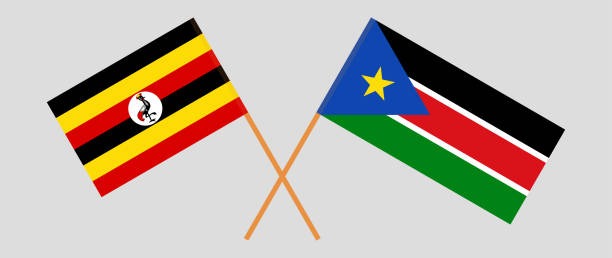
By Joseph Kiggundu
KAMPALA.Ugandans travelling to South Sudan will now pay between Shs185,000 for a single-entry visa and Shs924,000 for a six-month multiple-entry visa .
This came after Juba introduced a revised visa regime that imposes new entry charges on most African travellers.
The changes come despite the close economic and political ties between Uganda and South Sudan. Uganda is one of South Sudan’s largest trading partners and hosts about 900,000 South Sudanese refugees under one of Africa’s most progressive refugee settlement policies.
The new visa charges are expected to have the greatest impact on cross-border traders, transporters, business people and other frequent travellers who rely on the busy Elegu-Nimule border, one of the region’s busiest trade corridors.
According to South Sudan’s updated e-Visa portal, citizens of Uganda, Kenya, Rwanda and the Democratic Republic of Congo will pay a discounted $50 (about Shs185,000) for a single-entry visa.
A three-month multiple-entry visa for travellers from the four countries will cost $125 (about Shs462,000), while a six-month multiple-entry visa has been set at $250 (about Shs924,000).
For nationals of most other countries, the charges are higher. A single-entry visa costs $100 (about Shs370,000), a three-month multiple-entry visa $200 (about Shs740,000) and a six-month multiple-entry visa $350 (about Shs1.29 million).
Citizens of Somalia and Burundi have also been placed under the $100 single-entry visa category.
Meanwhile, Egypt and Tanzania remain the only African countries whose citizens can enter South Sudan without paying visa fees, while South African passport holders are exempt from visa requirements for visits of up to 30 days.
The revised framework introduces differentiated visa charges based on nationality, replacing what had been a more uniform system and creating varying travel costs across the continent.
The development is expected to draw attention within the East African Community (EAC), whose member states have committed themselves to promoting the free movement of people, labour and services to deepen regional integration.
For Uganda, the changes carry added significance because South Sudan remains one of its largest export markets, with thousands of Ugandan traders supplying food, manufactured goods and other products to the neighbouring country.
Uganda has also played a central role in supporting South Sudan through humanitarian assistance, regional diplomacy and security cooperation.
It currently hosts about 900,000 South Sudanese refugees, who are allowed to work, establish businesses, access education and healthcare, and cultivate allocated land under Uganda’s refugee settlement model.
In addition, Uganda has deployed troops to South Sudan at different times to help stabilise the country during periods of political and security instability while supporting regional peace initiatives.
The revised visa regime is expected to increase the cost of travel for many East Africans and could affect cross-border trade, tourism and business unless bilateral or regional arrangements are reviewed.
Travellers intending to visit South Sudan have been advised to confirm the latest visa requirements, applicable fees and application procedures through the country’s official e-Visa portal before making travel arrangements.