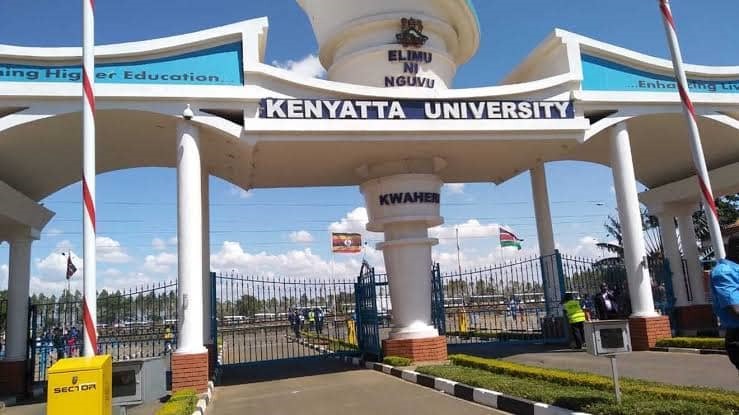
NAIROBI.Kenyan President William Ruto has announced plans to fully fund university and college education for every student who qualifies for admission, saying no child should miss out on higher education because of their family’s financial situation.
Speaking on Tuesday at State House in Nairobi, Ruto said the government had completed work on a new higher education funding model and submitted the necessary amendments to Parliament to pave the way for universal funding beginning in September this year.
The proposal marks a major policy shift after years of complaints from universities over inadequate government funding and concerns from students who struggled to raise tuition despite qualifying for admission.
The reforms are intended to ensure that access to higher education is determined by academic merit rather than a family’s ability to pay.
Ruto acknowledged that previous funding models had failed to achieve their objectives, leaving universities under severe financial strain.
“We tried the differentiated model. I think the vice chancellors here know it didn’t work because it made most of our universities almost close down. Because while we promised 80% funding, we went down to 40%, and most universities suffered,” he said.
He said the government later introduced a funding structure combining parental contributions, student loans and scholarships in an effort to promote equity, but many deserving students still faced financial barriers.
“Now we are moving to universal under the amendments we have taken to Parliament. So going forward, any student, so long as they have passed their exam and they have been placed in a college or a university, will get full funding for their higher education,” Ruto said.
The President said parents who wish to contribute towards their children’s education would remain free to do so, but financial hardship would no longer prevent students from accessing higher education.
“It will be the choice of parents if they want to pay. But if parents don’t want to pay, we now have a model that will pay for every child,” he said.
Ruto urged Parliament to expedite consideration of the amendments to the Higher Education Loans Board framework, saying the reforms would enable students to pursue the courses they qualify for without being limited by cost.
“We want to make sure that if a child qualifies to do engineering or medicine, funding does not deter them from achieving their goal, that the government of Kenya must be able to support every child,” he said.
If approved by Parliament, the reforms are expected to ease the financial burden on thousands of Kenyan families and significantly expand access to higher education ahead of the next academic intake.
The announcement is also likely to resonate across East Africa, where many students who perform well in national examinations fail to enrol at universities because they cannot afford tuition and other related costs. Others defer their studies, drop out midway or opt for less expensive programmes despite qualifying for more competitive courses.
Uganda faces a similar challenge. While the government sponsors top-performing students under its public university scholarship programme, the number of available places remains limited, leaving many qualified learners to rely on private sponsorship, student loans or family support.
Kenya’s proposal is therefore expected to add momentum to regional discussions on expanding access to higher education and ensuring that financial constraints do not stand in the way of academic opportunity.
Around the world, only a handful of countries provide tuition-free or fully state-funded university education. Germany, Norway and Austria are among the best-known examples, where public universities charge little or no tuition for eligible students.
In Africa, Mauritius is one of the few countries that offers free tertiary education at public institutions for its citizens. Algeria also provides largely tuition-free public university education, while countries such as Egypt heavily subsidise higher education.
Most African countries, however, rely on a mix of government scholarships, student loans and private financing, leaving many qualified students to meet tuition costs themselves.
If implemented, Kenya’s proposal would place it among a small group of countries where the state guarantees funding for all students admitted to public higher education institutions.
In Uganda, government sponsorship is limited to a relatively small number of top-performing students, with the majority relying on private sponsorship, family support or student loans.