By Jazeerah Mirembe
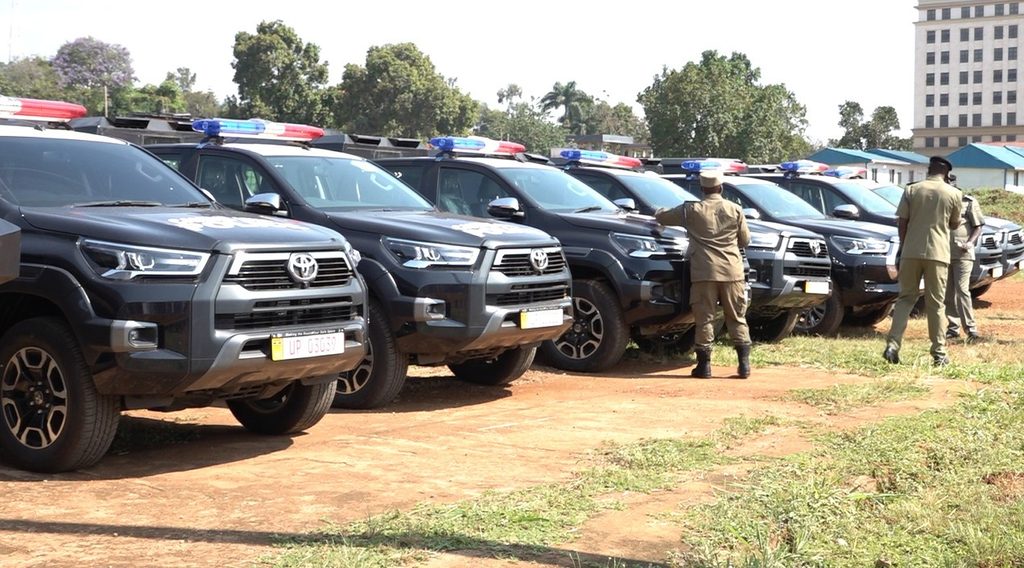
The Uganda Police Force has deployed 10 canine vehicles to 10 regions across the country to strengthen crime investigations.
The canine vehicles will help more in rural areas where access to police canine services has remained a challenge.
The vehicles are expected to facilitate the transportation of sniffer dogs to crime scenes, addressing logistical gaps that have in the past seen police officers ask victims or members of the public to facilitate the transportation of the dogs.
Speaking during the launch of the vehicles, Deputy Inspector General of Police (DIGP) James Ocaya said the intervention is expected to help eliminate fuel-related solicitation, which he described as a form of corruption.
The Uganda Police Force continues to intensify efforts to combat crime and accelerate investigations, with a focus on addressing logistical gaps that have hindered effective investigations across the country.
The latest initiative has seen the Force strengthen its Canine Unit by dispatching 10 vehicles to 10 police regions, particularly to support officers involved in crime investigations.
Among the regions benefiting from the new vehicles are Mbarara, Mbale and Lira. The vehicles will be stationed at regional police offices and deployed to support investigations when required.
Ocaya said the intervention is expected to address some of the corruption-related challenges associated with accessing police canine services.
“We were told that the canine don’t receive corruption and because of that they have become very, very effective in fighting crime. So, what do we expect now that we have these equipment? We expect to see more vigilance and more tracking. But we want to focus on prevention more.”
According to the latest crime report, police canine teams were deployed in about 20,000 cases and assisted in the arrest of more than 17,000 suspects.
Police expect these operations to increase with the deployment of the new vehicles, which are equipped to transport officers and canine teams to crime scenes.
Commandant of the Uganda Police Canine Unit, Dr Martin Mugume, said logistical challenges have previously affected the deployment of sniffer dogs, with some victims and officers having to provide transport or fuel.
“People have been reporting at the station and there is no transport. Others have been using their private vehicles and others have even gone ahead to facilitate with fuel, which has led to corruption. So, this injection now of these assets is supposed to improve the response of our teams to these crimes.”
Police have also raised concerns over the emergence of groups in some villages that allegedly claim to connect crime victims to police services before demanding money from them.
The Force has warned individuals involved in such activities that they risk arrest if investigations establish that they are exploiting members of the public.
Uganda Police has significantly expanded its canine coverage over the years, from 13 stations about a decade ago to 129 stations today.
Despite the expansion, police acknowledge that demand for canine services continues to exceed available resources, creating logistical challenges and opportunities for corruption.
According to DIGP Ocaya, the Force has developed a three-year plan to extend canine services to all 32 police regions across the country.
Until the plan is fully implemented, police officers will continue to rely on existing resources to support crime prevention and investigations.
Regional Police Commanders, in liaison with District Police Commanders, will oversee the deployment of the new vehicles and canine teams within their respective areas of responsibility.
The Police Force says the expansion of canine services is intended not only to strengthen crime detection and investigation but also to improve response times, reduce logistical constraints and ensure that members of the public can access police services without being subjected to unnecessary costs.