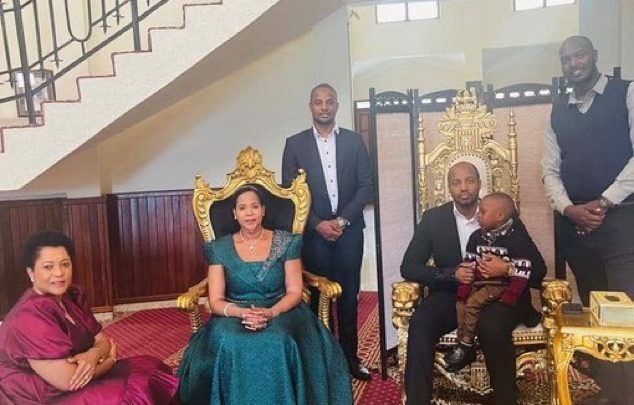
By Joseph Kiggundu
KAMPALA — The succession to the Tooro throne following the death of King Oyo Nyimba Kabamba Iguru Rukidi IV should be guided by Ugandan law, Tooro customs and traditions, and the late monarch’s valid will, Attorney General Dr Sam Mayanja has advised.
Mayanja made the position in a legal opinion dated September 12, 2026, and addressed to President Yoweri Museveni, who had sought legal guidance amid disagreements over who should succeed the late King as Omukama of Tooro.
According to the Attorney General, birth and descent are central considerations when determining succession to a traditional or cultural institution.
He based the interpretation on Article 246 of the Constitution, which provides for traditional and cultural leaders in accordance with the customs and traditions of the communities they serve.
Mayanja also referred to Sections 3 and 4 of the Institution of Traditional or Cultural Leaders Act, 2011, which require traditional and cultural institutions to operate in accordance with the customs, traditions, wishes and aspirations of their respective communities.
He said these provisions, together with the Tooro Kingdom Constitution, provide the broader legal framework for determining succession to the throne.
Tooro Constitution suspended
Mayanja, however, noted that the Tooro Kingdom Constitution is not currently operational.
King Oyo suspended its observance in 2013 after raising concerns about provisions he considered inconsistent with Uganda’s laws. The suspension was subsequently upheld by the courts in the case of George Kusemererwa vs King Oyo.
Although the late monarch later appointed a committee to review the kingdom’s Constitution, Mayanja said the review had not been concluded by the time of King Oyo’s death.
As a result, the Attorney General said the Tooro Constitution may provide historical and contextual guidance, but cannot presently be treated as an operative instrument for settling the succession dispute.
King Oyo’s will
A key document in the Attorney General’s opinion is King Oyo’s will, signed on September 14, 2022.
Mayanja said the will contains provisions dealing specifically with the succession to the Tooro throne.
Under Article 10(1) of the document, the late King provided for a biological son who was lawfully recognised as his child to become his heir and successor to the Kingdom of Tooro, subject to applicable law and the kingdom’s customs and traditions.
Mayanja therefore interprets the provision as giving priority to a legally recognised biological son of King Oyo, should such a son exist.
The will also names an alternative successor.
Under paragraph 10(2), Prince Komwiswa Yoweri, the son of Omusuuga Charles and cousin to King Oyo, would succeed in circumstances where the King had no son capable of taking over the throne, or where his son had died before assuming the kingship, become permanently incapacitated or was otherwise unable to discharge the responsibilities of the Omukama.
The Attorney General’s interpretation therefore places the two possible lines of succession in an order determined by the circumstances outlined in the late King’s will.
Will can be contested
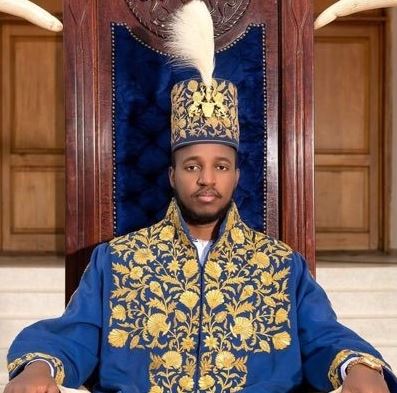
Mayanja also made clear that his interpretation does not remove the possibility of a legal challenge to the will.
He cited Section 15(1) of the Institution of Traditional and Cultural Leaders Act, which provides mechanisms for resolving disputes within traditional and cultural institutions through councils of elders, clan leaders or their representatives.
Where such traditional mechanisms fail to resolve a disagreement concerning the validity or interpretation of the will, the matter may ultimately be referred to the courts, according to the legal opinion.
The Attorney General’s position is therefore an interpretation of the applicable legal and customary framework rather than a court judgment conclusively settling the succession dispute.
Burial ritual put on hold
Mayanja has also advised that a traditional ritual associated with the installation of a Tooro successor should be postponed until the succession question is settled.
Under Tooro tradition, the successor traditionally throws nine coffee beans into the grave during the burial of the outgoing King. The ritual symbolises and confirms the successor’s assumption of the throne.
Given the disagreement over King Oyo’s successor, Mayanja recommended that the coffee-bean ritual should not be performed until the rightful successor has been established.
He cited the burial of the late King Kaboyo as precedent, noting that the ritual was reportedly performed three months after the King’s burial, once the successor had been identified.
The Attorney General nevertheless found no legal barrier to the burial of King Oyo proceeding while the succession dispute remains unresolved.
His recommendation is therefore to separate the burial from the succession-confirmation ritual, allowing the late monarch to be buried while the question of who should succeed him is addressed through the appropriate legal and traditional channels.
The legal opinion places the succession question within a framework combining Ugandan law, Tooro customs, descent and the provisions of King Oyo’s will, with a legally recognised biological son given priority under the circumstances specified in the document. Where the conditions for that succession are not met, the alternative heir named in the will could come into consideration.
If the parties remain unable to resolve the dispute through the prescribed traditional mechanisms, the matter could ultimately be determined by a competent court.