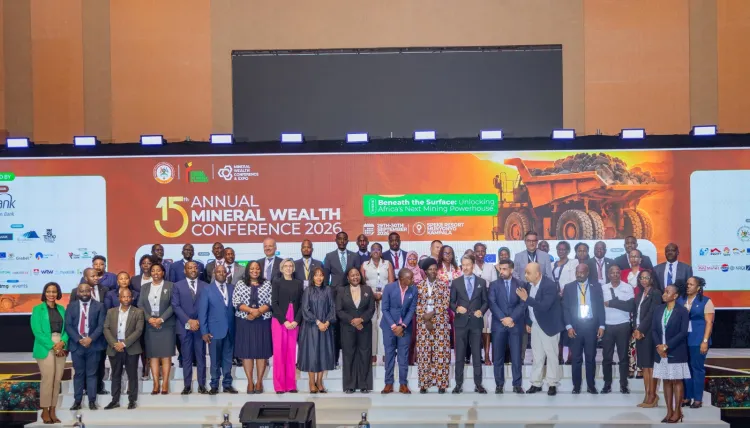
Delegates pose for a group photo during the 15th-Annual-Mineral-Wealth-Conference held from-29th-to-30th-September-at-Speke-Resort-Munyonyo
By Maria Mariam Namala
KAMPALA — Equity Bank Uganda is stepping up efforts to bring artisanal and small-scale miners into the formal financial system as the country seeks to raise the mining sector’s contribution to economic growth.
The bank says a large proportion of small-scale miners have difficulty accessing conventional loans because their businesses are largely informal, mobile and often lack the documentation and financial records required by commercial lenders.
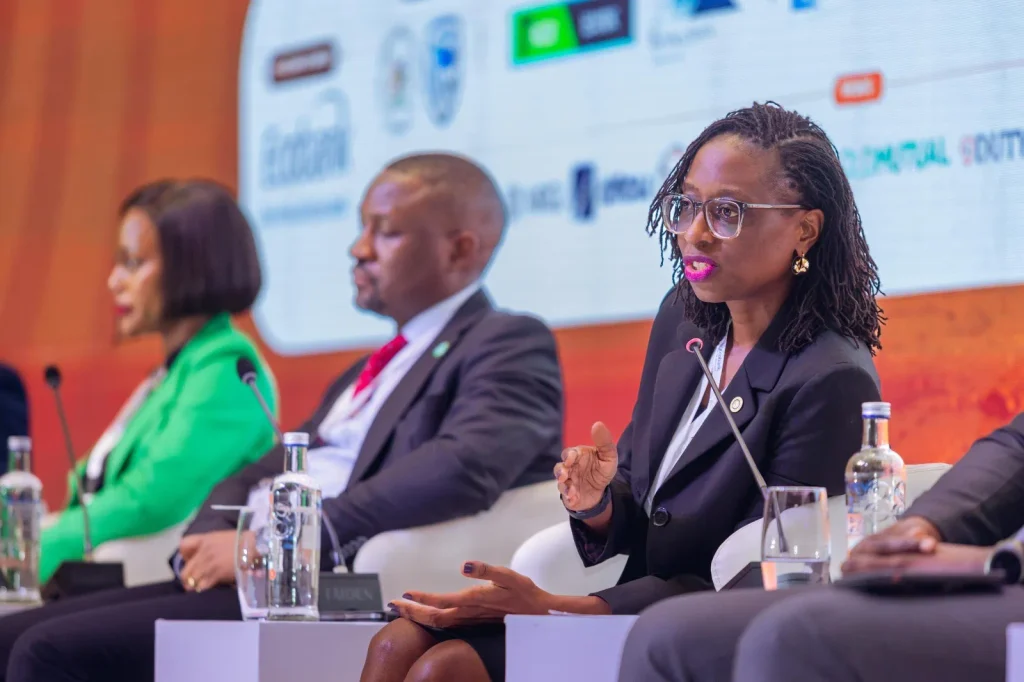
Christine Mukasa Mugerwa, Senior Sector Head for Energy, Mining and Extractives at Equity Bank Uganda, said the bank is developing partnerships with mining associations, mineral buyers and refineries to bridge the financing gap.
She said about 80 per cent of Uganda’s miners operate at artisanal level, often relying on rudimentary tools and moving from one mining location to another.
According to Mugerwa, the nature of their operations makes it difficult for many miners to satisfy traditional lending requirements, limiting their ability to invest in better technology and expand production.
She said Equity Bank is responding through financial literacy initiatives and asset financing, including support for miners seeking to acquire equipment such as mini-excavators.
The bank outlined its approach during the 15th Annual Mineral Wealth Conference and Expo held at Speke Resort Munyonyo from September 29 to 30.
The conference, organised by the Uganda Chamber of Energy and Minerals in partnership with the Ministry of Energy and Mineral Development, attracted more than 1,500 participants, including government officials, investors, mining companies, financial institutions and industry experts.
Held under the theme “Beneath the Surface: Unlocking Africa’s Next Mining Powerhouse,” the conference focused on ways Uganda can attract investment, improve production and increase the value generated from its mineral resources.
Mugerwa said Equity Bank’s intervention is intended to go beyond increasing the sector’s contribution to national output, with a focus also on improving miners’ incomes, safety and overall welfare.
Uganda’s mining industry currently contributes about two per cent to GDP, while the government has set an ambition of raising the contribution to 10 per cent.
Artisanal and small-scale miners account for an estimated 80 per cent of the country’s active mining workforce, yet many operate without fixed business premises, formal accounts or documented cash flows.
The financing gap leaves some miners dependent on middlemen who provide working capital or purchase minerals, potentially limiting the returns miners receive from their production.
Equity Bank says it is seeking to address this challenge by connecting miners to formal financial services while working with organisations and businesses across the mineral supply chain.
The bank is also engaging major industry players, including Wagagai, to strengthen market linkages, improve payment systems and encourage more transparent transactions between miners and buyers.
Push for local mineral processing
The financing discussion came amid calls for Uganda to invest more aggressively in local mineral processing rather than exporting raw minerals.
State Minister for Science, Technology and Innovation Jonard Asiimwe urged investors and policymakers to prioritise value addition, warning that continued export of unprocessed minerals could deny the country significant economic benefits.
He called for improved geological information, mapping of mineral value chains and greater investment in domestic processing facilities.
Uganda Chamber of Energy and Minerals Chief Executive Officer Humphrey Asiimwe said the country has so far identified 58 minerals, creating opportunities for investors across the mining and processing value chain.
He cited developments such as the Wagagai Gold Mine as evidence of the potential for expanding commercial mining and mineral value addition in Uganda.
Equity Bank’s growing focus on mining is also linked to Equity Group’s broader Africa Recovery and Resilience Plan, which identifies natural resources and mineral processing as potential engines of industrialisation and economic transformation.
The bank says providing appropriate financing, business knowledge and modern equipment to small-scale miners could increase productivity, improve working conditions and encourage safer mining practices.
The initiative comes as Uganda seeks to formalise more of its mining activities and ensure that communities involved in artisanal mining capture a greater share of the value generated from the country’s mineral wealth.