By Maria Mariam Namala
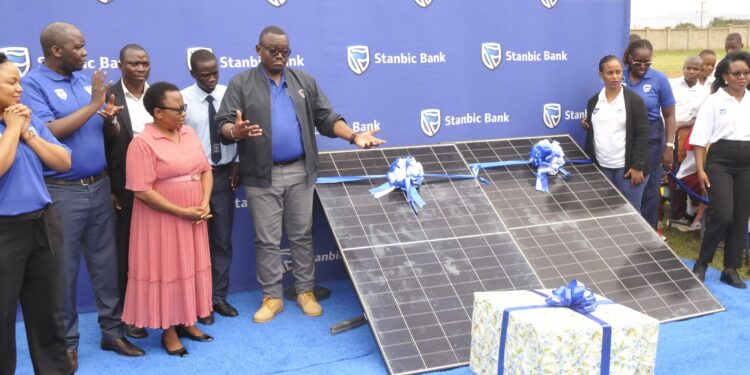
MBALE — Students at Mbale School for the Deaf are expected to have a more reliable evening study environment following the installation of a hybrid solar power system donated by Stanbic Bank Uganda.
The support was celebrated through a lively performance of Kadodi, a traditional dance associated with the Bagisu people of eastern Uganda, who regard Mount Elgon, also known as Masaba, as their ancestral homeland. The teenage performers, many of whom have hearing impairments, captivated the audience with coordinated movements as spectators cheered and rewarded some of the dancers with money.
A teacher involved in training the students said their performance demonstrated the abilities that learners with special educational needs can develop with appropriate instruction and support.
Established by the government in 2008, Mbale School for the Deaf provides secondary education and vocational training, primarily for learners with hearing impairments and other physical disabilities. The institution’s vocational department offers courses in agriculture, motor vehicle mechanics, building and construction, electrical installation, plumbing, welding and fabrication, fashion and design, leather tanning, carpentry and cosmetology.
Stanbic Bank’s Executive Head of Business and Commercial Banking, Tunde Thorpe, said the solar installation followed consultations with the school’s management, which identified inadequate lighting in the main hall as a major challenge.
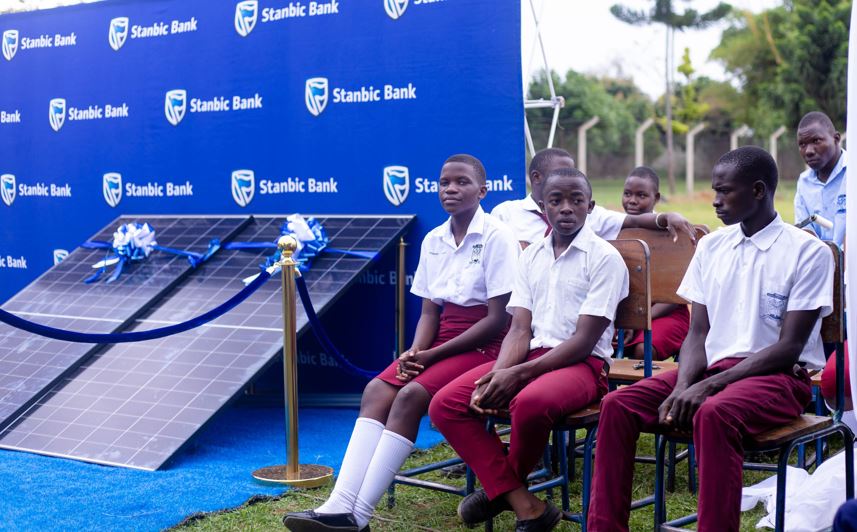
The hall doubles as the students’ dining area and evening study space, where learners are expected to read between 7pm and 9pm. Thorpe said unreliable electricity had been disrupting these activities and reducing the time available for learning.
He said the new system would provide a dependable source of clean energy, allowing students to study in a better-lit and safer environment while reducing the institution’s reliance on conventional electricity.
Thorpe added that the initiative was part of the bank’s Positive Impact Agenda, which focuses on supporting groups such as women, young people and farmers who contribute to Uganda’s socioeconomic development.
He said the bank also considered inclusive education an important part of its community investment, noting that children with disabilities deserved opportunities to develop their abilities and pursue their ambitions.
Thorpe said Stanbic, which has operated in Uganda for 35 years, remained committed to working with communities and supporting initiatives intended to improve livelihoods and contribute to national growth.
School headteacher Esther Akuku welcomed the donation, saying the solar system would help minimise interruptions to students’ evening studies whenever the electricity supply failed.