By Ruth Nanyonga
The Cabinet has officially dropped the contentious plan to redevelop Constitution Square also known as City Square into a commercial real estate complex.
The decision brings an end to a high-stakes tug-of-war over Kampala’s premier green space and historic landmark.
Announcing the decision on Tuesday, October 27, 2026, Minister of ICT and National Guidance Justine Kasule Lumumba confirmed that the executive body resolved to reverse the development proposal and preserve the site’s historical, legal, and environmental integrity.
“Cabinet has decided to reverse the proposal for the development of City Square, formally known as Constitution Square, and retain the site’s existing legal status. This decision followed consideration of the site’s history, its legal protection, and the environmental and urban planning issues raised by the proposal,” Ms Lumumba told Journalists in Kampala .
She emphasized that Constitution Square remains a strictly protected heritage site under Ugandan law.
“Its protection dates back to 2007 and is recognised under the Museums and Monuments Act, 2023, and the heritage protection instrument issued in 2024. The protected site covers approximately 1.172 hectares, comprising plots 5, 6 and 7. It also contains the 1945 War Memorial, which commemorates Ugandan soldiers who lost their lives in the First and Second World Wars,” Ms Lumumba explained. “The Square and its memorial are part of our national history. Decisions about the site must respect that history and its protected status. The public should therefore be clear: Cabinet has reversed the development proposal. Constitution Square will retain its existing legal status.”
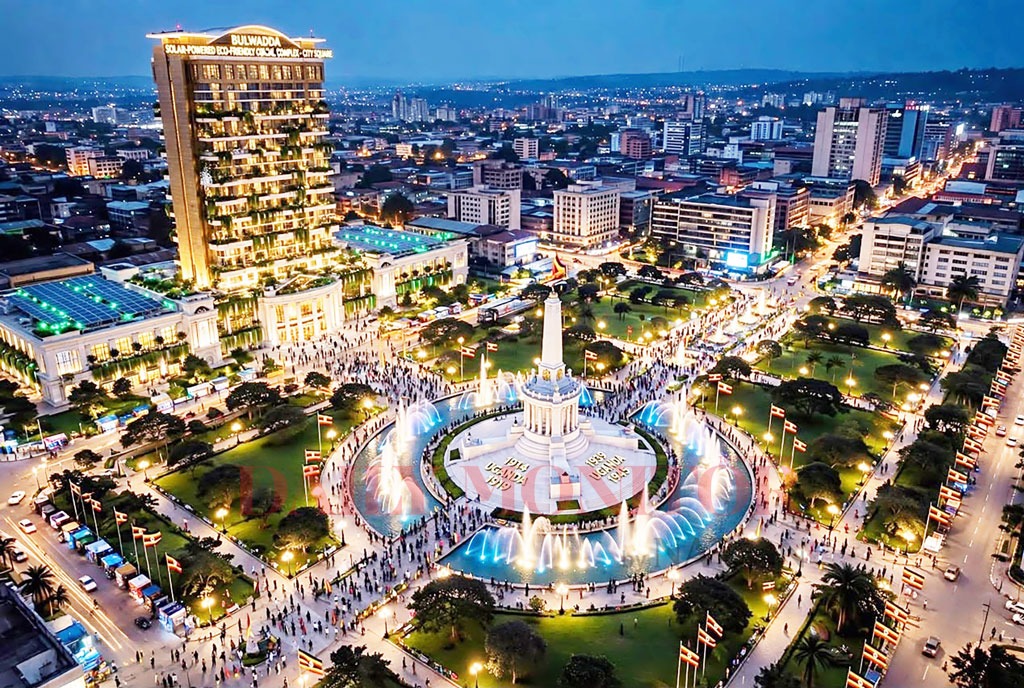
The Cabinet’s sharp U-turn comes just days after senior government officials and private investors were actively pushing to transform the public park. The initiative stemmed from an August 30 directive in which President Museveni instructed the Minister for Kampala Capital City Authority (KCCA) and Metropolitan Affairs, Ms Minsa Kabanda, to evaluate a proposal submitted by businessman Hassan Bulwadda. Mr Bulwadda had sought to construct an eco-friendly commercial complex featuring a high-end hotel, a shopping mall, and solar-powered amenities on the two-acre property.
The project had gained strong backing from the Attorney General Sam Mayanja, who defended the President’s constitutional authority to explore the redevelopment. Mr Mayanja insisted that modernizing the site would rid the city centre of criminal elements while introducing structured green spaces and water fountains similar to global capitals like London and Paris.
At the same time, Mr Mayanja dismissed claims by city businessman Hassan Basajjabalaba, who had recently appeared before Parliament’s Committee on Commissions, Statutory Authorities and State Enterprises (Cosase) asserting that he held a valid 49-year lease on the land dating back to 2001.
“A lease on public property does not confer permanent proprietary rights on a lessee. It confers on the user a period of time, and the developments are attached in the middle of the title deed as conditions,” Mr Mayanja said in an exclusive interview prior to the Cabinet decision. “I don’t know whether it was Basajjabalaba or one of his companies that was granted the lease some years ago and was rescinded. It remained public property and I don’t understand his claim… He cannot flog a dead horse; let him continue making threats until he gets tired.”
However, the proposal to alienate the public square triggered fierce resistance from environmentalists, urban planners, and political leaders. Kampala Lord Mayor Ronald Balimwezo and Leader of the Opposition in Parliament Joel Ssenyonyi vehemently opposed the giveaway, warning that stripping Kampala of its core green space would destroy its ecological balance and civic identity.
In a formal petition to the government, Mr Balimwezo noted that the location dates back to 1903 when the colonial administration designated it as Government Square, acquiring deep civic and constitutional significance over the past century.
“City Square must be left open. It is the City Square that helps us breathe, take in the air. It must not be played with. That is our take,” Mr Balimwezo said.
With Cabinet’s latest resolution, the legal protections anchored under the Museums and Monuments Act of 2023 take absolute precedence, ensuring that Constitution Square will remain an open, public heritage sanctuary in the heart of the capital.