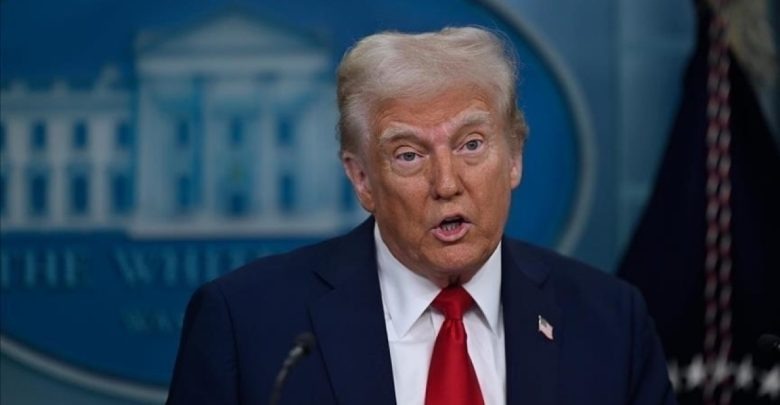
WASHINGTON: U.S. President Donald Trump has moved to remove Rwanda and South Africa from the African Growth and Opportunity Act (AGOA), a programme that grants eligible African exports duty-free access to the American market, citing trade barriers, governance concerns and threats to U.S. national security interests.
The proposed termination, effective January 1, 2027, comes days after Washington imposed fresh sanctions on Rwanda’s defence establishment over its alleged support for M23 rebels fighting government forces in eastern Democratic Republic of Congo (DRC).
U.S. Trade Representative Jamieson Greer announced Monday that Trump had notified Congress and the governments of both countries of his intention to withdraw their AGOA benefits following an annual review of eligibility.
“Based on the review, President Trump found that the governments of Rwanda and South Africa are engaging in practices that are inconsistent with AGOA’s eligibility criteria,” Greer said.
“These concerning and pervasive practices include, but are not limited to, barriers that undermine American trade and investment and practices that pose a threat to U.S. national security and foreign policy interests in the region.”
Greer said Washington would continue pressing African partners to meet the programme’s eligibility requirements.
Rwanda Faces Mounting U.S. Pressure
The Trump administration cited concerns over Rwanda’s “trade and investment restrictions, rule of law, political pluralism, workers’ rights and human rights”, alongside threats to American national security and foreign policy interests.
The announcement follows U.S. sanctions imposed on October 28 against Rwanda’s Ministry of Defence and Zigama Credit and Savings Society over their alleged involvement in supporting M23 rebels in eastern Congo.
Washington accused the Rwandan military of providing M23 with weapons, equipment, training and logistical assistance, while alleging that Zigama facilitated financial transactions linked to the rebel movement.
The sanctions form part of growing American pressure on Kigali to end its alleged military involvement in the DRC, despite a U.S.-brokered peace agreement between Rwanda and Congo.
Rwanda has repeatedly denied supporting M23, arguing that its security concerns arise partly from the presence of the Democratic Forces for the Liberation of Rwanda (FDLR), an armed group operating in eastern Congo.
The proposed AGOA termination also revives a longstanding trade dispute between Washington and Kigali.
In 2018, during Trump’s first presidency, the United States suspended duty-free treatment for Rwandan apparel after Kigali raised tariffs on imported second-hand clothing and footwear to support its domestic textile industry.
Rwanda retained preferences for other eligible products, meaning the latest proposed exclusion would be considerably broader.
South Africa Also Targeted
For South Africa, Washington cited trade and investment barriers, corruption and threats to U.S. national security and foreign policy interests.
The move comes amid strained relations between Washington and Pretoria over trade and foreign policy disagreements, including South Africa’s case against Israel at the International Court of Justice.
South Africa has also rejected allegations by the Trump administration concerning the treatment of white South Africans.
As one of AGOA’s largest beneficiaries, South Africa faces potentially significant consequences for exporters, particularly in manufacturing and agriculture, if its preferential market access is withdrawn.
Implications for African Trade
Established in 2000, AGOA grants eligible sub-Saharan African countries duty-free access to the United States for thousands of qualifying products.
However, participation depends on meeting eligibility conditions covering market access, economic policies, governance, human rights and U.S. national security interests.
Uganda was removed from AGOA effective January 1, 2024, following Washington’s concerns over human rights and other eligibility requirements. Ethiopia lost its benefits in 2022 amid concerns over the conflict in Tigray.
The latest action underscores Washington’s willingness to use trade preferences to pressure African governments over economic, governance and foreign policy disputes.
For Rwanda, the proposed exclusion adds a potential trade penalty to the sanctions already imposed over its alleged involvement in eastern Congo.
The decision has not yet taken effect, leaving Rwanda and South Africa facing a January 1, 2027 deadline.