By Joseph Mary Buwule
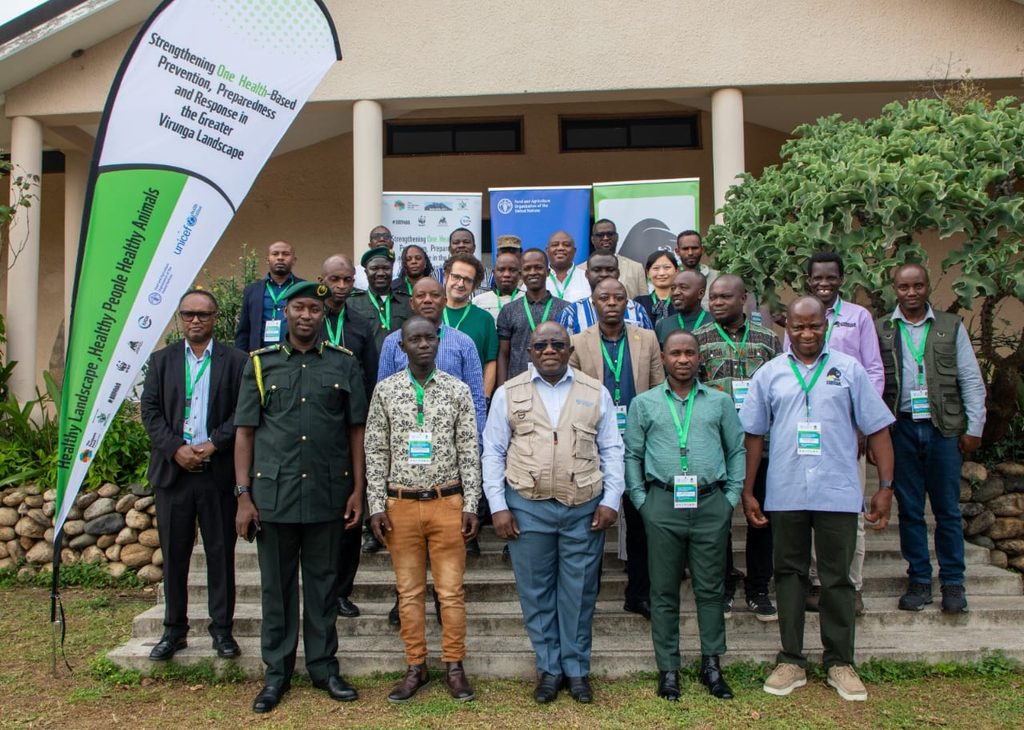
QUEEN ELIZABETH NATIONAL PARK, UGANDA — The Food and Agriculture Organization of the United Nations (FAO), in collaboration with Gorilla Doctors, has launched a week-long regional training aimed at strengthening wildlife disease surveillance and improving the detection, investigation and response to emerging and re-emerging zoonotic diseases across Africa.
The training, taking place at Queen Elizabeth National Park from November 2 to 6, 2026, has brought together 24 wildlife, veterinary, animal health, disease surveillance and conservation professionals from Uganda, Rwanda, Ethiopia, South Sudan, Burundi, Liberia, Guinea, Burkina Faso, Togo and Ghana.
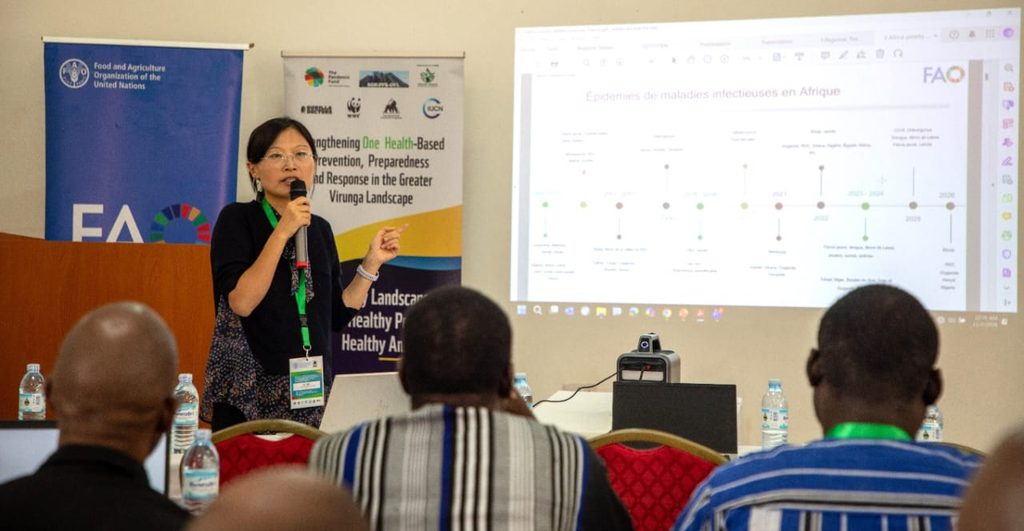
The participants are being equipped with practical skills to identify unusual wildlife health events, safely collect and handle specimens, investigate suspected disease outbreaks and strengthen timely reporting and referral of suspected cases.
The training is being implemented through collaboration between the FAO Regional Office for Africa, FAO Headquarters’ Animal Health Service (NSA), and Gorilla Doctors under the Pandemic Fund-supported Strengthening One Health-based Prevention, Preparedness and Response in the Greater Virunga Landscape (SOHPPRGVL) project.
The initiative comes amid growing concern over emerging and re-emerging zoonotic diseases, which can have far-reaching consequences for human health, animal health, biodiversity, food systems and livelihoods.
Although African countries have continued to strengthen disease surveillance systems, gaps remain in wildlife disease detection, outbreak investigation, safe wildlife handling, specimen collection and transportation, as well as coordination between field surveillance teams, laboratories and national reporting systems.
The training seeks to address some of these challenges through a combination of classroom sessions and practical field exercises.
Participants are receiving training on the identification and response to priority zoonotic diseases, including Ebola Virus Disease, mpox, Marburg Virus Disease and Rift Valley Fever.
The practical component is particularly important because wildlife health events often occur in remote protected areas, where park rangers and other frontline personnel may be the first to encounter sick or dead animals.
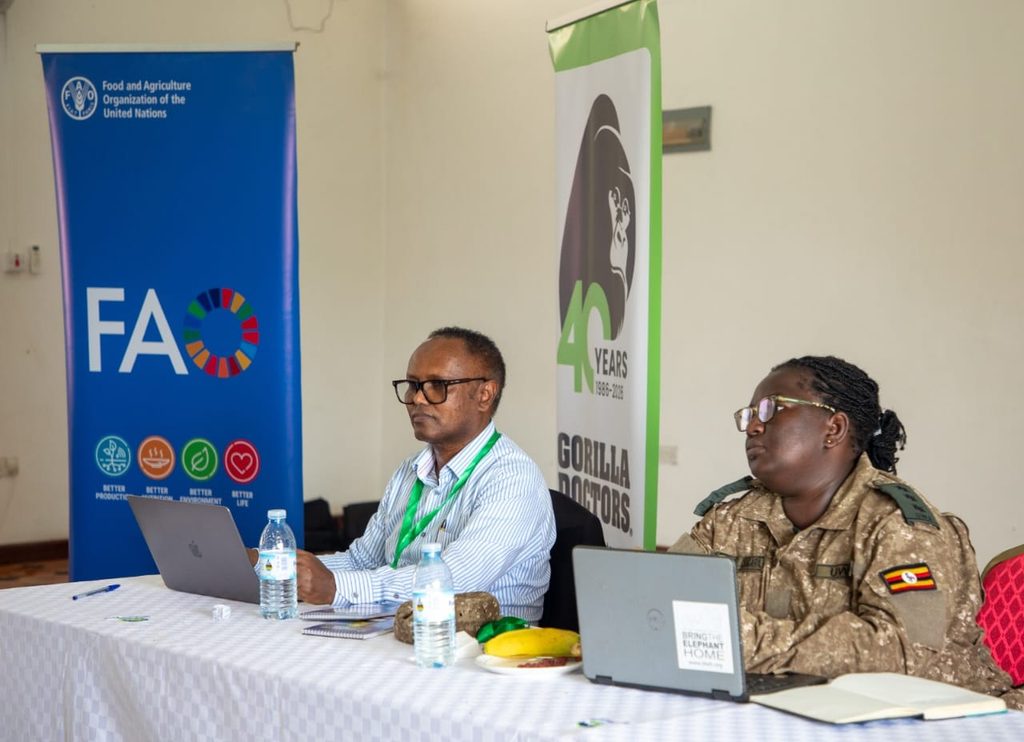
Representing the FAO Representative in Uganda, Dr. Willington Bessong Ojong, Livestock and Fisheries Sector Coordinator, said strengthening wildlife health surveillance has become an increasingly important component of public health and agricultural development.
He said wildlife health should no longer be considered solely a conservation concern, but rather an integral part of efforts to protect communities, livestock production and national economies.
“Protecting wildlife health is no longer solely a conservation imperative. It is equally a public health necessity, an agricultural priority, and an investment in economic resilience,” Ojong said.
He emphasized that early detection of diseases in wildlife can provide an important warning mechanism, enabling authorities and communities to assess risks and coordinate interventions before diseases spread further.
“Strengthened wildlife surveillance enhances our collective ability to detect threats early, assess risks and implement coordinated interventions before outbreaks escalate,” he added.
The training consequently places emphasis on strengthening the capacity of professionals operating at the interface between wildlife, livestock, people and the environment.
Dr. Bernard Sebidde, SOHPPRGVL Project Coordinator at Gorilla Doctors, said disease prevention must be integrated into wildlife conservation, particularly as human populations expand and interactions between people and wildlife increase.
He noted that the Greater Virunga Landscape, which stretches across parts of Uganda, Rwanda and the Democratic Republic of Congo, is an important conservation ecosystem where people, livestock and wildlife interact closely.
According to Sebidde, these interactions make effective disease surveillance, preparedness and response essential to both conservation and public health.
“Wildlife conservation and disease prevention must go hand in hand. As human populations grow and the space between people and wildlife continues to shrink, we must strengthen our ability to monitor disease threats while ensuring that wildlife is protected,” he said.
Sebidde stressed that disease surveillance should not be used to portray wildlife as a source of danger, but rather to improve understanding of disease risks and promote safe coexistence between people and animals.
“The goal is not to blame wildlife, but to understand the risks and learn how to live safely alongside it,” he said.
The training also highlights the critical role played by wildlife rangers in detecting disease events within protected areas.
Fred Kisame Eria, Chief Warden of the Queen Elizabeth Conservation Area, who represented the Executive Director of the Uganda Wildlife Authority, said rangers are frequently the first people to encounter sick animals, unusual animal behaviour or unexplained wildlife deaths.
He said equipping rangers with knowledge and practical skills to recognise, report and safely handle suspected disease events can significantly strengthen early warning systems.
“Rangers are often the first to encounter sick animals or unusual wildlife deaths. Equipping them to recognise these events, report them appropriately and handle them safely is crucial to preventing future outbreaks,” Eria said.
He noted that limited capacity among frontline wildlife personnel, together with weak linkages between protected-area surveillance systems, national laboratories and reporting mechanisms, has previously constrained timely detection and response.
The regional training is therefore expected to strengthen these connections by improving the capacity of frontline personnel to identify unusual wildlife health events and ensure that relevant information and specimens reach appropriate authorities and laboratories for further investigation.
Strengthening the One Health approach
The initiative is anchored in the One Health approach, which recognises the close interconnection between the health of people, animals and the environment.
Under the approach, disease prevention and preparedness require collaboration among wildlife authorities, veterinary and animal health services, public health institutions, environmental agencies, conservation organisations, laboratories and communities.
The focus on zoonotic diseases is particularly significant because a substantial proportion of emerging infectious diseases affecting humans are associated with animals.
Detecting disease threats in animal populations before they spill over into human communities can provide authorities with an opportunity to investigate risks and take preventive action.
For African countries where wildlife, livestock and human populations frequently share landscapes and natural resources, strengthening wildlife health surveillance is increasingly important.
The regional training is also providing an opportunity for participants from different countries to exchange experiences and build professional networks for wildlife disease surveillance.
By bringing together professionals from East, West and Central Africa, the programme is expected to facilitate the exchange of knowledge, lessons and practical approaches for dealing with wildlife health threats across different ecological and operational settings.
The initiative forms part of broader efforts by FAO and its partners to strengthen disease prevention, preparedness and response through One Health approaches.
For Uganda, hosting the training at Queen Elizabeth National Park provides participants with a practical environment to translate classroom knowledge into field-based surveillance skills.
The broader objective is to strengthen systems capable of detecting unusual wildlife health events early, ensuring that suspected cases are properly investigated and enabling authorities to respond before diseases develop into wider outbreaks.
As Africa continues to face the threat of emerging infectious diseases, investment in wildlife health surveillance is increasingly being viewed not only as a conservation priority, but also as an important investment in human health, livestock, food systems and livelihoods.
The training is expected to contribute to a stronger regional network of trained wildlife and animal health professionals capable of working across sectors and national borders to detect and respond to zoonotic disease threats at their source.