By Joseph Kiggundu
President Yoweri Kaguta Museveni has challenged African content creators to use their platforms to promote Africa’s history, identity, achievements and development aspirations, saying the continent’s transformation depends on fulfilling five historical missions: liberation, democracy, economic prosperity, strategic security and African unity.
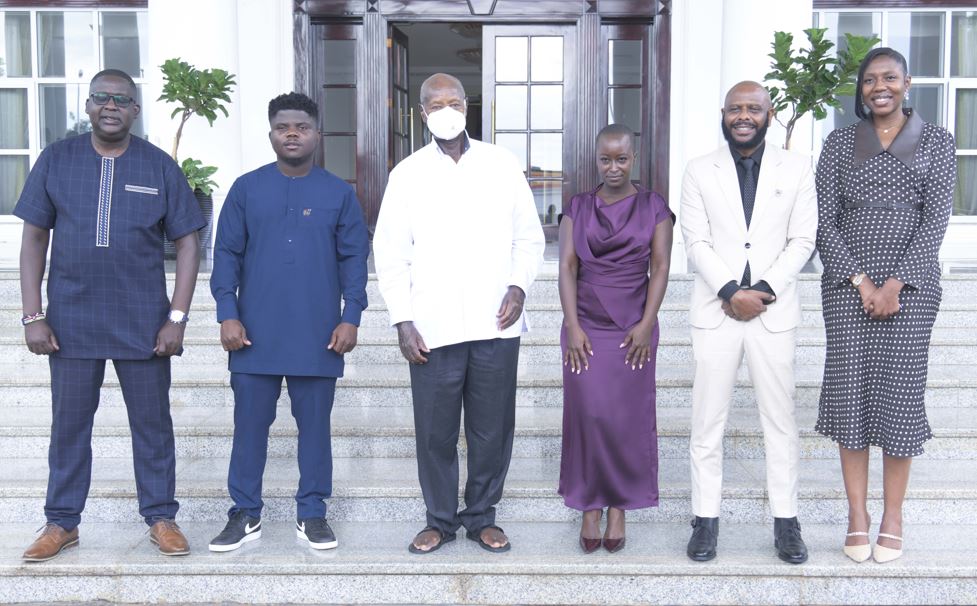
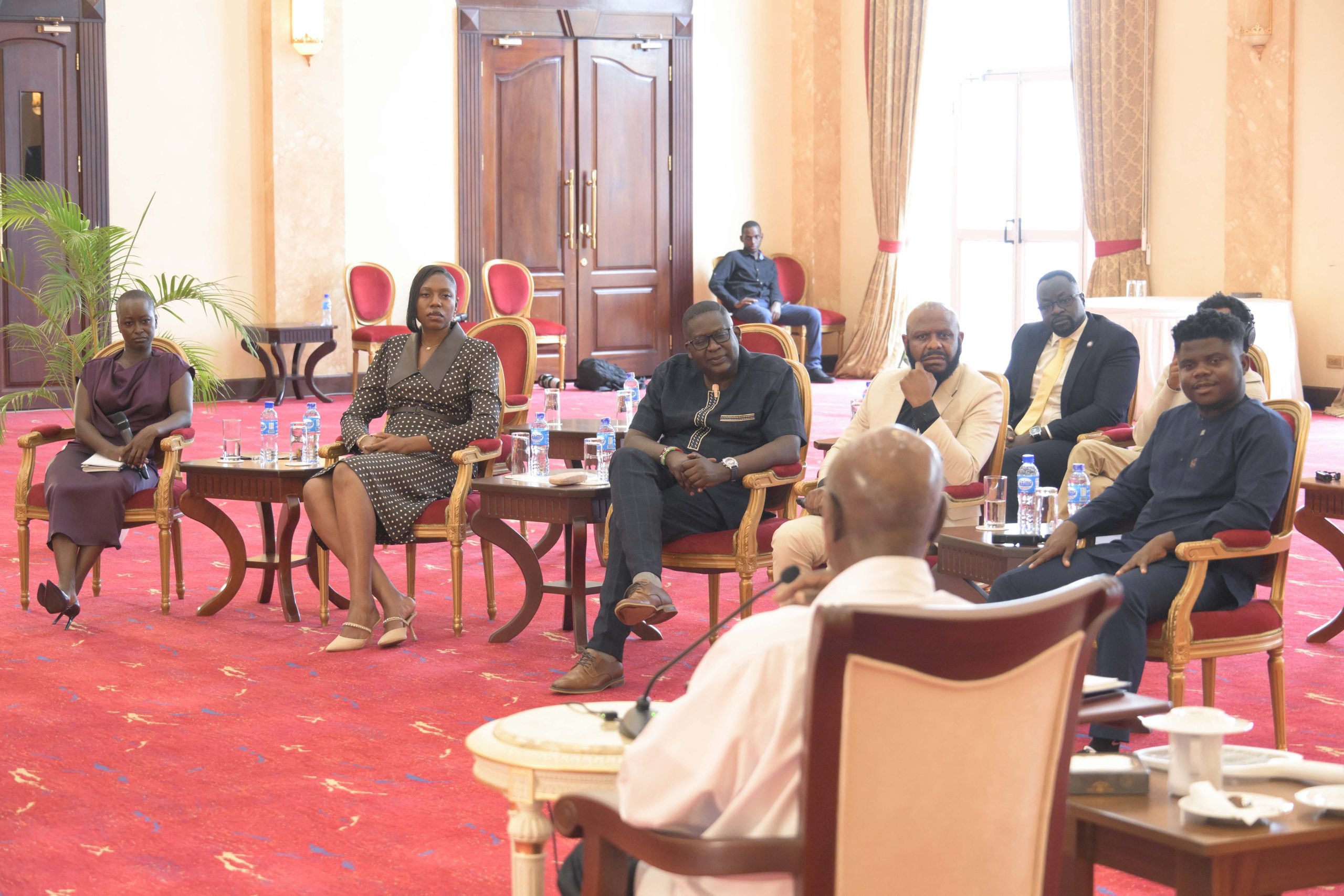
The President made the remarks on Thursday at State House, Entebbe, while meeting a delegation of prominent content creators from Ghana, Zambia, Tanzania, Kenya and Uganda.
The delegation comprised Berthold Kobina Ackon from Ghana, Masiliso Mutumba from Zambia, Salim Athumani Kikeke from Tanzania, Daniel Wambua Ndambuki from Kenya and Christine Lynghamar Kia, a Ugandan national currently residing in Sweden.
President Museveni said he invited the content creators after watching some of their discussions on African history, culture and languages. He saw an opportunity to share historical knowledge and insights that could enrich their storytelling about the continent.
“I decided to invite you to give you the content of the Jjajas, the old people, because you are content creators. The content I want to give you is something we have been talking about for a long time,” he said.
Using the analogy of a patient and a doctor, the President explained that societies are like patients while leaders are like doctors, emphasising that properly understanding the challenges facing a society is essential to finding appropriate solutions.
He observed that Africa has strong foundations for wealth creation, including agriculture, craftsmanship, traditional medicine and other forms of indigenous knowledge. He also highlighted the continent’s rich cultural heritage and linguistic diversity as important resources for its development.
According to the President, Africa’s historical challenges were compounded by internal divisions, poor governance and conflicts among communities and kingdoms, which weakened the continent and made it vulnerable to external domination.
He noted that these historical experiences offer important lessons for present-day African leaders and the younger generation, particularly on the importance of unity, cooperation and collective action.
Drawing from these lessons, President Museveni outlined the five historical missions that Africa must continue pursuing.
The first historical mission, he explained, was liberation from colonial rule. He recalled the struggles of African freedom fighters and the contribution of international developments, including support from the Soviet Union and the weakening of European colonial powers following the two World Wars, in advancing the liberation struggle.
He noted that the formation of liberation movements, including the African National Congress (ANC) in 1912, marked important milestones in the struggle for independence, which was eventually achieved across the continent, with South Africa attaining majority rule in 1994.
The second historical mission, according to the President, is democracy. He emphasised the importance of African countries being governed through systems that reflect the political will and interests of their people.
The third mission is economic prosperity. President Museveni explained that sustainable prosperity cannot be built on dependence on foreign assistance but rather on the production of goods and services that can be sold in viable markets.
He said Africa has the resources, human potential and productive capacity to create wealth but must address the limitations posed by fragmented markets.
“Your prosperity depends more on the whole of Uganda than on your tribe,” the President said, emphasising the importance of patriotism and national cohesion.
He explained that producers need sustainable markets for their goods and services, adding that as production increases beyond the capacity of domestic markets, African countries must look beyond their borders.
This, he said, makes economic integration through the East African Community (EAC) and the African Continental Free Trade Area (AfCFTA) essential, as larger markets encourage production, investment, job creation and industrial growth.
The fourth historical mission is strategic security. President Museveni said Africa must develop the capacity to protect its interests against external threats, noting that cooperation among African countries is essential in strengthening collective security.
He explained that closer political and economic integration would enhance Africa’s ability to defend its interests across land, air, water and space, capacities that individual countries may struggle to develop independently.
The fifth historical mission is African unity, which the President described as fundamental to achieving both economic prosperity and strategic security.
He called on the current generation of African leaders to draw lessons from history and strengthen cooperation and integration, rather than allow differences to undermine the continent’s common interests.
“If the past kings made mistakes in uniting us, what are you doing, you the African leaders?” he challenged.
President Museveni further urged Africans to recognise their historical, cultural and linguistic connections, noting that the continent’s people share many commonalities that can be harnessed to advance their collective interests.
The content creators welcomed the opportunity to engage with the President and gain a deeper understanding of Africa’s history, development journey and future aspirations.
They expressed particular interest in Uganda’s growing industrial capacity, noting that they had been impressed to learn about the range of products manufactured locally, including buses produced by Kiira Motors Corporation.
The content creators observed that perceptions of Uganda and Africa in Europe and other parts of the world do not always reflect the continent’s progress, industrial development, investment opportunities and potential.
They expressed interest in establishing platforms through which young Africans can share their stories, cultures and experiences, promote a better understanding of the continent and showcase its achievements.
The delegation also pledged to share the President’s message with their respective audiences in Africa and beyond, highlighting the importance of African unity, economic transformation and the need for Africans to take ownership of their story.