By Nasser Kayanja
KAMPALA — Equity Group Holdings invested a record Shs3.10 trillion (US$771 million) in social impact and sustainability initiatives across its regional operations in 2025, as the financial services group expands its support for businesses, households and climate-related programmes.
According to the Group’s newly released 2025 Sustainability Report, more than Shs809.12 billion (US$201 million) was channelled into sustainable finance, supporting investments aimed at promoting environmental protection, clean energy and climate resilience.
The Group recorded more than 47,000 climate-related transactions, distributed 75,855 clean-energy products and facilitated the planting of 9.1 million trees during the reporting period.
Beyond environmental initiatives, Equity Group disbursed Shs12.57 trillion (US$3.11 billion) to micro, small and medium-sized enterprises (MSMEs), trained 962,924 entrepreneurs, supported 60,009 scholarships and facilitated 9,772 paid internships.
Its social protection programmes reached 5.94 million people, with Shs5.40 trillion (US$1.34 billion) disbursed through cash transfers. In healthcare, Equity Afya operated 150 medical centres in Kenya and the Democratic Republic of Congo, recording more than 4.6 million cumulative patient visits.
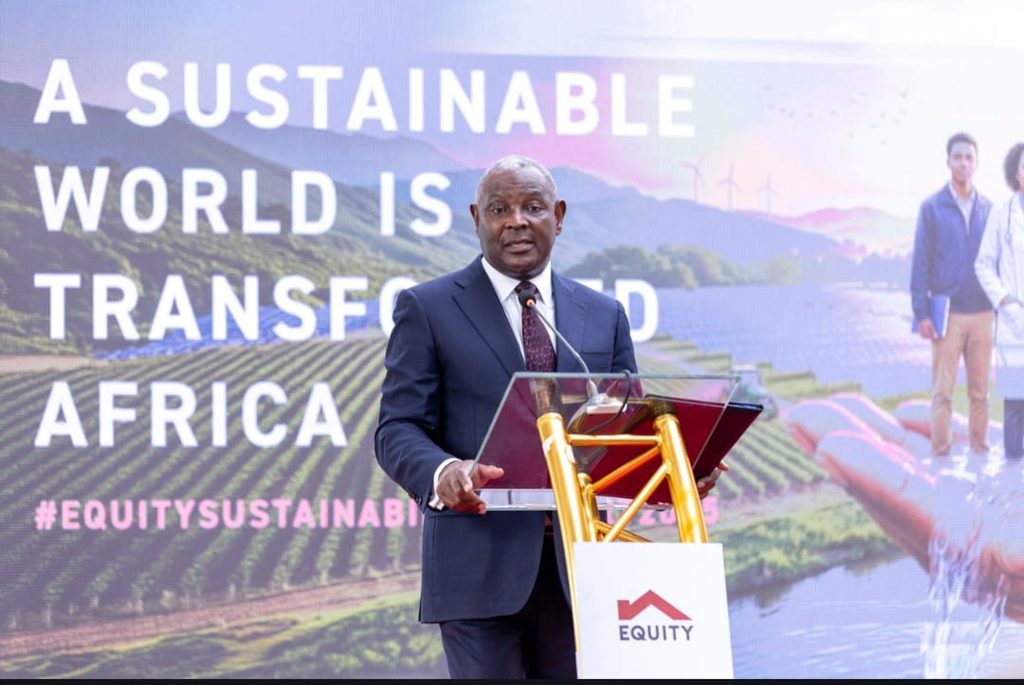
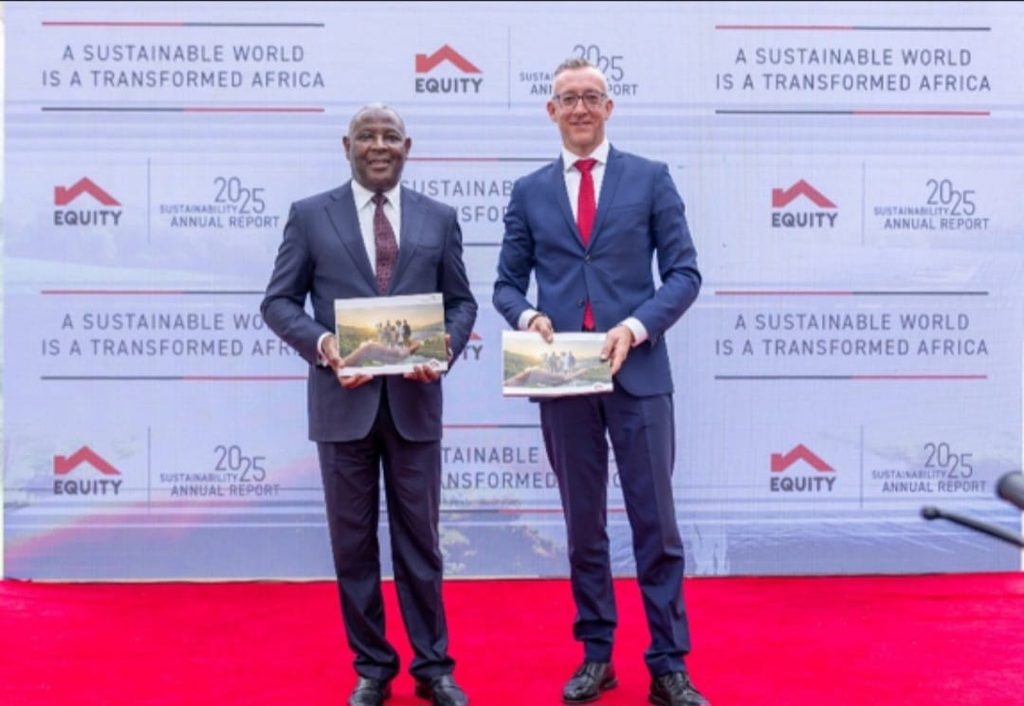
The report, themed “A Sustainable World is a Transformed Africa,” highlights the Group’s progress in enterprise development, education, healthcare, financial inclusion, climate action and responsible business practices.
In Uganda, the announcement highlights Equity Bank Uganda’s role in translating the Group’s regional sustainability agenda into locally relevant financial services, enterprise development and partnerships.
Equity Bank Uganda Managing Director and Chief Executive Officer Gift Shoko said the bank was committed to ensuring that financial services contribute to lasting economic and social progress.
“In Uganda, our ambition is to ensure that banking contributes to lasting economic and social progress. This means supporting businesses to grow, widening access to appropriate financial solutions and working with partners to unlock opportunities for households, enterprises and communities,” Shoko said.
He added that the bank was using its commercial banking relationships to support enterprises across different sectors while strengthening the integration of environmental and social considerations into responsible lending decisions.
Equity Group Managing Director and Chief Executive Officer Dr James Mwangi said the results demonstrate that commercial success and sustainable development can reinforce each other.
“Our 2025 performance demonstrates that commercial success and sustainable development are not competing priorities, but mutually reinforcing drivers of long-term prosperity,” Mwangi said.
He noted that the Group would continue directing finance towards economic resilience, supporting enterprises and protecting natural resources while expanding opportunities for wealth creation across its markets.
The report also emphasises the importance of partnerships between governments, financial institutions and development organisations in mobilising resources for sustainable development.
German Ambassador to Kenya H.E. Sebastian Groth said collaboration between the public and private sectors was essential to achieving development at scale.
He cited renewable energy, local value addition and climate finance as key areas where private investment could accelerate economic transformation.
Nasra Nanda, Built Environment Lead at the Executive Office of the President, also highlighted the financial sector’s role in promoting sustainable construction, supporting small and medium-sized enterprises in the built environment and incorporating environmental resilience into investment decisions.
She said financial institutions could support the transition by financing businesses and skills needed for sustainable construction while ensuring that investments account for environmental risks and long-term resilience.
Equity Group’s sustainability strategy is anchored in its Tri-Engine Model, which integrates economic performance, social impact and environmental sustainability into its business strategy, governance, risk management and operations.
Through the approach, the Group seeks to combine financial growth with inclusive development, strengthening household resilience, expanding economic opportunities and supporting communities across the African markets in which it operates.