KAMPALA
By Joseph Mary Buwule
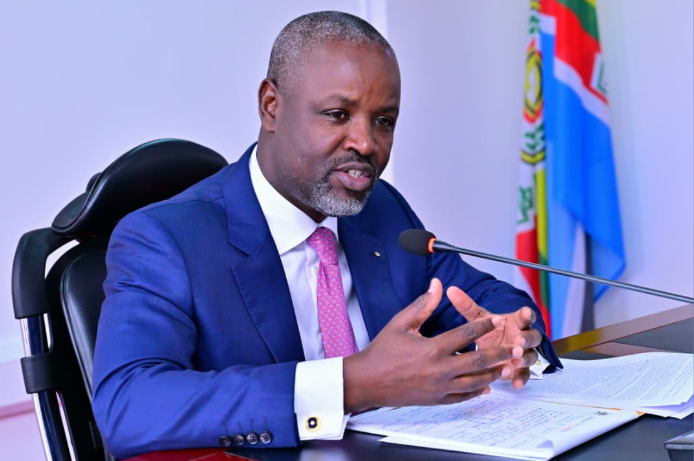
Deputy Speaker of Parliament Thomas Tayebwa has backed calls for the enactment of a comprehensive social protection law to strengthen the implementation, coordination and sustainable financing of programmes targeting vulnerable people in Uganda.
Tayebwa said a dedicated law would provide a stronger legal framework for social protection interventions, establish clear institutional responsibilities and ensure that government support reaches people who need it most.
He said the proposed legislation should go beyond existing policies and programmes to provide enforceable provisions and sustainable funding mechanisms for initiatives targeting older persons, children with disabilities and other vulnerable groups.
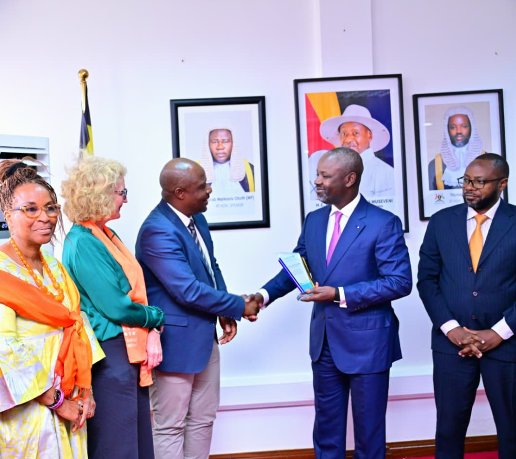
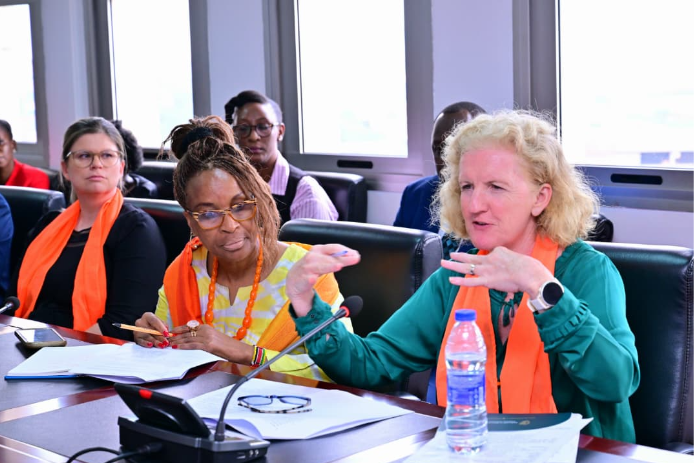
He made the remarks on Thursday while meeting members of the Parliamentary Forum on Social Protection and representatives of development partners, including Ireland’s Ambassador to Uganda, H.E. Mags Gaynor, the United Nations Children’s Fund (UNICEF) and the World Food Programme (WFP).
The meeting discussed the need for a unified legal framework to address gaps in Uganda’s social protection system and strengthen the delivery of social assistance programmes.
Responding to a proposal presented by Ambassador Gaynor, Tayebwa agreed that a comprehensive law was necessary to operationalise constitutional provisions on social protection and provide clearer guidance on government responsibilities.
“We would need a law that would operationalise the provisions of the Constitution and go much deeper,” Tayebwa said.
However, he urged the Parliamentary Forum to work closely with the Executive to advance the proposed legislation, noting that Parliament faces constitutional limitations under Article 93 regarding the introduction of private members’ bills that impose financial obligations on the Consolidated Fund.
He emphasised that social protection should be treated as a fundamental right rather than an act of generosity towards disadvantaged communities.
“Social protection is not charity. Social protection is a fundamental right that ensures that the dignity, the resilience and the contribution of every Ugandan is considered and is felt,” he said.
Ambassador Gaynor commended Parliament for its continued advocacy for social protection, describing investment in social protection as an important strategy for developing human capital, reducing poverty, strengthening household resilience and promoting economic inclusion.
She argued that supporting vulnerable populations should not be viewed as an additional cost to society but as an investment in the country’s long-term development.
Reforms to Senior Citizens Grant
The meeting also called for accelerated implementation of proposed reforms to the Senior Citizens Grant, including lowering the eligibility age from 80 to 65 years and increasing the monthly payment from Shs25,000 to Shs35,000.
Ambassador Gaynor said the proposed changes would significantly expand the number of older persons eligible for government assistance, but stressed the need to strengthen institutional capacity to ensure effective delivery of the programme.
The Senior Citizens Grant provides financial assistance to older persons, helping them meet basic household needs and maintain some level of financial independence.
WFP Country Representative Wanja Kaaria-Ndoho highlighted the importance of social protection interventions for elderly people, particularly those living in Karamoja, where prolonged drought has exposed vulnerable households to food insecurity and economic hardship.
She said approximately 10,000 older persons received assistance in June through interventions targeting communities affected by drought.
Kaaria-Ndoho further disclosed that a second round of support was planned to benefit approximately 17,000 additional older persons across all nine districts of Karamoja.
The planned intervention follows an earlier support programme that covered five districts in the sub-region.
She said such interventions demonstrate the importance of strengthening social protection systems to help vulnerable populations withstand climate-related shocks and other emergencies.
Calls for nationwide child disability grants
The meeting also discussed the National Child Disability Assistance Programme, with Tayebwa commending Parliament and development partners for their collaboration in securing Shs15 billion towards the initiative.
The programme is intended to support children with disabilities and their families, many of whom face additional financial pressures associated with healthcare, education, mobility and other essential needs.
The Chairperson of the Parliamentary Forum on Social Protection, Kiconco Katabaazi Patrick, said the current allocation was insufficient to cover the entire country, noting that it could only support beneficiaries in fewer than 30 districts.
He called for increased government funding to enable the programme to expand nationwide and reach more children with disabilities.
Tayebwa urged stakeholders to strengthen monitoring, evaluation and documentation of the programme’s impact to provide evidence that could support further resource mobilisation.
He said demonstrating the difference made by the programme would strengthen Parliament’s case for additional funding and ensure that more vulnerable children benefit from government interventions.
Push for National School Feeding Programme
The proposed establishment of a National School Feeding Programme was another key issue discussed during the meeting.
Development partners called on government to consider introducing a comprehensive school feeding initiative, particularly in vulnerable communities where household poverty and hunger continue to affect school attendance, retention and learning outcomes.
WFP has been supporting school-going children through interventions such as the Karamoja Feeds Karamoja programme and other partnerships.
During the recent drought, approximately 250,000 children benefited from take-home food rations, an intervention intended to ease household food shortages while encouraging parents to keep their children in school.
Tawanda Chinembiri, who represented UNICEF at the meeting, said providing food at school was critical to improving attendance, particularly in Karamoja, where hunger remains a major barrier to education.
He noted that access to meals can be a strong motivation for children to attend classes in communities where families struggle to provide sufficient food.
“If you don’t feed the school children in Karamoja, if you don’t provide them food at school, then they will not come to school,” Chinembiri said.
Tayebwa supported the need for targeted school feeding interventions but cautioned against adopting a blanket approach that overlooks the different economic circumstances of communities across the country.
He particularly emphasised the need to prioritise Karamoja, where some households struggle to provide even one meal a day and therefore cannot reasonably be expected to prepare additional food for their children to take to school.
“You can only pack if you have what to pack,” he observed.
He argued that school feeding interventions should take into consideration the economic realities of vulnerable households instead of placing the responsibility entirely on parents.
Tayebwa said targeted interventions in communities such as Karamoja would help keep children in school, improve access to education and protect them from the effects of hunger and household poverty.
The discussions underscore growing calls for Uganda to move towards a more coordinated and adequately financed social protection system, supported by a comprehensive legal framework that guarantees assistance to vulnerable populations.
Through stronger legislation, improved funding and collaboration between Parliament, government and development partners, stakeholders hope to expand access to social assistance and ensure that older persons, children with disabilities and disadvantaged households are not left behind.