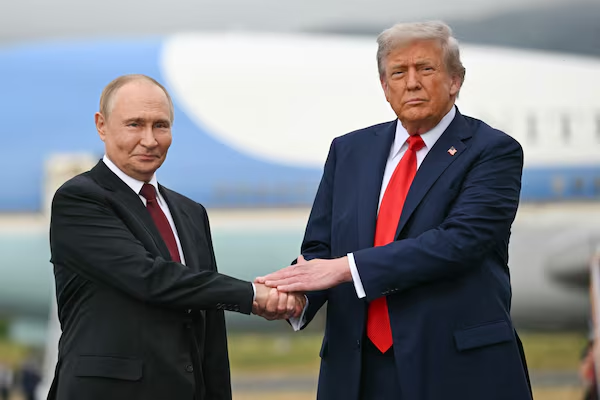
The Kremlin has struck an unusually positive tone toward Washington after the release of the United States’ revised National Security Strategy, saying the new document reflects a worldview that is largely consistent with Russia’s own approach to global affairs.
Kremlin spokesperson Dmitry Peskov said the policy shift marked a significant departure from previous U.S. strategies that labelled Russia as a principal threat. Instead, the new framework unveiled last week by the Trump administration emphasizes restoring strategic stability with Moscow, scaling back NATO expansion ambitions and reassessing America’s engagement in Europe.
“These adjustments align, in many ways, with our own vision of a balanced international order,” Peskov told Russian state media. His remarks signal rare approval from a government that has long criticised U.S. foreign policy doctrine as confrontational.
The revised U.S. security blueprint no longer highlights Russia as a direct adversary. Rather, it focuses on recalibrating Washington’s relationship with both Russia and Europe, while placing greater attention on domestic priorities. The strategy also warns of Europe’s political and demographic weakening a framing Russia has often echoed in its own geopolitical messaging.
Another notable shift is the absence of strong commitments to NATO enlargement, a long standing point of friction between Washington and Moscow. Russian officials have repeatedly argued that NATO’s growth threatens regional stability, and they view the new U.S. stance as a step toward easing tensions.
Despite welcoming the policy changes, Peskov warned that the U.S. deep state establishment could still hinder full implementation. Russian officials said past attempts at resetting relations were often undermined by entrenched political interests in Washington.
Still, the Kremlin believes the new strategy could support ongoing diplomatic efforts, including negotiations surrounding the war in Ukraine and broader East West security arrangements.
The shift has sparked concern across Europe where several governments worry that deprioritising Russia as a threat may undermine collective deterrence. Critics fear the new U.S. approach could weaken transatlantic unity at a time when Russia continues to exert influence over security dynamics in Eastern Europe.
Analysts say the coming months will reveal whether Washington’s new posture leads to concrete cooperation with Moscow or whether long-running geopolitical mistrust will reassert itself.
For now, Russia is treating the document as the most favourable strategic signal it has received from the United States in years a development that could reshape how the two powers engage on global security issues.
