By Joseph Kiggundu
KIKUUBE — President Yoweri Museveni is set to unveil Uganda’s crude oil grade today as the country takes another major step towards commercial oil production and entry into the international crude oil market.
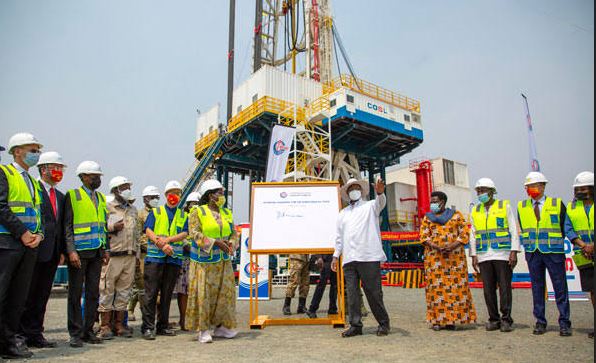
Museveni will announce the name during a visit to the Kingfisher oil project in Kikuube District, where CNOOC Uganda Limited is developing one of Uganda’s two major oil production projects.
The naming ceremony is expected to give Uganda’s crude a distinct commercial identity ahead of the anticipated start of production later this year.
The President’s visit comes as Uganda accelerates preparations for first oil and assesses progress on the country’s oil and gas projects.
Energy and Mineral Development Minister Monica Musenero toured the Kingfisher project on Tuesday ahead of Museveni’s arrival.
During the inspection, Musenero visited the Central Processing Facility, a drilling site at Pad 2 and a waste-management facility.
She was briefed on the progress of commissioning, national content initiatives and community development programmes associated with the project.
Giving Uganda’s crude a commercial identity
The naming of Uganda’s crude is expected to mark an important transition from oil development to commercialisation.
Crude oil is traded according to grades, with each grade distinguished by characteristics such as density, sulphur content and refining qualities. Giving Uganda’s crude a recognised name will help identify its characteristics in the international market.
The Uganda National Oil Company (UNOC) has been building anticipation for the announcement through a campaign dubbed “The Crude Truth.”
Uganda’s crude is waxy and relatively low in sulphur. Because of its waxy nature, the oil will require heating during transportation to maintain its flow.
The crude will be transported through the 1,443-kilometre East African Crude Oil Pipeline (EACOP) from the Albertine region to the Chongoleani terminal near Tanga on Tanzania’s Indian Ocean coast.
Uganda eyes 230,000 barrels per day
The Lake Albert basin is estimated to contain about 6.5 billion barrels of oil in place, of which between 1.4 billion and 1.7 billion barrels are considered recoverable, according to UNOC.
Uganda’s two major upstream projects — Kingfisher, operated by CNOOC Uganda Limited, and Tilenga, operated by TotalEnergies — are expected to produce a combined peak output of about 230,000 barrels of crude oil per day.
The Kingfisher Central Processing Facility has been designed to handle up to 40,000 barrels per day.
Commercial quantities of oil were confirmed in Uganda’s Albertine Graben in 2006, but the country spent several years in the exploration and development phases before reaching the current stage.
The Final Investment Decision in 2022 paved the way for approximately $15 billion in investment across Uganda’s oil projects and supporting infrastructure.
First oil in sight
Uganda’s first-oil target has been pushed back several times, but government and industry officials maintain that commercial production remains targeted for later this year.
The EACOP project is also reported to be more than 90 per cent complete and has entered critical testing and commissioning stages.
Once production begins, crude from the Kingfisher and Tilenga fields will be collected in the Hoima area before being transported through EACOP to Tanzania for storage and eventual export.
The naming of the crude grade is therefore being viewed as more than a ceremonial event, as it gives Uganda’s oil a distinct identity as the country approaches the final stages of becoming a commercial oil producer.