ENTEBBE — Farmers enrolled in Uganda’s Parish Development Model (PDM) are set to gain greater access to improved dairy cattle, pigs and poultry breeding stock as the National Animal Genetic Resources Centre and Data Bank (NAGRC&DB) rolls out a new five-year strategy aimed at raising livestock productivity.
Under its Strategic and Investment Plan for 2025/26 to 2029/30, NAGRC&DB plans to expand the breeding and multiplication of productive, farmer-preferred animal breeds and make quality breeding stock available to PDM beneficiaries at highly subsidised prices.
The intervention is intended to help households establish viable livestock enterprises, increase incomes and gradually shift from subsistence production into the money economy.
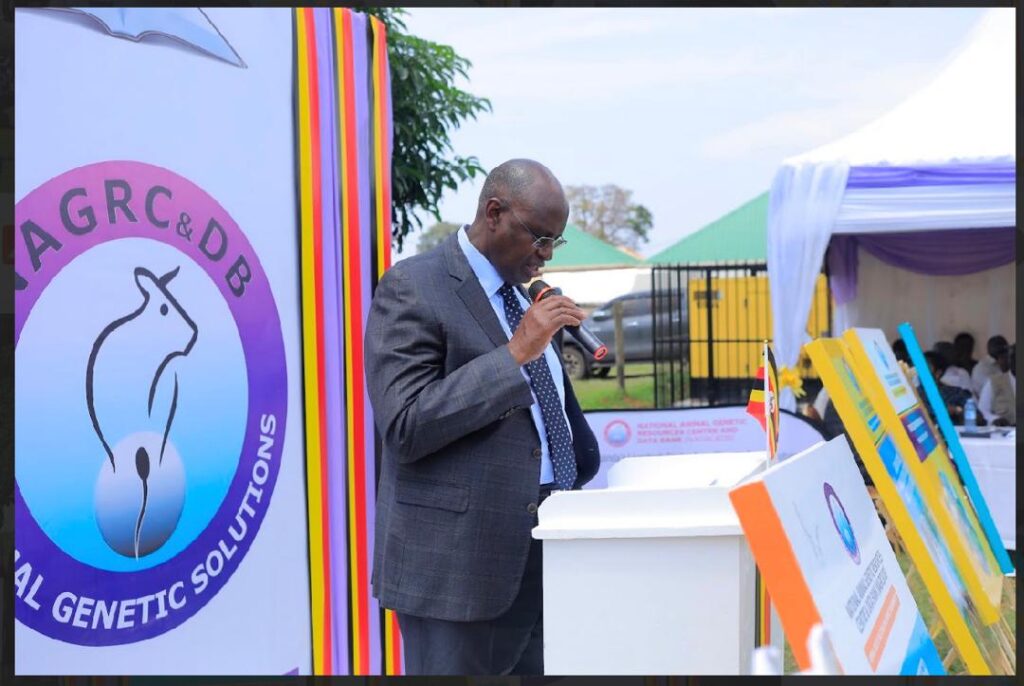
The plan is among five institutional documents launched at the NAGRC&DB headquarters in Entebbe by the Minister of State for Animal Industry, Hon. Bright Kanyontore Rwamirama.
Rwamirama challenged the agency to ensure that the plans translate into measurable improvements in the lives of farmers rather than remaining institutional documents.
“The value of these documents will not be measured by the launch today,” he said, urging NAGRC&DB management, staff, the Board and partners to concentrate on implementation and results.
NAGRC&DB will focus on the breeding and multiplication of improved dairy and beef cattle, goats, pigs, poultry and fish, with its farms and ranches serving as breeding, multiplication and technology-transfer centres.
The agency will work with local governments, farmer organisations and PDM structures to ensure the improved genetic materials reach farmers.
Beneficiaries will also receive technical guidance in breeding, feeding and livestock enterprise management to enable them to get better returns from the animals.
Dairy, piggery and poultry will receive particular attention because of their potential to provide households with regular income while supporting the commercialisation of agriculture.
NAGRC&DB will track the breeds and poultry genetic resources introduced, multiplied and distributed to PDM farmers as part of efforts to measure the impact of the programme.
The intervention will be implemented alongside the Uganda National Animal Breeding Strategy and Action Plan (NABSAP), which seeks to tackle challenges affecting livestock production, including low genetic productivity, inadequate breeding infrastructure and limited access to quality breeding materials.

NABSAP also promotes climate-resilient animal genetics while providing for the conservation of Uganda’s indigenous animal genetic resources.
Beyond breeding, NAGRC&DB plans to increase the production of quality and affordable animal feeds and strengthen its institutional capacity to improve service delivery.
Eng. Robert Ssenozi, a NAGRC&DB Board member representing farmers in the Central Region, said the new framework provides an opportunity to accelerate the transformation of Uganda’s livestock industry.
He described the launch as “launching possibilities”, noting that commercialising animal breeding could significantly increase livestock productivity and farmers’ earnings.
The NAGRC&DB intervention is aligned with the broader PDM goal of raising household incomes and moving subsistence households into the money economy.
For farmers, the success of the initiative will ultimately depend on whether improved breeding stock becomes easier and cheaper to access and whether better genetics result in higher production, increased incomes and sustainable livestock enterprises.