KAMPALA.
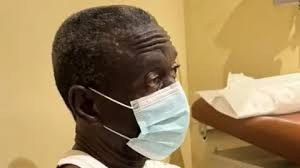
The Uganda Medical Association (UMA) has asked the government to allow incarcerated veteran politician and medical professional, Dr Kizza Besigye, access immediate specialised medical care.
In a strongly worded January 22 statement signed by newly elected president, Dr Frank Asiimwe, the association expressed deep concern over the reported deterioration in Dr Besigye’s health.
“We must recall that Dr Besigye is not only a seasoned national leader but a medical professional who played a gallant role in preserving the lives of our freedom fighters,” UMA stated. “At a time when they had no other medical option(s) and their lives were in mortal danger, he availed his skills and laid down his life against all odds to ensure their survival,’’ the statement read.
Reflecting more deeply on the situation, the doctors highlighted the broader implications of what Dr Besigye,69, is going through. “Given this history of service and sacrifice, it is only fitting that his own medical dignity be upheld today… And if a doctor that has ever saved lives of people in power can be denied health care in his own country, at his old age, how confident can we be that we, that having treated millions of ‘nobodies’, when our time to need help comes, we will get the attention or sympathy of powerful people that know us not?” the UMA statement reads in part. It adds: “Does our service and sacrifice even matter? Or is it other matters that really matter? Is it the good work we do now or the perceptions of our actions that could cross certain lines that really define the value of our lives?” Last Tuesday, reports emerged of Dr Besigye’s urgent transfer from Luzira Prison to a medical facility in a critical state.
“We strongly advocate for Dr Besigye to have unrestricted access to his personal physicians and specialised medical care,” the UMA appealed. It added: “The State bears the responsibility for ensuring the health and physical well-being of all persons in its custody. This concern holds for all who are incarcerated, in government detention centres, their charges notwithstanding.” Dr Besigye, a four-time presidential candidate, holds a Bachelor’s degree in Medicine and Surgery (MBChB) from Makerere University. He was President Museveni’s personal physician during the Bush War (1981 to 1986). Dr Besigye was arrested in Kenya in November 2024, and now faces charges of illegal possession of firearms, ammunition, and treachery, among others.
Demand for full internet restoration
In the same statement, UMA also asked the government to fully restore unrestricted internet access to the pre-election levels, warning that the ongoing disruptions are severely hampering healthcare delivery across the country. The UMA leadership said the restrictions have hindered critical functions such as coordination among healthcare facilities, telemedicine consultations, access to online medical resources, and real-time communication essential for patient care and emergency responses. “The recent disruptions to internet and mobile money services have created significant obstacles for the medical community…These are not just communication tools; they are public-health lifelines,’’ the statement reads in part.
On emergency referrals and financial access, UMA said the inability to share diagnostic images and specialist consultations via digital platforms “delays life-saving interventions”. “With mobile money being a primary payment method, restrictions hinder families from paying for emergency surgeries, medicines, and ambulance services in real-time,” the UMA stated. It added: “We notice that these restrictions are slowly being eased, but they can currently be described as epileptic, and this is not good enough for delivery of 21st-century health care.” Several internet users in Uganda continue to report an inability to access social media platforms or applications like WhatsApp, Twitter, and Facebook, about two weeks after the shutdown by the authorities. Some internet users are reportedly employing a Virtual Private Network (VPN), a technology that protects its users by encrypting their data and masking their IP addresses.
VPN hides their browsing activity, identity, and location, allowing for greater privacy and autonomy, and enabling access to some of the restricted websites or applications. For WhatsApp, sometimes a user in Uganda is able to see texts without using a VPN, but the user is often unable to download images and videos. This limitation on a widely used communication platform is concerning, especially for the medical community sharing information through pictures and images with senior colleagues or peers to aid diagnosis or treatment. The recently concluded general election on January 15, which included presidential and parliamentary polls, brought significant disruptions to daily life in a country heavily reliant on a cash-based economy, mobile money, and public transport.
In the days leading up to and during the election period, authorities imposed a nationwide internet shutdown, citing security concerns. Public transport, particularly long-distance bus companies that ferry patients to Kampala (home to major facilities like the Uganda Cancer Institute and other national referral hospitals), largely suspended operations due to safety fears amid heightened tensions and security concerns. These combined disruptions, including internet and mobile money (cash withdrawal), halted transport, and challenges accessing cash, created barriers to healthcare access, especially for vulnerable groups
