The ruling National Resistance Movement (NRM) government has unveiled plans for the swearing-in and inauguration of President-elect .
The ceremony is scheduled for May 12, 2026, at Kololo Ceremonial Grounds in Kampala.
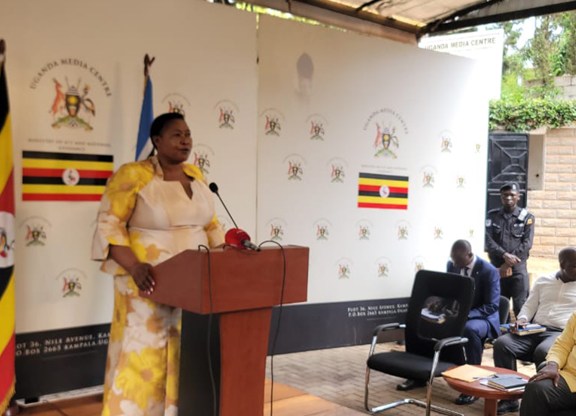
According to the Minister for Presidency Milly Babalanda, the ceremony will run from 8:00 a.m. to 2:00 p.m will draw international delegations, government officials and members of the public. It will under the theme, “Protecting the gains, making a qualitative leap to higher middle income status,” with preparations already underway for what authorities describe as a high-profile state event.
“We expect over 30 international delegations from across the world, alongside ministers, Members of Parliament, ambassadors and members of the public,” Babalanda said, adding that security agencies are coordinating arrangements to ensure the event is conducted safely.
She further noted that the inauguration will be broadcast live on television and digital platforms to allow nationwide access.
“All necessary arrangements are being put in place to guarantee a smooth and secure event,” she said.
Ahead of the ceremony, government has scheduled a series of pre-inauguration activities, including the handover of the outgoing term’s manifesto implementation report and thanksgiving prayers.
Officials say these events are intended to reflect on past commitments while marking the transition into a new term.
“This is not just a ceremony, but a moment to account to Ugandans and set the tone for the next phase,” Babalanda added.
Government officials also highlighted achievements in peace, security and socio-economic transformation as key pillars of the administration’s record. They cited programmes such as the Parish Development Model, Emyooga and Operation Wealth Creation, alongside expanded electricity access and growth in local industries.
“These gains have created jobs, improved livelihoods and attracted investment, which is why Ugandans continue to place their trust in President Museveni’s leadership,” Babalanda said.
The government links these developments to Uganda’s broader political history, tracing them to the 1980 protracted armed struggle that led to the current constitutional order, including the 1995 Constitution and regular elections held every five years.
The May 12 ceremony will formally usher in President Museveni’s seventh term, following his victory in the most recent general elections in which the National Resistance Movement secured a parliamentary majority and he reportedly garnered over 71 percent of the presidential vote, according to official results from the Electoral Commission.