By: Joseph Mary Buwule
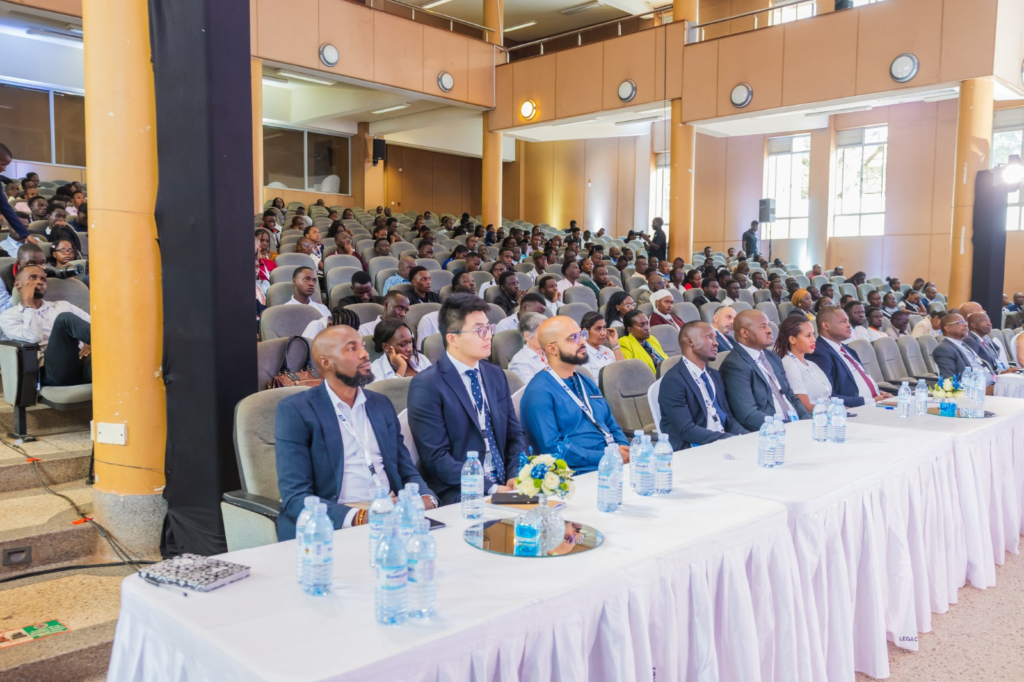
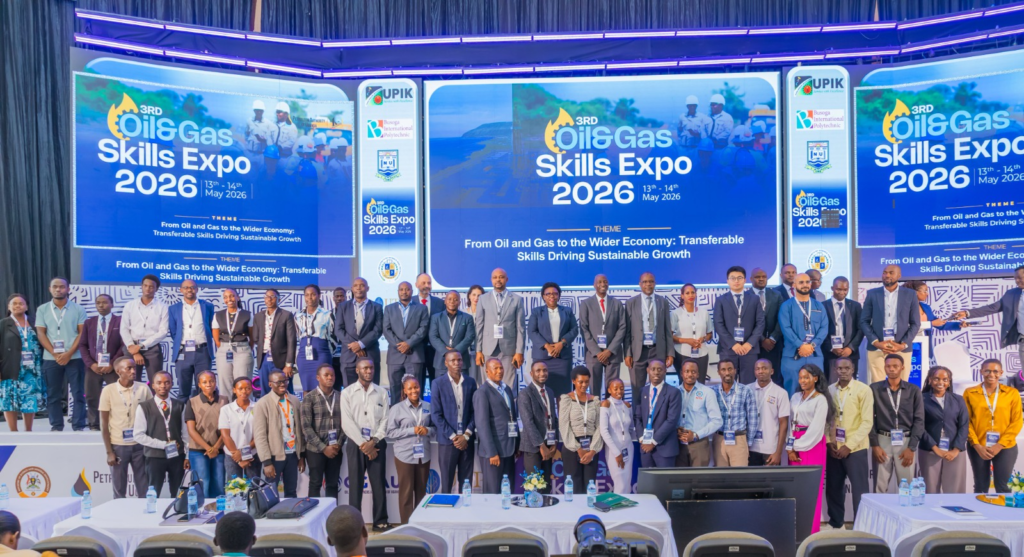
Uganda’s energy sector has taken another major step toward preparing local talent for the country’s oil production era following the official opening of the 3rd Oil & Gas Skills Expo 2026 at Makerere University on Wednesday, May 13.
The two-day expo, organized by the Petroleum Authority of Uganda under the theme “Fostering Transferable Skills and Innovation in the Oil and Gas Sector for Sustainability,” has brought together students, professionals, training institutions, policymakers, and industry players to discuss workforce readiness ahead of Uganda’s first oil.
The exhibition aims to showcase skills development opportunities, promote national content participation, and create career networking platforms for Ugandans seeking opportunities in the country’s growing petroleum industry.
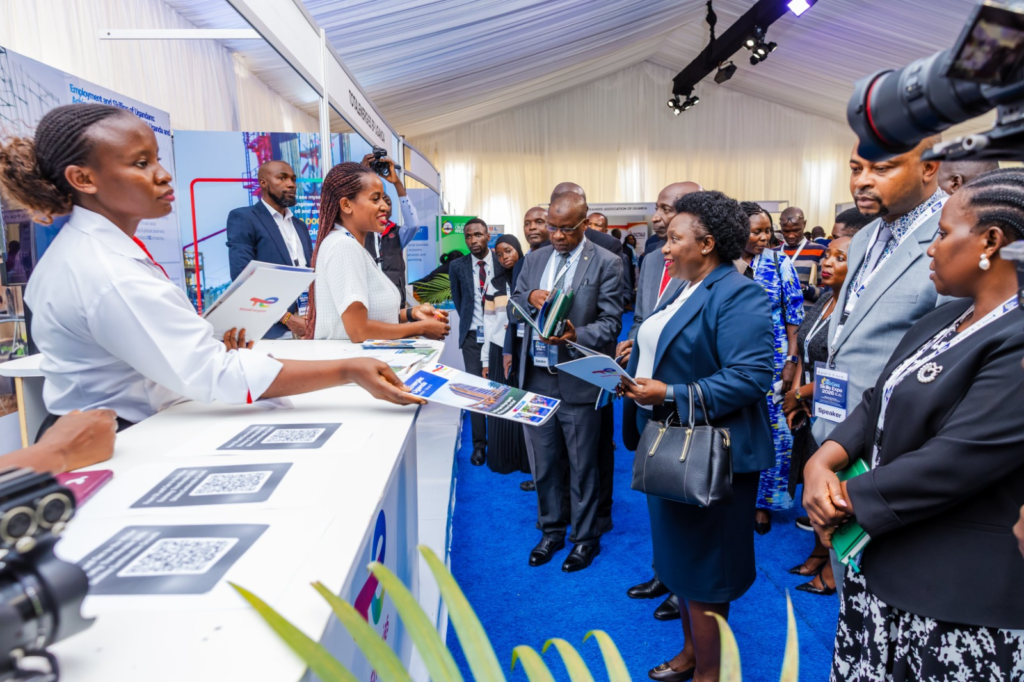
The expo comes at a critical moment as Uganda transitions from the development stage of its petroleum projects into the operational and production phase. Major stakeholders and contractors participating in the event include the East African Crude Oil Pipeline project, ZPEB, Expro, COSL Uganda, Sinopec, MSL Logistics, Weafri and Dietsmann among others.
Participants are engaging in career guidance sessions, innovation showcases, mentorship discussions, exhibitions, and networking opportunities designed to equip Ugandans with practical skills required across the oil and gas value chain.
Speaking on behalf of the Minister of Energy and Mineral Development, Ruth Nankabirwa, Under Secretary Ms. Grace Tusiime said government remains committed to ensuring that Uganda’s petroleum resources support sustainable and inclusive national development.
She noted that the recently launched National Petroleum Policy 2025 emphasizes skills development, technology transfer, innovation, and stronger collaboration between industry and academia in preparation for the country’s evolving energy landscape.
“I am pleased to note that this Expo has deliberately focused on workforce readiness for the operations phase, strategic research and innovation, international accreditation and emerging employment opportunities. These discussions are critical as Uganda transitions from project development into petroleum production,” Tusiime said.
She added that the policy also promotes transferable skills, digital competencies, and environmental stewardship, aligning with Uganda’s broader industrial transformation agenda.
A major focus of this year’s expo is the promotion of transferable skills, with organizers emphasizing that expertise acquired in the petroleum sector can also support other sectors of the economy including construction, logistics, engineering, manufacturing, transport, information technology, and environmental management.
Executive Director of the Petroleum Authority of Uganda, Ernest Rubondo, stressed that skills transfer does not happen automatically and requires deliberate interventions such as structured training, certification, and information sharing.
“With all the above skills already in the sector, it is important to appreciate that skills transfer does not occur automatically. It requires deliberate interventions, including certification, structured training, and information sharing, many of which are going to be presented and discussed during this Expo,” Rubondo said.
Rubondo revealed that by the end of 2025, direct employment in Uganda’s oil and gas sector had grown to more than 21,000 personnel.
He explained that beyond direct employment, the industry had generated an estimated 50,000 indirect jobs through supply chains, subcontracting, transport, hospitality, and other support services linked to petroleum activities.
In addition, induced employment was estimated at 140,000 jobs arising from increased household spending by workers and businesses benefiting from the sector, bringing the total employment impact close to 200,000 jobs.
“Overall, the total employment impact of the industry approached 200,000 jobs, underscoring its substantial contribution to national employment creation, income generation, and Uganda’s economic growth,” Rubondo noted.
He further disclosed that more than 14,000 Ugandans have already been trained through institutions including Makerere University, Uganda Petroleum Institute Kigumba, Kyambogo University, Mbarara University of Science and Technology, the Assessment and Skilling Centre (TASC), Sunmaker Energy and Busoga Polytechnic Institute among others.
According to Rubondo, these institutions have embedded critical skills within the country including heavy goods vehicle driving, welding, scaffolding, and Health, Safety and Environment (HSE) training.
He attributed this progress to internationally recognized certifications such as OPITO, EICTB, and City & Guilds obtained by 14 government and private training institutions in Uganda.
At the expo, Prof. Juma Kasozi, Deputy Principal College of Natural Sciences at Makerere University, said the university has greatly benefited from Uganda’s oil and gas industry through training of trainers, provision of modern equipment, and access to vital research datasets.
“These investments have enabled us to produce a highly skilled workforce that is now contributing directly to the petroleum sector,” Prof. Kasozi remarked.
The keynote speaker, Prof Augustine Ifelebuegu, emphasized the need for Uganda to future-proof its petroleum workforce by ensuring that skills acquired in the sector remain relevant across the broader economy.
“Oil and gas will remain a dominant source of energy for the next 50–70 years. However, Uganda must take deliberate steps to future-proof its petroleum workforce by ensuring these skills are transferable to the broader economy,” he said.
Prof. Ifelebuegu warned that workforce demand is expected to decline significantly during the production phase, making transferable skills increasingly important for long-term employment sustainability.
The expo forms part of broader industry engagements, including the 11th Oil & Gas Convention, all aimed at preparing Ugandans to actively participate in the country’s petroleum industry and maximize national benefits from the sector.
Uganda’s major oil projects, including the Tilenga Project, Kingfisher Project and the East African Crude Oil Pipeline, are expected to create thousands of direct and indirect jobs as the country moves closer to commercial oil production.