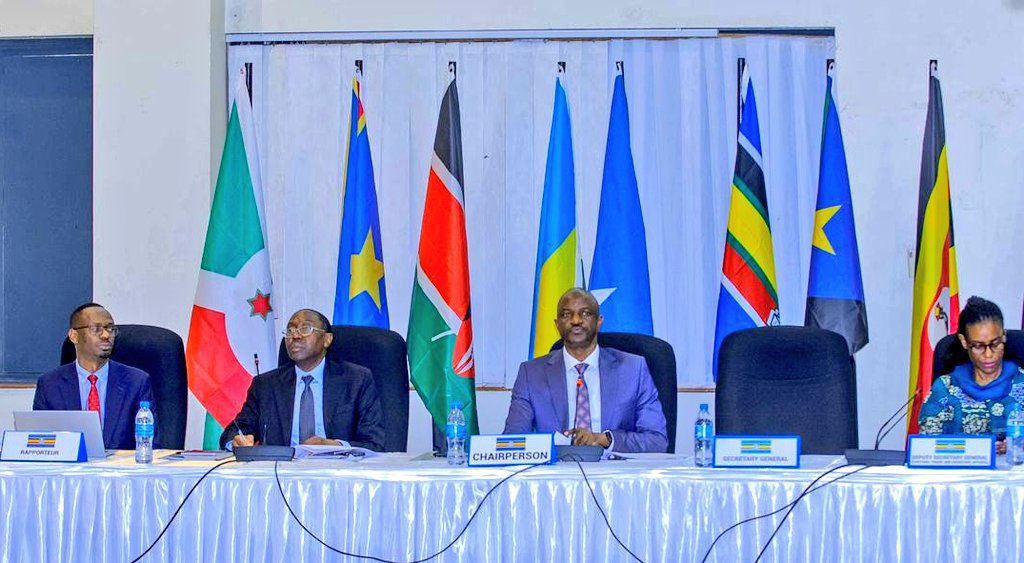
Finance Ministers and senior economic policymakers from the East African Community (EAC) Partner States have agreed that all member countries will present their national budgets on June 11, 2026.
The move is aimed at strengthening regional fiscal coordination, macroeconomic convergence and economic integration across East Africa.
The resolution was reached during the 18th Meeting of the Sectoral Council on Finance and Economic Affairs (SCFEA), held in Arusha, Tanzania from May 11–15, 2026.
The meeting brought together Ministers of Finance, Permanent Secretaries responsible for Finance and Economic Planning, and officials from the EAC Secretariat to review regional economic performance, harmonisation of tax systems and progress on implementation of EAC integration commitments.
Chaired by the Permanent Secretary and Secretary to the Treasury, Dr. Ramathan Ggoobi, the Council adopted a common regional budget theme for the 2026/27 financial year: “Deepening Regional Integration and Economic Resilience through Improved Regional Security, Domestic Revenue Mobilisation and Digital Transformation for Inclusive Growth.”
The Ministers emphasized the importance of a coordinated regional approach to budgeting, tax harmonisation and economic management in order to strengthen resilience and support sustainable growth within the Community.
The meeting also reviewed the region’s economic outlook, with Partner States reporting continued economic recovery despite prevailing global uncertainties.
Uganda reported economic growth of 6.7 percent in the first half of FY2025/26, up from 5.8 percent during the same period the previous year, driven by strong performance in agriculture, industry and services.
In efforts to deepen regional integration, the Council assessed progress in harmonisation of domestic taxes and implementation of directives intended to eliminate inconsistencies affecting trade within the EAC.
Partner States reported progress in aligning excise duty frameworks and treatment of locally produced goods in line with EAC Customs Union commitments.
Ministers further reviewed progress toward agreed macroeconomic convergence targets, including maintaining inflation below 8 percent, fiscal deficits below 3 percent of GDP and foreign exchange reserves equivalent to at least 4.5 months of imports.
The meeting noted that several Partner States, including Uganda, Tanzania and Rwanda, have maintained inflation within agreed convergence thresholds, reflecting prudent macroeconomic management across the region.
PSST Ggoobi called for stronger implementation of regional commitments to ensure citizens experience tangible benefits from integration efforts.
“Citizens expect concrete benefits from the EAC, including increased trade, jobs, investment and improved livelihoods,” he said.
PSST Ggoobi stressed the need for the region to move from declarations to practical implementation, noting that sustainable financing, stronger institutional capacity and effective coordination remain critical to the success of regional integration.
The Council also discussed sustainable financing of the EAC and called for accelerated implementation of reforms aimed at ensuring predictable and equitable funding of regional institutions.
Additionally, Ministers considered measures to strengthen public financial management systems across the region, including harmonisation of fiscal frameworks, treasury systems, commitment controls and budget credibility mechanisms to support economic stability and investor confidence.
The meeting concluded with renewed commitment by Partner States to deepen regional integration, strengthen economic resilience and accelerate implementation of the East African Community agenda across the region.