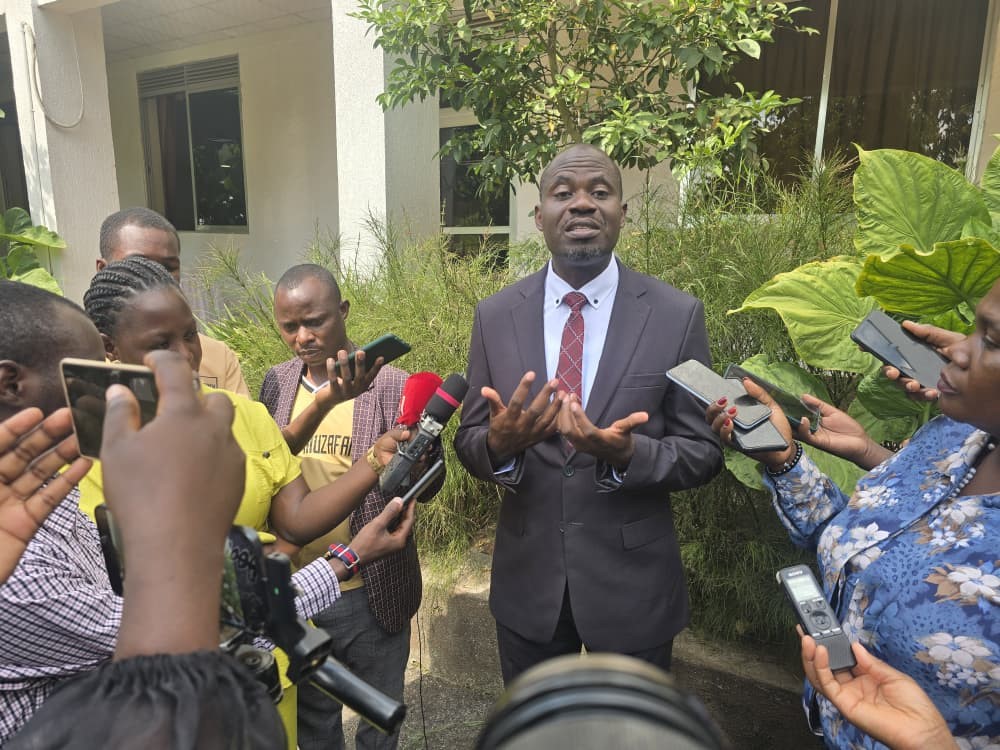
By Johannah Nantongo
MASAKA. Journalists from the Greater Masaka sub region have undergone training on insurance reporting, with officials from the Insurance Regulatory Authority of Uganda (IRA) urging the media to play a more informed role in educating the public about insurance services, consumer rights, and complaint resolution mechanisms.
The training, held in Masaka City on June 18 , brought together media practitioners from various districts to enhance their understanding of the insurance sector and improve the accuracy of reporting on insurance-related matters.
Speaking during the media engagement, IRA officials emphasized the need for Journalists to familiarize themselves with insurance policies, regulations, and consumer protection frameworks to avoid misinformation that could undermine public confidence in the industry.
Ms Gerrie Magezi, a legal officer at IRA, said the authority operates a complaints bureau mandated under Section 11(1) of the Insurance Act to receive, investigate, and resolve complaints from members of the public.
“We encourage Journalists to guide the public towards the right channels whenever they have complaints about insurance services. The Authority has established mechanisms to handle such grievances professionally and confidentially,” Ms Magezi said.
She noted that the IRA has digitised its complaints management system, enabling policyholders across the country to lodge complaints without necessarily travelling to Kampala.
“Today, everything is digital. A person can submit a complaint online and receive feedback within less than five days. We also have regional offices in Gulu, Mbale, Mbarara and Kampala to bring services closer to the people,” she said.
Ms Magezi cautioned journalists against publishing unverified allegations, saying inaccurate reporting could erode consumer trust in the insurance sector.
“Understand what you are reporting about. False information can destabilise consumer confidence. We also urge the public to provide evidence whenever they lodge complaints because it helps us conduct thorough investigations,” she added.
Addressing Journalists, Mr Protazio Sande, the acting Chief Executive Officer of IRA, warned against rising cases of insurance fraud, noting that the regulator has intensified efforts to detect and eliminate fraudulent practices.
“We have registered several fraudulent cases within the insurance industry. However, we have studied the trends and understand how these schemes operate. We are therefore prepared to deal decisively with those involved,” Mr Sande said.
He explained that fraudulent claims eventually increase the cost of insurance for genuine policyholders.
“The biggest challenge with fraud is that it raises the cost of insurance for honest clients. Insurers treat fraudulent claims as a business cost and incorporate them into premium pricing. In the end, the burden is passed on to genuine customers,” he said.
Mr Sande expressed optimism that technological advancements being adopted within the sector would significantly reduce fraud through better verification systems, improved data management, and enhanced claims processing.
“With increased use of technology, we expect fraud levels to decline significantly over the coming years, making insurance more affordable and accessible to the public,” he added.
The IRA boss also used the opportunity to clarify misconceptions surrounding agricultural insurance, urging farmers to embrace professional farming practices.
He said agricultural insurance is designed to protect farmers against unforeseen losses and not losses arising from negligence.
“Farmers should avoid turning themselves into veterinary doctors or crop specialists. Some losses occur because of wrong prescriptions or poor farming decisions, yet they could have been avoided through professional guidance,”Mr Sande said.
He further clarified that livestock insurance does not compensate farmers for theft of animals, but rather for deaths caused by insured risks such as disease outbreaks, accidents, natural disasters, and other unforeseen events.
“The purpose of the insurance is to cushion farmers against genuine and unavoidable losses. It is not intended to compensate for negligence or criminal acts such as theft,” he explained.
The training forms part of IRA’s broader efforts to increase insurance awareness and strengthen public trust in the sector through improved access to information, consumer protection, and responsible reporting.