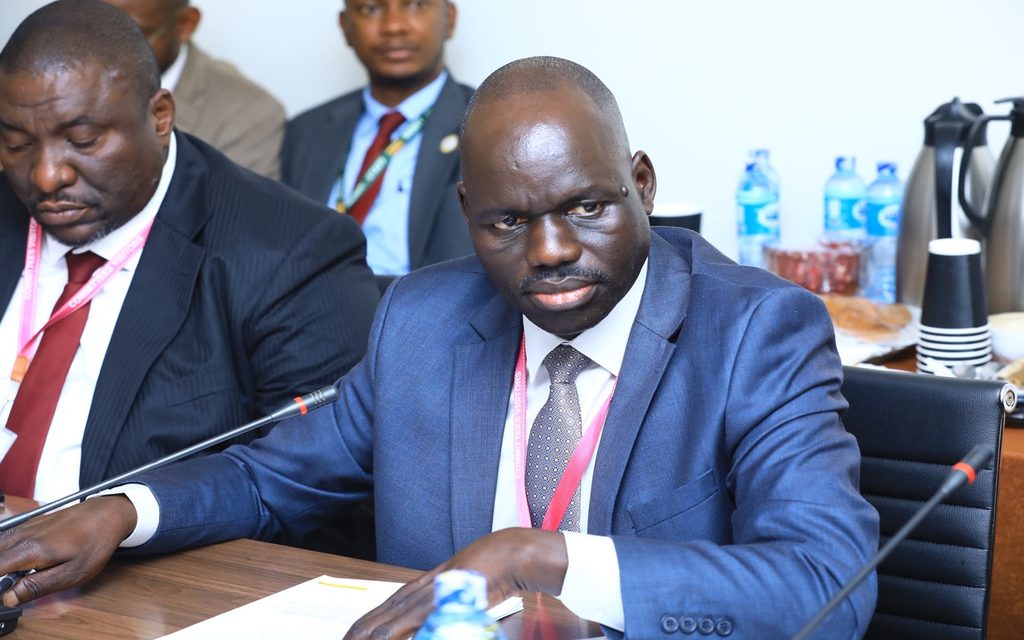
Eng. Isaac Wani, Commissioner in charge of National Roads at the Ministry of Works and Transport
By Joseph Kiggundu
KAMPALA: Implementation of several road and transport infrastructure projects across Uganda has been slowed by delays in land acquisition and inadequate counterpart funding, the Ministry of Works and Transport has told Parliament.
The ministry’s Undersecretary for Finance and Administration, Barbara Mugambe, said land acquisition and counterpart funding require significant financial resources, limiting the Government’s ability to implement all planned projects simultaneously.
Mugambe made the remarks during an interface with the Parliamentary Committee on National Economy, where the ministry presented a report on the status of externally funded projects.
She said Government was changing its approach by seeking separate financing for civil works and land acquisition in some major projects.
She cited the 127-kilometre Jinja-Mbulamuti-Kamuli-Mukungu road and 10 kilometres of roads in Jinja City as examples where separate funding for land acquisition is being pursued.
“This will help us to curb shortages regarding land acquisition,” Mugambe said.
The ministry report identified delayed land acquisition as a major challenge affecting several projects, including the 23.7-kilometre Busega-Mpigi Expressway, the 191-kilometre Rwenkunye-Apac-Lira-Puranga road and the improvement of 11.45 kilometres of national roads in refugee-hosting areas of the West Nile sub-region.
The delays have been attributed to inadequate budget allocations and disputes over land ownership.
The 92-kilometre Kampala-Jinja Expressway has also been affected. According to the ministry, only 4,519 of the approximately 16,000 project-affected persons have so far been compensated, at a cost of Shs502.9 billion.
The ministry said Shs338 billion had been provided for compensation during the 2026/27 financial year to address part of the outstanding obligations.
The Bukasa Port Development Project, valued at €50 million, is also facing delays because some project-affected persons have refused to vacate the site until they receive alternative land for resettlement, as they were promised in 2023.
Committee Chairperson Jane Avur questioned why Government continues to seek financing for projects before resolving critical requirements such as land acquisition.
She warned that prolonged delays could increase the cost of infrastructure financing.
“Why do the technocrats in the ministry push for projects for financing when you know that the critical things that should be prioritised have not been done?” Avur asked.
Bukedea County MP David Okwere raised concerns over 13 abandoned road projects and questioned the quality and durability of some newly constructed roads.
He attributed some road damage to heavy cargo trucks and asked the ministry to explain whether weighbridges were effectively controlling overloaded vehicles.
Okwere also questioned the ministry’s supervision of road projects.
Gulu City Woman Representative Betty Aol urged the ministry to increase the participation of local contractors in infrastructure projects and strengthen their capacity under the Buy Uganda Build Uganda (BUBU) policy.
Responding to the concerns, Engineer Isaac Wani, Commissioner in charge of National Roads, said delays in reviewing road designs also contribute to extended project timelines.
He explained that designs sometimes become outdated when funding is secured several years after completion of the original design.
Wani cited the Nebbi-Goli road, whose design was completed in 2019 but funding for construction was secured in 2025.
He said changes in traffic volumes and other road-use characteristics can require designs to be updated before construction begins.
Wani further explained that externally funded projects are generally implemented under procurement guidelines set by development partners, which may not always accommodate the BUBU policy.
He said local contractors are more commonly engaged in Government-funded projects.
On abandoned roads, Wani said many of the projects were inherited from the former Uganda National Roads Authority (UNRA) during the rationalisation of Government agencies.
He said the Ministry of Works and Transport sought additional funding from the Ministry of Finance to settle outstanding payments to contractors.
According to Wani, most of the affected projects have since resumed, with works ongoing after the Government addressed payment arrears.