By Joseph Kiggundu
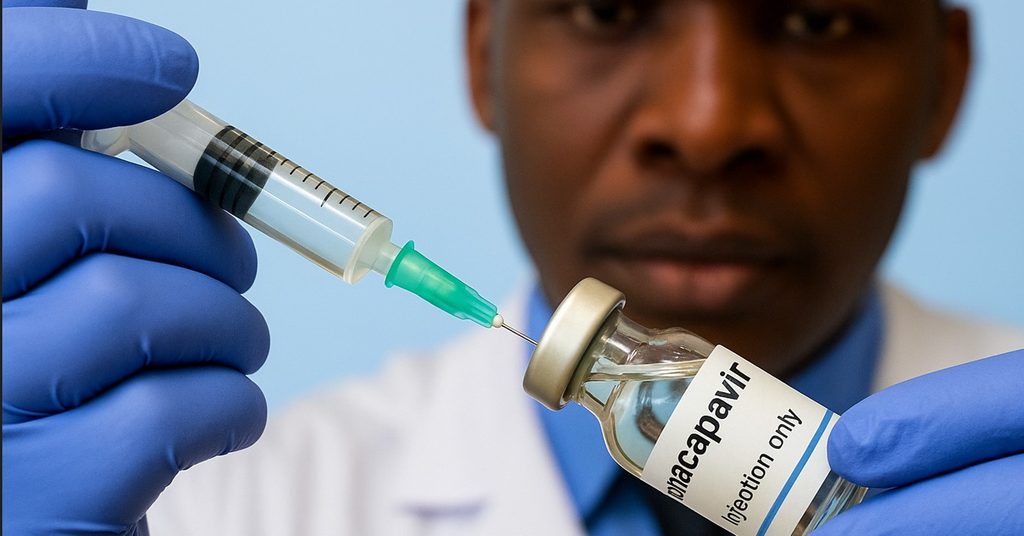
KAMPALA — Uganda is preparing to expand the rollout of lenacapavir, a long-acting injectable HIV prevention medicine, to about 300 health facilities as more people seek alternatives to daily HIV prevention pills.
The injection is administered every six months and is intended for people who may find daily oral PrEP difficult to maintain consistently.
Dr Flavia Matovu Kiweewa, Director of Research at the MU-JHU Research Collaboration and Uganda’s principal investigator for the Gilead-sponsored PURPOSE 1 study, said the expansion will depend largely on the availability of supplies.
She was speaking at a media engagement in Kampala on September 1, where journalists, bloggers and online content creators were briefed on lenacapavir’s research, effectiveness, eligibility and rollout in Uganda.
Uganda began providing the injection in April 2026 after receiving an initial donation of 19,200 doses through the Global Fund. The first phase covered 103 facilities, with plans to increase this number to about 300 by the end of the year.
Kiweewa said the available doses are being distributed across the country rather than being concentrated in Kampala.
Among the Kampala facilities currently providing the injection are Kisenyi Health Centre IV, Kawaala Health Centre III, Kisugu Health Centre III, Kiswa Health Centre III, Kitebi Health Centre III and Komamboga Health Centre III.
From treatment to prevention
Lenacapavir was originally developed for HIV treatment, particularly for people whose virus had developed resistance to several available medicines.
Kiweewa said its strong ability to suppress resistant HIV prompted researchers to examine whether the medicine could also be used to prevent infection among HIV-negative people.
The drug belongs to a class of medicines known as capsid inhibitors and interferes with different stages of the HIV lifecycle.
PURPOSE 1 results
The PURPOSE 1 clinical trial, which included adolescent girls and young women in Uganda and South Africa, reported no HIV infections among the 2,134 participants who received twice-yearly lenacapavir.
The wider trial enrolled 5,338 HIV-negative participants and compared lenacapavir with two daily oral PrEP options. The findings, published in the New England Journal of Medicine in 2024, recorded 39 infections among participants taking F/TAF and 16 among those taking F/TDF, while no infections occurred in the lenacapavir group.
Another Phase 3 trial, PURPOSE 2, also reported significantly lower HIV incidence among men and gender-diverse participants receiving twice-yearly lenacapavir compared with daily oral F/TDF.
In June 2025, the US Food and Drug Administration approved lenacapavir for HIV prevention under the brand name Yeztugo, making it the first twice-yearly injectable PrEP option approved in the United States.
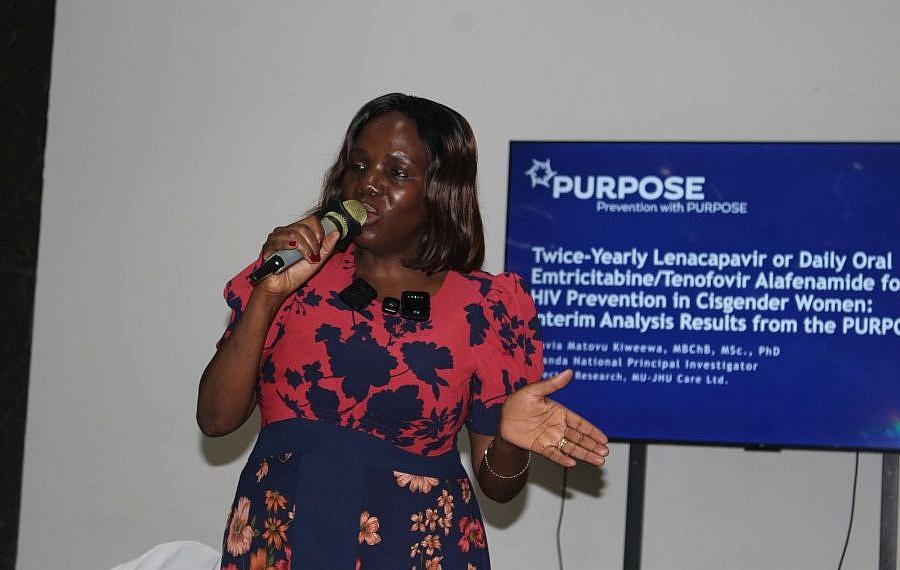
Dr Flavia Matovu Kiweewa, Director of Research, MU-JHU Research Collaboration
Demand outpaces supply
Kiweewa said interest in lenacapavir has been higher than initially anticipated, with some Ugandans seeking information about the injection even before its national rollout.
She said the demand demonstrates that HIV prevention is relevant beyond traditionally identified high-risk groups.
Under the current approach, anyone who believes they may be at risk of HIV infection can approach a health worker for assessment and PrEP.
Kiweewa said men currently account for about 70 percent of people receiving lenacapavir, while more efforts are needed to ensure women who could benefit from the medicine also have access.
The injection is provided free of charge through the government programme, with support from the Global Fund and Gilead Sciences.
Generic versions could lower costs
Uganda is currently using donated and programme-supported supplies rather than generic lenacapavir.
Kiweewa said plans to facilitate access to generic versions could eventually widen availability through private pharmacies and clinics.
Gilead has entered voluntary licensing arrangements aimed at enabling generic production for eligible low- and middle-income countries. The expected ceiling price has been put at about US$40 per person annually, which could make the medicine considerably more affordable when generic supplies become available.
Initial tablets required
Kiweewa cautioned new users that protection does not begin simply because the injection has been administered.
People starting lenacapavir PrEP receive oral loading doses on the first two days alongside the injection. She said this helps the medicine reach protective concentrations more quickly.
Users are advised to allow about 48 hours for protection to become established or use condoms during the initial period, according to the guidance she provided.
Health workers must check other medicines
Kiweewa also urged users to disclose other medicines they are taking because some drugs can interact with lenacapavir.
She highlighted particular considerations for people receiving treatment for tuberculosis, noting that rifampicin can reduce lenacapavir levels and potentially affect its effectiveness.
People with hepatitis B also require careful assessment to determine the appropriate prevention and hepatitis B treatment regimen.
She further cautioned that interactions can occur with certain cholesterol and erectile-dysfunction medicines, meaning health workers should review a patient’s medication before administering the injection.
Researchers study one-year protection
Researchers are also investigating whether lenacapavir could eventually provide HIV protection for an entire year.
Kiweewa said the PURPOSE 365 study is examining how long protective drug concentrations remain in the body.
If the medicine can maintain effective levels for 12 months, it could pave the way for a once-yearly HIV prevention option, although further evidence and regulatory approval would be required.
A new chapter in HIV prevention
The introduction of lenacapavir gives Uganda another option for HIV prevention, particularly for people who struggle with daily PrEP adherence or want a more discreet prevention method.
For Kiweewa, the next challenge is ensuring that the medicine reaches the people who need it.
With the Ministry of Health targeting 300 facilities, increased supply, wider geographic coverage, affordable generic versions and public awareness will be central to expanding access to the six-monthly HIV prevention injection.